
Getting the Most from Windows 10 Game Mode

We tinker with Microsoft’s newest ‘game mode’ added to Windows 10, can it help make your gaming rig the best it can be?

We tinker with Microsoft’s newest ‘game mode’ added to Windows 10, can it help make your gaming rig the best it can be?

I’ll admit it, my system is currently still running Windows 7. Over the years since 8 was released, and now 10, I haven’t really found the need or desire to swap systems. Windows 7 has always offered everything I wanted for my gaming rig, in addition to having control over things and a lack of “apps” on a PC. That being said, Windows 10’s new ‘game mode’ has me questioning whether or not it might be time to take that leap into Microsoft’s double digits and see what the newest software can really do. Hang out a little longer to find out why.

Windows has been a long-standing staple of computer-based gaming. While some titles wander over to MacOS or Linux machines, Windows carries lion’s share of the marketplace. And while it existed before Windows 95, the interface and Windows that we have come to know and love really only started since Windows 95. If you managed to last through all the clips contained in the above-linked YouTube video (my favorite is the last one), you can see what a turning point they thought Windows 95 was to it’s more Mac-looking predecessors. A new era of gaming and Windows was born.

It’s hard to think that the Windows interface we know and love started out over 20 years ago. How far have we come?

So with just over 20 solid gamer-representin’ years under their belt, Microsoft has decided to address their lions and launch their ‘game mode’ for Windows 10. The operating system, which went live in July of 2015, has received a mixed array of comments over the months since it’s initial release, including criticism of its stealth OS upgrades which happened to a large portion of unwitting users. While a lot of that mess is behind them, Microsoft is trying to hold onto its image and keep its market favour, likely in hopes that developers don’t decide to suddenly make the gaming market a bit more even. Enter, game mode.

Back in January of this year, Microsoft announced on its developer blog that it was going to be improving the gaming and streaming tools available to its consumers, boasting increased performance, fan-requested features, and beam streaming to roll out over 2017.

“Whether you play on Xbox One, a Windows 10 PC, your mobile phone, or anywhere you sign-in with Xbox Live, we’re going to make your gaming experiences easier, more social, and better with innovative hardware and software features throughout the year.”

With all the goodies Microsoft purported to be planning for this gaming improvement, many people appeared to be rather excited. However, back in January, very little was actually said by Microsoft about what they had in store, other than “increased performance” for gaming. As users started to gain access to the fledgling mode since late January, opinions have been mixed about whether or not the mode actually helps to optimize your system for increased gaming performance. Basically, the mode is designed to turn your computer more into a console-type hardware experience, in that, it will prioritize your CPU and video card usage to focus on the game you’re playing, rather than those pesky background tasks. We all leave things like Chrome, Discord, or iTunes open while playing games (if your PC can handle it of course), and game mode purport to help make sure those programs are only taking as much juice as they absolutely need to function. Their goal at launch was to target your frame rates and provide a smoother gameplay experience, no matter what the title.

After turning on game mode, you’ll be able to pull up a very Xbox-looking interface over your currently active game UI, in order to enable or disable the improvements. As the video above describes, Microsoft was also toying with the idea of letting games turn on this mode automatically, ensuring an even more seamless user-experience. While it may not provide that much of a boost now, its current installment may help bridge the gap between playable and non-playable games, for less robust PC setups, as RandomGamingHD states in their YouTube video “Does the New Window 10 ‘Game Mode’ Improve Gaming Performance.” Microsoft themselves have said that it is exactly these lower-end systems that they want game mode to help the most.

Source: PCGamesN

RandomGamingHD’s conclusions, like many others we’ve reviewed, came to the optimistic conclusion that while game mode might not quite be where it needs to be yet, it genuinely offers an integrated potential for improving gaming, especially when you need to squeeze the last drop of power you can from an aging rig. After following Microsoft’s progression through the years, I’m excited to see what they’ve learned from console production, and operating system development, to see how they will continue to meld them together over the calendar year.

While Windows 10 gaming mode may only offer small tweaks and improvements at this time, it has Windows 10 skeptics like me intrigued about the possibility of a PC running optimally for gaming, rather than it being an afterthought. If the mode is perfected and improved upon over the coming months, you may see myself and others like me, switching to reap the benefits.

There are always countless ways to tweak your Windows performance manually, but game mode might not quite offer you the bang you’re looking for, yet. I intend to keep an eye on what Microsoft has in store for gaming and Windows, and I suggest you do too. After all, even 5 more frames, can make all the difference.

 [poll id=”4″]

Have you used Windows 10’s game mode? Will you ever? Are you a min/max gamer or do you just pray to the technology gods that your computer will turn on, let alone allow you to play anything? Join in the conversation below on Discord, on our Facebook page, or Twitter!

This Day In Gaming History: July 12

 Thisdayingaming

This Day in Gaming History is an editorial released 2-3 days per week, that takes you on a ride in its custom-built gaming history blue box. We take a look at titles all released on the same day throughout gaming history, while also giving extra facts and anecdotes as available or appropriate. Got a favorite game that you want to learn more about, or perhaps want to see featured on TDIGH? Send angel1573 a message on the forums, or leave a comment below!

While today’s post will be brief (a topic which will be discussed further in coming weeks), its a heavy hitter comes from a franchise which seems to be on everyone’s lips these days. If you haven’t been living under a rock, I’m sure you’ll catch my meaning. Whether or not you’re ready to master what we have in store for you today, it’s time to dive in and go!

CASTLEVANIA II: BELMONT’S REVENGE [JAPAN] (GAME BOY)

Also translated as “The Legend of Dracula“, and not to be confused with the NES game Castlevania II: Simon’s Quest, this title was released for the Game Boy on this day in 1991. The second title to be released for the Game Boy handheld, and sequel to Castlevania: The Adventure, it is set fifteen years after the events of its predecessor. Released in color in later versions, Castlevania II: Belmont’s Revenge was applauded for its inclusion of classic Castlevania items, and weapons, while also making better use of the Game Boy’s hardware than its predecessor. The title follows the story of Christopher Belmont and his quest to save his son and Transylvania from Dracula in newly regenerated human form.

PAC-MAN COLLECTION (GAME BOY ADVANCE)

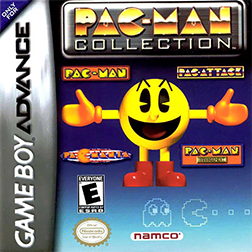
A compilation of four Pac-Man titles–Pac-Man, Pac-Mania, Pac-Man Arrangement, and Pac-AttackPAC-MAN Collection was released on this day in 2001. While the first three titles are all classic Pac-Man, and follow general Pac-Man gameplay, Pac-Attack is a falling-block puzzle game much like Tetris, and was originally released for the Genesis and SNES consoles. Due to the small screen of the GBA, players are given the option to view their chosen title in two different methods. In scroll-mode, the field of view automatically scrolls to follow Pac-Man, whereas full-screen shows the entire field of view in miniature form. With the exception of Pac-Attack, the player can tweak various settings such as lives, difficulty level, or bonus life counters, similar to the DIP switch enabled settings in the original arcade machines. The title was criticized for cutting out pieces of music and sound effects, a lack of save functionality, and inconsistencies with the field of view methods. Overall, however, the title was well received.

POKEMON BOX: RUBY & SAPPHIRE (GAMECUBE)

Last but not least, with all the Pokémon Go news since launch, it seems very appropriate that we should look at another Pokémon title. Originally available in North America, and only at the Pokémon Centre in New York City, Pokémon Box: Ruby & Sapphire was released on this day in 2004. More Poke-utility than game, for the days long gone where storage was a massive problem, Pokémon Box allowed players to store up to 1,500 Pokémon from Ruby or Sapphire. It allowed for ease of collection, organization, and searching of said Pokémon, and also allowed players to play Ruby or Sapphire on their TVs. In Europe, the box could be purchased in a GameCube bundle, which included Pokémon Colosseum, a memory card, and a GBA-GB game link cable. The title also facilitated transfer of Pokémon between Emerald, FireRed and LeafGreen.

The game also connects with GBA directly, allowing Trainers to deposit their Pokémon without having to trade. Once stored, players can view a spreadsheet-like stat list, featuring categories such as: original Trainer, moves, Pokémon Contest stats, friendliness, and level. Pokémon Box also features a “showcase” mode, which allows players to create a stage from a combination of ten backgrounds, ten stage patterns, and five types of display pieces, alongside one of eight music tracks to show off their selected Pokémon. The title has certain limitations before it can be used with any of they aformentioned Pokémon titles, all of which include having caught at least 100 Pokémon in their in-game Pokédex, plus additional title-specific requirements. After a certain number of Pokémon are deposited within the game cartridge, the player is gifted a Pokémon Egg, which will hatch into a Pokémon with a special move it would not learn normally. This move can be passed down through breeding.

Images © Konami, Namco, & Nintendo


Some other titles released on this day:

  • Warpman (Japan) – NES – 1985
  • FlatOut – Xbox/PS2 – 2005
  • Resident Evil 4: PLATINUM – iOS – 2009

This Day in Gaming History: June 23

Thisdayingaming

This Day in Gaming History is an editorial released 2-3 days per week, that takes you on a ride in its custom-built gaming history blue box. We take a look at titles all released on the same day throughout gaming history, while also giving extra facts and anecdotes as available or appropriate. Got a favorite game that you want to learn more about, or perhaps want to see featured on TDIGH? Send angel1573 a message on the forums, or leave a comment below!

Today, we’ll be returning to some classic titles and franchises, household names, and iconic characters in gaming history. Creations of the earliest console wars, their characters continue to be used as symbols for their brands. From the early days of Sonic the Hedgehog, through to a new generation of Mario and Link, let’s adventure alongside our childhood heroes on This Day in Gaming History.

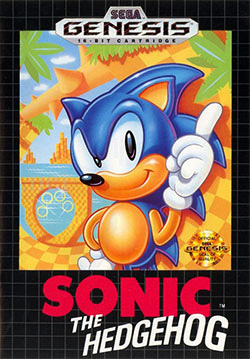
SONIC THE HEDGEHOG (SEGA GENESIS)

Released simultaneously in North America, Europe, and Australia on this day in 1991, Sonic the Hedgehog became the first game of the Sonic franchise. Following the game’s development in 1990, and after deciding on the anthropomorphic traits of Sonic, the team renamed themselves the “Sonic Team” to match their new character. Influenced by the Super Mario titles, Sonic the Hedgehog introduced a new technique to platforming: the ability to roll along curved scenery. Over time, this ability would evolve and become an integral part of Sonic’s gaming identity. The title itself was well received by critics, who praised its visuals, music, and pace of gameplay. The game was also commercially successful, helping to make the Sega Genesis console a key player in its era of console gaming.

In the 1991 holiday season, the Genesis outsold the Super Nintendo by a two-to-one ration, and in January of 1992, it peaked to claim 65% of the console market share. While Nintendo eventually overtook Sega, it was the first time since 1985 that Nintendo did not lead the console market. Sonic the Hedgehog has been ported to various media since, alongside clones and inspired offshoots, including various “animal with attitude” platformers like Aero the Acro-Bat, Earthworm Jim, or Crash Bandicoot.


NINTENDO 64 CONSOLE & SUPER MARIO 64

N64

Launched alongside one another in all markets, on this day in 1996 the Nintendo 64 console and Super Mario 64 were launched in Japan. Initially codenamed “Project Reality”, the design was finalized by mid-1995, but its launch was ultimately delayed until 1996. The console primarily competed with the PlayStation and Sega Saturn, as part of the fifth generation of console gaming. Alongside Super Mario 64, the console was launched with Pilotwings 64 worldwide, and Saikyo Habu Shogi in Japan only. The console was launched in a variety of colours and designs, including limited-edition controllers and systems.

The N64 was highly anticipated and was met with great praise as a result for its power and gaming delivery–allowing for a more powerful generation of games. The system was in high demand upon release, and during its first three days on the market, retailers sold 350 000 of 500 000 available units. However, the decision for the console to use cartridges rather than discs resulted in tapered sales and more expensive games than its counterparts. Ultimately, the N64 remains one of the most iconic consoles in gaming history, not only for its own profile, but also the games released for it.

Super Mario 64 is the best selling game of all time for the Nintendo 64 console, having sold more than eleven million copies worldwide. A remake was launched on the Nintendo DS in 2004, entitled Super Mario 64 DS and features modifications to the original title. The game left a lasting legacy on 3D game design, particularly with camera design and 360 degree analog control. Super Mario 64 is lauded by critics and fans alike as one of the greatest and most revolutionary games of all time.

Countless titles which followed its released were influenced by Super Mario 64‘s design, including: GoldenEye 007, the Grand Theft Auto series,  Kingdom Hearts, and countless others. Dan Houser, a prominent figure in the development of GTA, stated “Anyone who makes 3D games who says they’ve not borrowed something from Mario or Zelda [on the N64] is lying.” On May 5, 2011, Super Mario 64 was chosen as one of the 80 games to be displayed at the Smithsonian, as part of the “The Art of Video Games” exhibit which launched the following year.


PHANTOM HOURGLASS (NINTENDO DS) [JAPAN]

Much like the other two (or three if you’re going to be technical) gaming behemoths in our list today, The Legend of Zelda: Phantom Hourglass is another title in a long list of games in the Zelda franchise. An action-adventure game released on this day in 2007 in Japan, it is the fourteenth installment in the greater series, and the direct sequel to the 2002 Gamecube title Wind Waker. The game has been re-released for the Wii U via the Virtual Console in North America as of May 2016. The title features 3D cell-shaded graphics and an overhead camera perspective. Players utilize both the touchscreen and the microphone, alongside traditional controls, to progress the story.

While the title and its gameplay were generally praised upon release, Phantom Hourglass was criticized for its online features. Receiving several industry awards, the game would go on to sell 262,800 copies in its initial month in the U.S. By March of 2008, 4.13 million copies had been sold worldwide. Phantom Hourglass was praised as one of the better games to be launched on the Nintendo DS handheld. While the game changes pace and tone when compared to others like Twilight Princess on the Wii, it remained a worthy successor to Wind Waker. Several websites named it the 2007 Game of the Year for the Nintendo DS, and was listed as such in many mainstream magazines. While a point of criticism for some, the title was simultaneously praised for being the first Zelda title to successfully attract casual players.

Images © Nintendo & Sega


Some other titles released on this day:

  • Phantasy Star Online: Blue Burst (PC) – 2005
  • Dynasty Warriors 6 Empires (PS3) – 2009
  • Pokemon Black & White Version 2 [Japan] (DS) – 2012
  • Batman: Arkham Knight (PC/PS4/Xbox One) – 2015

This Day in Gaming History: June 14th

This Day in Gaming History is an editorial released 2-3 days per week, that takes you on a ride in its custom-built gaming history blue box. We take a look at titles all released on the same day throughout gaming history, while also giving extra facts and anecdotes as available or appropriate. Got a favorite game that you want to learn more about, or perhaps want to see featured on TDIGH? Send angel1573 a message on the forums, or leave a comment below!

Things are falling into place today as we take a look at one of the most well known video games of all time, we delve into a Playstation 2 experiment title ahead of its time, and revisit one of the Playstation 3’s best story-driven titles; all on This Day in Gaming History!

TETRIS (GAMEBOY) [JAPAN]

Originally released on June 6th in 1984, Tetris found its way onto the Game Boy on this day in 1989 in Japan. Tetris was the first entertainment software to be exported from the then-USSR to the US, initially finding itself on the Commodore 64 and IBM PC.  The title is a popular use of “tetrominoes”, the four-element special case of “polyominoes.” The use of “polyominoes” have been used in popular puzzles since at least the early 1900’s; however, they date back as far as antiquity. The game has been released for nearly every video game console and computer operating system since its initial release, and has frequently been listed as one of the greatest video games of all time. In January of 2010, it was announced that the franchise had sold more than 170 million copies, approximately 70 million physical copies and over 100 million copies for mobile devices.

According to academic research, Tetris might actually increase your brain function and activity. As a user becomes more proficient, their brains show more efficient brain activity while playing. Even moderate playing can result in increased general cognitive function–critical thinking, reasoning, language, and processing. Tetris has been a focus of many other academic studies over the years. The title also inspired a number of film adaptations, including both a short animated film and the live action movie, both entitled Pixels.


PSI-OPS: THE MINDGATE CONSPIRACY (PS2)

Released in North America on this day in 2004, this traditionally-styled shooter incorporated a variety of psychic powers to differentiate itself in the market. Players take control of Nick Scryer, a ‘PSI-Operative’ whose mind has been wiped in order to infiltrate a terrorist organization. He is ultimately captured and must fight his way out, regaining his PSI powers along the way. The diverse set of psychic abilities, and limited tactical choices of weaponry, made PSI-OPS an entertaining excursion from the norm of shooters. It received generally favorable reviews from critics and players alike, but has yet to produce a sequel. The game was listed in 2010 as a game that should receive a sequel, as well as one to play before you die. In February of 2007, producer Midway Games faced a copyright infringement suit from William L. Crawford III who claimed similarities with his screenplay “Psi-Ops”. In December of 2008, Midway won the case, leaving the future of Psi-Ops open for potential revival.


THE LAST OF US (PS3)

Released only in 2013 on this day, The Last of Us is a third-person action-adventure survival-horror title (try saying that three times fast). The title was remastered for the PS4 in 2014. Players use firearms and improvised weapons alongside stealth to defend against enemy humans and cannibalistic creatures. Development of the title began in 2009, shortly after the release of Uncharted 2: Among Thieves. The central focus of the game lies on its two main characters, Joel and Ellie; all gameplay elements were developed around it. The actors chosen to play these key roles, were also used for motion capture of the characters.

Following its announcement in 2011, the title was widely anticipated, and received wide praise by many reviewers. Its acclaim centered around characterization, subtext, exploration of the human condition, its soundscape, its visuals, and its depiction of female characters. The game’s depictions of violence also became a source of discussion among critics. The title became one of the best selling PS3 games, and is widely considered to be one of the best video games of all time. Following its initial release, developer Naughty Dog released several DLCs as both prequel and sequel chapters. A sequel has been discussed, and is likely to be in development, following the recent release of Uncharted 4: A Thief’s End, in early May of this year.

Images © Capcom, List, Midway Games, & Sony Computer Entertainment


Some other titles released on this day:

  • Arc the Lad: End of Darkness  – PS2 – 2005
  • Eternal Sonata [Japan] – Xbox 360 – 2007
  • Alice: Madness Returns – PC/PS3/Xbox 360 – 2011
  • Fallout Shelter – iOS – 2015

This Day in Gaming History: June 11

Thisdayingaming

This Day in Gaming History is an editorial released 2-3 days per week, that takes you on a ride in its custom-built gaming history blue box. We take a look at titles all released on the same day throughout gaming history, while also giving extra facts and anecdotes as available or appropriate. Got a favorite game that you want to learn more about, or perhaps want to see featured on TDIGH? Send angel1573 a message on the forums, or leave a comment below!

Today, we’re taking a bit of a curve with our trajectory as we focus on a sole piece of gaming history today: the release of a Nintendo hendheld console, in a long line of handhelds. Let’s take a look at what the GBA has done for gaming history, shall we?

GAME BOY ADVANCE (GBA) – NORTH AMERICA

Game_Boy_Advance_Purple_Model

On this day in 2001, Nintendo released what would become one of the most successful handhelds in gaming history in North America. Celebrating its 15th anniversary this year, the Game Boy Advance was the sixth release in the Game Boy line, including advancements and different versions on the Game Boy and Game Boy Color. The Game Boy Advance itself also had two additional releases from its original model, including the Game Boy Advance SP released in 2003, and the 2005 Game Boy Advance Micro. The handheld maintained an extensive game collection, as well as a distinguished career run. The system has been supported as late as 2010 (in Australia). The Game Boy Advance is also touted as having one of the best hardware designs in Nintendo’s history for ergonomics and durability. The GBA was initially hinted at as far back as 1996 in EGM as a Game Boy successor being worked on by Nintendo, coded “Project Atlantis.”

The extensive and successful gaming library developed for the GBA following its release was highlighted by a number of well-known titles (some that you can expect to read about here in the future). According to IGN, the top ten of all time include: WarioWare: Twisted (2005), Castlevania: Aria of Sorrow (2004), Legend of Zelda: A Link to the Past with Four Swords (2003),  Advance Wars (2001), Tony Hawk Pro Skater 2 (2001), Mario Golf (2004), Super Mario Advance 3: Yoshi’s Island (2002), Final Fantasy VI [re-release] (2007), Metroid Zero Mission (2004), and Pokemon Ruby & Sapphire (2003). Much to the dismay of gamers wanting to revisit old GBA titles, there was a delay in Nintendo deciding to incorporate the Advance into the Virtual Console. Only recently, within the past year, have games begun to trickle into the official emulator. For an in-depth anniversary look at the GBA, check out this feature retrospective.

Image © Nintendo


Some other titles released on this day:

  • Mario Golf  [Japan] – Nintendo 64 – 1999
  • Bomberman Ultra – Playstation 3 – 2009
  • Tekken Revolution – Playstation 3 – 2013
  • LEGO Jurassic World – PC – 2015

This Day in Gaming History: June 5

Thisdayingaming

This Day in Gaming History is an editorial released 2-3 days per week, that takes you on a ride in its custom-built gaming history blue box. We take a look at titles all released on the same day throughout gaming history, while also giving extra facts and anecdotes as available or appropriate. Got a favorite game that you want to learn more about, or perhaps want to see featured on TDIGH? Send angel1573 a message on the forums, or leave a comment below!

We continue to drag our heels through the last few weeks of spring, looking towards a summer filled with sunshine…outside our windows as we sit inside and play video games. That’s how summers are spent, right? Regardless, we continue to have gaming history coming your way, even as historical releases are dwindling. Look for some summer special posts coming soon to help tide you over til mayhem hits in Q3. The blue box has some stories to tell today, so let’s take a look at one of the most well known-cult SNES titles, revisit some ancient ruins, and piece together a little bit more of the plotweb of Kingdom Hearts–all on This Day in Gaming History.

EARTHBOUND (SNES)

Also known as Mother 2 in Japan, this RPG title was modestly received on its release, only to carry a weighty global legacy. EarthBound has frequently been listed on top games every gamer should play at least once in their lives; often ranked rather highly as well. Critics, as well as players, find the title to be a “classic” of the RPG genre, as well as for its socio-political commentary. Praised for its humor, intelligence, and ability to captivate, EarthBound has continued to charm players of all kinds since its initial release. The title has also quite a cult following, developing slowly ever since its release. The community has struggled to gain access to North American releases of the greater Mother series, developed countless fan art and tributes, and has generally been quite vocal about the series more broadly–a fandom holding strong since EarthBound’s 1994 release.

The sequel to EarthBound/Mother 2 was originally to be released on the Nintendo 64 console, as EarthBound 64, but was later canceled. The title was later revived as a Japanese-only sequel in 2006 for the Gameboy Advance. EarthBound was re-released in 2013 for the Wii U Virtual Console. Beyond the game itself, the lead character Ness, has also become a fan-favorite icon since the game’s release. So much so, that fans advocated for his inclusion in Super Smash Bros. and its sequels). Ness thus has become perhaps more recognizable for his roles in Super Smash Bros than from his own game. Ness has even received his own amiibo figure.


TOMB RAIDER: ANNIVERSARY (PC/PS2)

Released in 2007, Tomb Raider: Anniversary is a remake of the original 1996 Tomb Raider. Utilizing an improved version of the “Legend” game engine, it includes all of the original environments from its prototype. While it was the least commercially successful game in the Tomb Raider series, the title was well received by critics. Nine official trailers and four developer diaries were released in anticipation of the remastered title; highlighting various zones and their updated graphics. Despite being an updated copy of the original, Anniversary featured new abilities, like pole swinging, which had been absent from initial gameplay. A game trailer showing footage of the game was released in June of 2006, however, the then-PSP title developed by Core Design was canceled; the had been leaked and was not meant to be released. In the week following the trailer’s leak, Eidos Interactive announced the Tomb Raider: 10th Anniversary Edition for PS2, PSP, and Windows, to be developed by Crystal Dynamics. Core Design is no longer legally allowed to produce Tomb Raider titles; the leaked trailer now considered to be copyright infringement.


KINGDOM HEARTS: DREAM DROP DISTANCE (3DS)

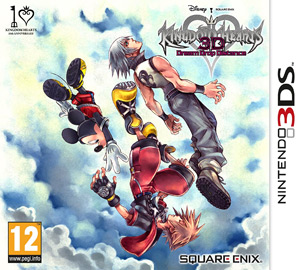
Taking place after the events of Kingdom Hearts Re:coded, the game focuses on Sora and Riku as they prepare for the return of Master Xehanort. Besides these two well known characters, players can recruit Dream Eaters to assist them in fights. Square Enix decided to develop Dream Drop Distance, having been impressed by the quality of the Nintendo 3DS. Taking advantage of the handheld’s functionality, Square was able to include action elements from the series seen in Birth by Sleep, as well as to give plot hints for Kingdom Hearts III. The game has sold well, and an HD remastered version for the Playstation 4 was announced in September of 2015, as part of the upcoming compilation Kingdom Hearts HD 2.8 Final Chapter Prologue. 

Images © Eidos Interactive, Nintendo, & Square Enix


Some other titles released on this day:

  • Athena [Japan] – NES – 1987
  • Digimon World 3 – PlayStation – 2002
  • Hospital Tycoon – PC – 2007
  • The Incredible Hulk – PS2/PS3/Wii/Xbox360 – 2008
  • Final Fantasy Tactics  – Android OS – 2015

This Day in Gaming History: May 30

Sailing through the mid 2000’s to just a few years ago, we’ve got the blue box clearly moving through the timestream. Only a few bumps through June 1st, but that hasn’t happened yet. Agent 47 returns for one of the best titles of the series, Kingdom Hearts continues its side stories away from the lead consoles, and you’ll never see the blue shell coming the eighth time around; all on This Day in Gaming History!

Continue reading “This Day in Gaming History: May 30”

This Day in Gaming History: May 28

Continue reading “This Day in Gaming History: May 28”

This Day in Gaming History: May 18

Continue reading “This Day in Gaming History: May 18”

This Day in Gaming History: May 16th

Continue reading “This Day in Gaming History: May 16th”