


There are a lot of methods that developers use to gain and maintain our interest in video games. Further still, there are external elements at work that also serve to drive us more into our games, as much as there are forces trying to drive us away. The network is as complex as it is interesting.
One of the first ways developers may gain our interest in their video game products, be the game itself or the method for playing the game (e.g. console, proprietary software, etc.). In many cases, especially in today’s market, a player’s decision about a title might be made up before they even have the game in their hands. Advertisements, reviews, unboxing videos, games conventions–all of them are driving people towards the socially agreed upon games for people to play. What’s the hottest ticket this year? What’s the new DLC for that EA game? What collector’s editions have the shiniest inclusions? What did that top Twitch streamer give special item drops for watching their stream?
Further still, advertisements and community driven conversations surrounding games are only part of this puzzle. Marketing and developer teams also try to appeal to whatever markets they perceive as being the most viable. At E3 this year, I remember reading a number of stories and news posts about angry Twitter or Facebook users criticizing the ongoing inclusion of female protagonists as within upcoming titles as a travesty, particularly when players would be unable to choose a male protagonist, or if players thought it wasn’t “accurate,” as happened with EA’s backlash for Battlefield V. Despite the increased perception of female protagonists, according to Polygon’s post, the numbers aren’t actually changing all that much:
When a game features a set female protagonist, every player who enters those worlds must experience them through the lens of whoever the female protagonist might be. These games work to normalize the notion that male players should be able to project themselves onto and identify with female protagonists just as female players have always projected ourselves onto and identified with male protagonists.
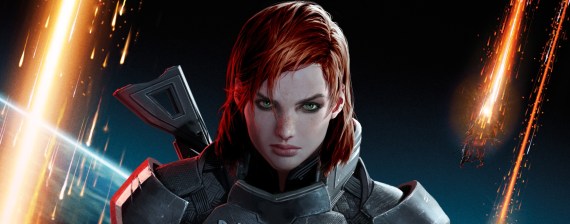
A lot of vocal male gamers react to this because their identity is tied up with the role they live, but also the roles they play in their video games. It’s perceived as being so intertwined, in fact, that while these individuals may have chosen to play a female or male character before, the act of being “forced” to play from the female perspective, is somehow an affront to them personally. Nevermind that FemShep from the original Mass Effect trilogy was obviously the better cannon choice…but I digress.
Before we even get our hands on the games, people are already being told what they can, cannot, should, or should not be playing. It’s tied up in people’s identities, and threaten’s some individual’s perception of their flow (Isbister 5), their immersion, if it doesn’t match what they believe it should be. Even though, that flow isn’t broken by say, playing a bright blue super-fast hedgehog in the curvy streets of Metropolis (or perhaps that’s because he’s male?). Play helps to perform acts “of bonding, including the exhibition and validation or parody of membership and traditions in a community” (Flanagan 5), which subsequently helps to reinforce and create community, as well as to stand up against or alongside social norms. When the group identity is called into question by the identity of our game’s protagonists, turmoil erupts. However, engagement does not necessarily cease here, but rather is transformed. Rather than direct play with the game itself, would-be players become embroiled with anger against the creation of their perceived abomination–there interest is oft maintained, even if in…different circumstances.
Conversely, the broadening and redefining of our social norms helps to provide better representation, to allow new communities to grow and become enthralled with a video game’s world. Representation matters, and while I probably still would have played the original Mass Effect trilogy, I don’t think I would have been as emotionally invested in the story, my decisions, or the future of the galaxy, had it not been for FemShep. Similarly, every chance I get, be it Dragon Age, Skyrim, Oblivion, World of Warcraft…pretty much every adventure or action RPG I’m given the option to play a female character, I will. I see myself in those roles, and I play my characters accordingly. It’s not that non-male individuals can’t get hyped about playing as male characters in our video games, quite the contrary. However, we might not see ourselves as the characters we play, as much as our male counterparts might. Individuals may become less invested in video games in general, become withdrawn from the community and advertisements already not targeted at them, and the prophecy becomes self-fulfilled.
The original Mass Effect trilogy was one of my favourite series, possibly of all time. Not only because the storyline was amazing, the world was stellar (pun intended), the voice acting, and music were superb, but also because for the first time in my already-then some twelve to fifteen years of gaming, I was finally able to really play myself. I made all of the Paragon decisions, not just because I wanted to play that role, but because I knew that’s how I would have responded in those situations. It was the truest essence of roleplay, something I had enjoyed doing in a pen-and-pencil environment, come to life in full voice-acted splendour. I carried this motif the whole way through, I made the hard decisions, I felt the struggles, and I was fully immersed in the entire journey.
At one point, for the achievements, I decided to try to go back and play the Renegade options, starting at Mass Effect 2. Suffice to say, I found it impossible. Even following the creation of my own mythos that my Sheppard was lost at the end of Mass Effect 1, and this ME2-alternative Sheppard was a miswired-during-revival version, I still couldn’t bring myself to play that kind of role. To this day, I still do not have those achievements.
In this way, the virtual worlds we visit are no less complex than the one our physical forms inhabit. “Within the culture of computer games, race, ethnicity, language, and identity relations including gender emerge as complex and contradictory…In Western countries, computer games are still perceived as an arena created by and for white men…” (Flanagan 225). She continues to discuss the specifics of a number of games and genres, namely the false dichotomy of “casual” female gamers and “hardcore” male gamers. She suggests that designers “…have yet to grapple with the full range of inequities ingrained in the player categories and game models exhibited in most of today’s games” (225). Though, despite the backlash they continue to receive, we do see this trend slowly starting to change. Despite the ongoing sexist environment within the industry for some, there yet remains hope, and an ongoing push for developers, and players, to do better. For just as soon as there’s no female representation, the tide can change just that quickly.
In the words of EA, “either accept it, or don’t buy the game.” As our video games are reflections of our societal norms, and of our own identities, emotions become heated when beliefs are challenged. Conversely, because they are reflections of our society, it looks good on the industry, and on gamer culture more broadly, to see these kinds of changes take place. Players are engaged and invested because they see themselves in the worlds they explore (Hart 2017). If we take the simulated play theory to be true, the better equipped players are at learning different kinds of worlds to live in, perhaps one with more accessible and even representation, the better adept they will be at living in them.
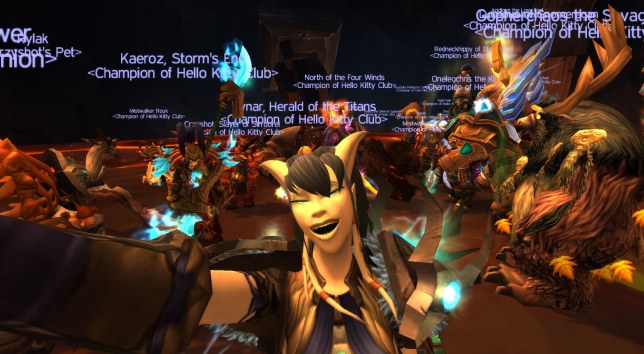
After all, play is ultimately a social venture, right? [Part 3]
– Flanagan, Mary. (2009) Critical Play.
– Hart, Casey (2017) Getting Into the Game: An Examination of Player Personality Projection in Videogame Avatars (Game Studies)
– Isbister, Katherine (2016) How Games Move Us

 My Life, or Something Like It