
Curating Communities in the Digital World; Spoilers, it’s nothing new.

Over the past few months in light of the COVID-19 pandemic, I can’t help but feel like there’s been an increasing awareness paid to community. What it means to be part of one, how do we come together as one, how do we build one in an increasingly digital age?

So many questions that people are now asking themselves as though they’re waking up from a haze. For so long people have been going through the motions of life and only truly living in the wisps of what community is supposed to be. People love to blame the internet and social media for destroying historical meanings of what it meant to be part of a community—but many of these people have ceased to evolve to see what modern day communities are actually like.
hpgiu1kefus41Then COVID struck. Slowly, then encapsulating the world. With the physical spaces we used to gather no longer being accessible, people fled to the internet to try and make whole the social spaces they were deprived of. The very people who claimed that these spaces were the death of all community are now struggling to try to figure out how to use the internet as the vast saviour of all things social.

And yet, they still don’t understand.

Now that I’ve passed into the post-comps-dissertation-writing-I-swear phase of my PhD, it’s hard to not see things align in an eerily timely and useful way. While I write about gender and power dynamics for my dissertation, I’m effectively writing about how communities are built and developed online. How their ideologies are developed and perpetuated; how we make meaning in digital spaces. As my academic mantra has been for a while: People, Technology, Culture.

I’ve had the pleasure of receiving a series of graduate research scholarships to develop a community for the UW Games Institute from the ground up in a digital space—predating the COVID epidemic, but accelerated in kind by its appearance. I’ve had in-depth experience with thinking through how to build the culture we want to have, and how to reinforce the culture we already had, through an entirely virtual medium.

This has given me new perspectives not only on how simple it can be to consciously choose the framework you want a community to develop around, but equally how easy it is for people to overlook the simple things that can easily breed discontent and toxicity if overlooked.

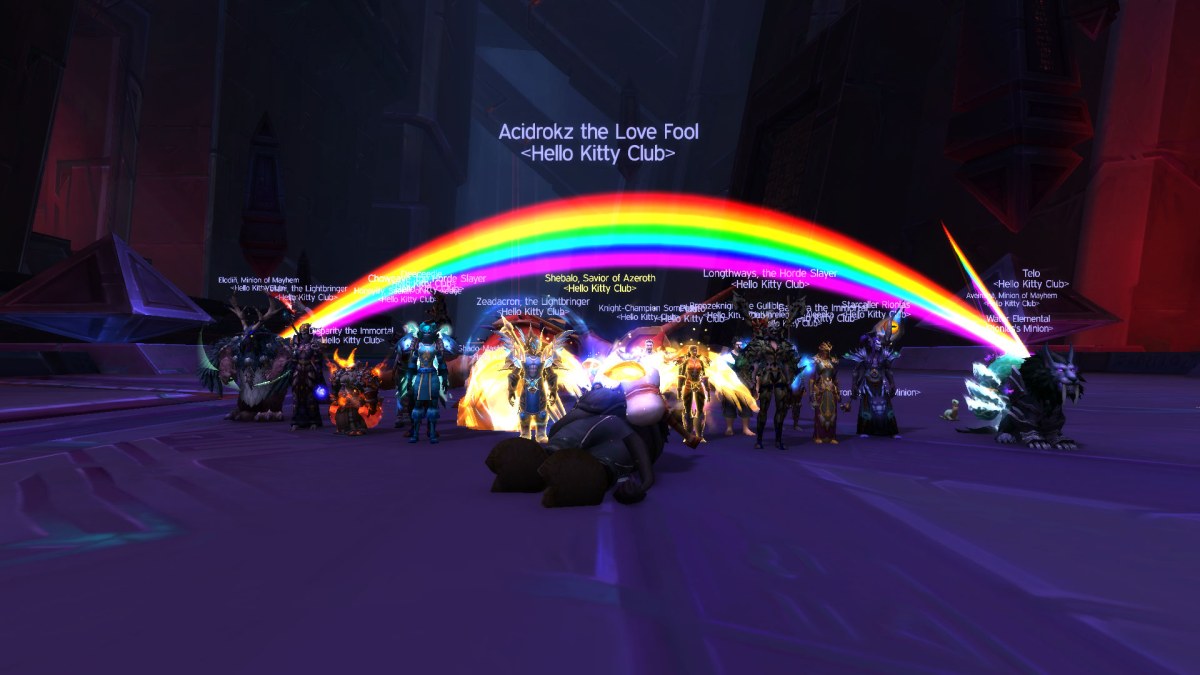
As per usual, this is going to come back to World of Warcraft (shocker, I know). I spent the morning talking to my current GM of HKC, whom I’ve known for over 13 years now. We talked about our community, the world of gaming culture, and most notably, the recent scandal with Method.

This scandal sadly has come at no surprise to me, as one who researches within and participates heavily in the competitive gamer world. The stories relayed through this news blast aren’t unique—in fact they’re far more common than many want to believe—but the more these stories come to light, the more…hopefully…we’ll come to see a change in the gaming “community.”

I’ve been lucky that I learned to navigate these worlds earlier, and have surrounded myself over time with people who support the kind of virtual space I want to be a part of, but many aren’t so lucky. That spine, was an important part of my conversation today. We have a strong and long-lasting community within Hello Kitty Club. But despite our size, we aren’t free from risk of drama (nor have we not had our share of it in the 10+ years I’ve been a part of its leadership).
IMG_20191102_175037-01
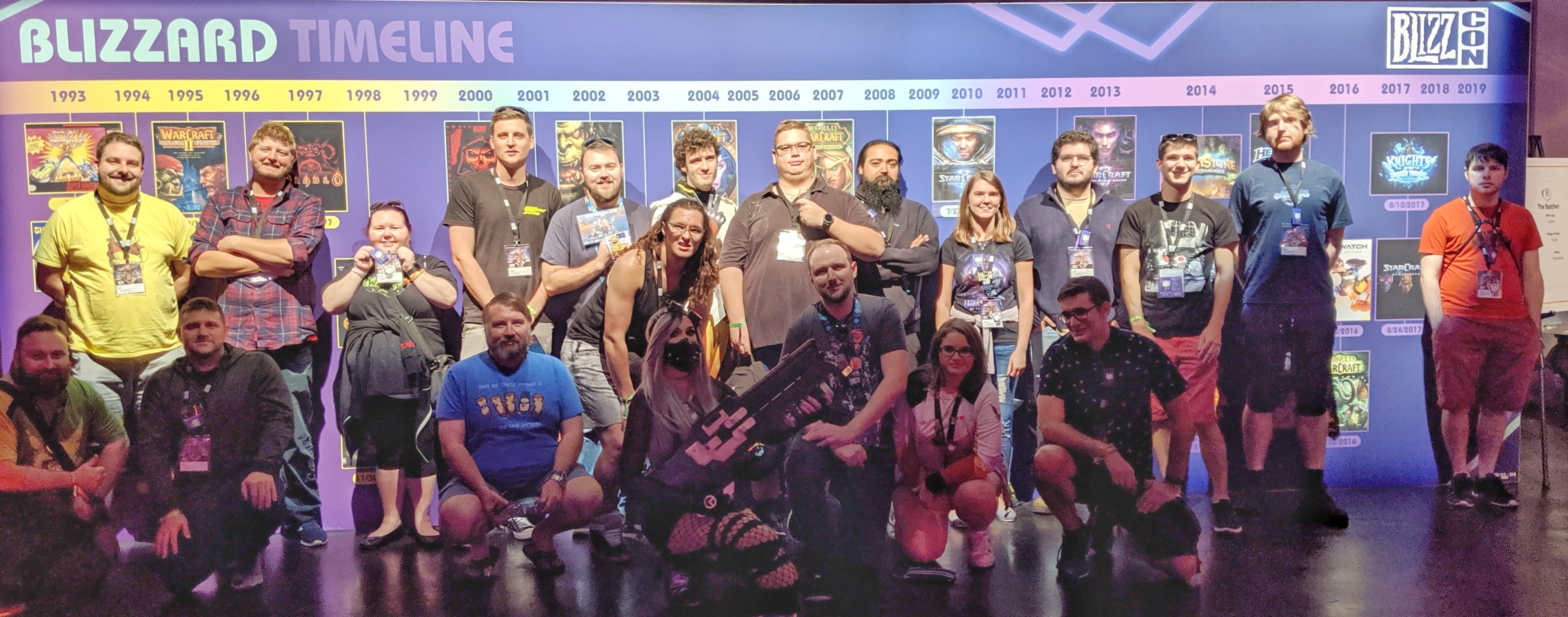
HKC BlizzCon 2019, HKC + Friends through the years (when we each joined Blizzard, approximately)


What struck me today was the willingness to work towards creating systems to stop, acknowledge, or offer recourse for situations in the same wheelhouse as what happened with Method (and others) before they even start. We aren’t some international gaming juggernaut, and yet, the importance of creating safe spaces for all members of your community, is no less important to us.

Over the years, there’s a reason why people keep coming back to HKC. Many guilds rise and fall. People disappear without a word. But for some reason, people keep coming back to us and remember us long after we’ve parted ways (or changed servers), and I can’t help but keep coming back to the question of community. We’ve evolved over the years but there’s something about our core, our attitude, our values that seems to strike a chord with people. Something we hope to soon put to writing to ensure that that energy can continue to thrive beyond the current leadership.

I mean….let’s face it, we might leave this game eventually right? (*awkward laughter*)

In the meantime though, I’m proud to be part of who HKC is today. We acknowledge our own missteps in the past but equally are learning from them in order to build a better community in the future. Even if it’s just in our one small corner of the Discord & Azeroth universes.

MVIMG_20191102_191748
HKC BlizzCon 2019, closing ceremonies

#GamerGate, Tech industry sexual harassment leaks, #BlackLivesMatter, #MeToo, and through this current Method scandal. All of these things happen everywhere, across the globe, but they are changed systematically at the small community level.

We work together to fight intolerance and misconduct at a local level and it can have a rippling effect that spreads across the whole of the industry. It’s human nature to gravitate towards what others are doing successfully. We must continue to fight, no matter how helpless it may seem by learning about these big-news items.

All news is local news, and the biggest of scandals start with the smallest of problems.

Build your communities with care and you’ll see them grow. Let them populate unchecked and you’re just setting yourself up for disaster. I’m sure Method meant well, but at some point you need to let go of old ways, evolve, and stand up for what’s right.

Change is an individual choice. Choose to build better communities, adopt more inclusive values, choose to listen to others.

Choose a better future by acting as though it were already here.

Through the Looking Glass

Popular media often serve as a reflection through which we view culture. Like mirrors at a funhouse, they can distort as much as they can show true. We’ve talked about it in class, and I’ve otherwise previously discussed on this blog (here and here), how pulp magazines can be interpreted as presenting a certain way of enacting American life. A very particular way of being a ‘proper’ citizen. As much as the stories, characters, visuals, and advertisments served to train a population to see the world a certain way, so too did the stories, characters, visuals, and advertisments reflect aspects of the world that already existed.

This week, we read topics on gender and race depiction in pulp magazines. While we have discussed these themes throughout the course, this week they take primary focus.

1889n4og4e6c5jpg
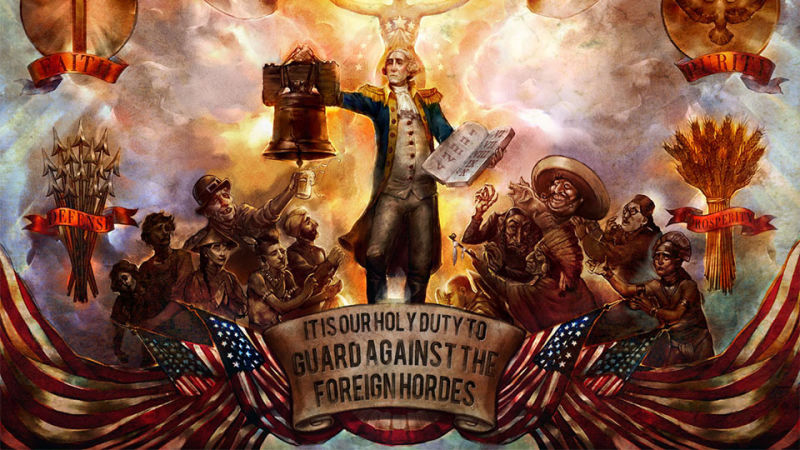
A mural from BioShock Infinite, featuring racial stereotypes of ‘undesireables’ and ‘societal moochers,’ that “proper” citizens of the game’s flying city of Columbia are supposed to protect against. This echoes a general theme of racist representations throughout the game, associated with the dominant white and affluent citizen body.

Nathan Madison explores racism in pulp magazines thoroughly in Anti-Foreign Imagery in American Pulps and Comic Books, 1920-1960. In particular, we read about “The Yellow Peril,” or rather the representation of stereotypes and orientalism within the covers of 1919 and 1935’s pulp magazines. Some of the imagery and quotations are quite jarring and unfortunately illuminating, not only for the cultures of the time, but also how long-lasting the tropes were. Towards the end of the chapter, Madison revisits the political nature of anti-foreign (particularly Chinese) climate surrounding these magazines from 1882-1930s. Laws prohibiting inter-race marriage, revoking citizenship from American women who ‘dared’ marry a Chinese man, limits to Chinese immigration.

He states on page 83:

In such an atmosphere, what do the stories found in the pulp magazines of the 1920s and the 1930s tell us about Americans, and, specifically, about their views of Asians and foreigners in general? It is difficult, and rash, to simply assign racism to such a time period that differs from the current in so many ways. One reason for this difficulty, aside from the error of attempting to impose early twenty-first century political correctness upon those living in the early twentieth century, is the contradicting evidence of racial tolerance, and even racial acceptance, on the part of many Americans at the time. For every act of the federal government that attempted to impose immigration restrictions, there was an outcry from many denouncing the racial intolerance such acts legalized.

Continually we return to the complex nature of history and scholarship. It is not enough to simply see these works and stories as reflections of rampant racism at the time. However, as Madison points out, the tendancies were there. It is hard to judge the past based on the morals of the present, and yet in many cases, I would argue, we should. As much as it ‘was different’ in their time, it does not mean we should forgive and forget what happened. In many cases these very damaging stereotypes and racial beliefs created an indoctrinating effect on the populace which persists to this day in many, albiet sometimes more subtle, ways. Amongst the stories that perpetuated the “yellow peril” within the pulps, others did try to subvert it, even to the point of having Chinese protagonists, even if stories like these were more rare.

world-war-2-propaganda
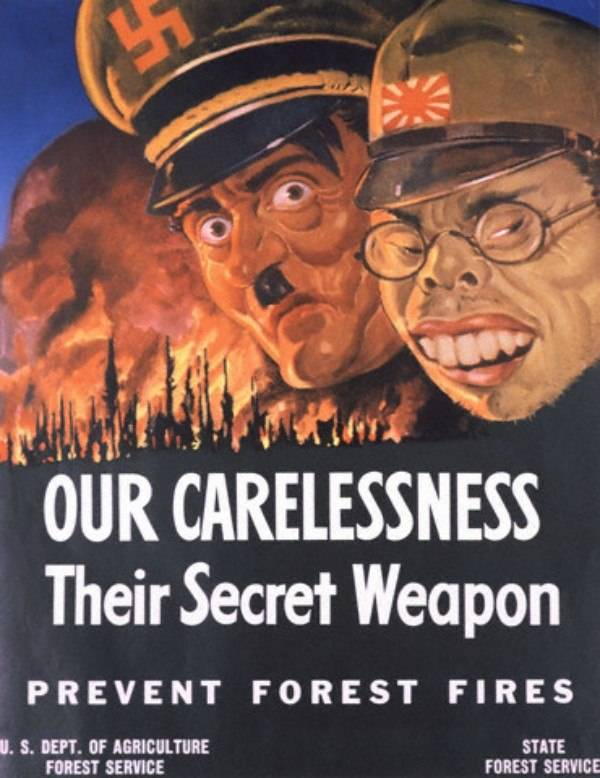
World War II Propaganda Poster

What concerns me about this side of pulp magazines is the overt propagandan nature of “yellow peril” narratives. Madison ends the chapter discussing how the discussion of “yellow” versus “white” races changes leading into World War II, thanks in part to a shift in a percieved gobal villain. He notes, however, that the legacy of this time continues much longer after the fact. We see the effect of orientalism repeat through a variety of funhouse mirrors throughout history, as people from the psudo-mythological East are demonized or exoticised to promote the master-narrative, especially in the contemporary U.S.A. these days. Propaganda narratives like the “yellow peril” catch like wildfire in cultural memory and have damaging effects on the landscape. When everything around you, from the news, to advertisements, to the entertainment you consume, tells a different version of the same story, it becomes increasingly difficult to fight against it.

It’s insidious as hell, and exactly why diverse opinions and representations continue to be important in media, and in scholarship.


spicy-detective-stories-april-1934Today is International Women’s Day, and I cannot fathom closing out this post without briefly mentioning the looking glass mirrors of gender roles in pulp magazines. That being said, I’ll be brief, as I’ve talked about gender roles briefly before.

Much like racial tropes and stereotypes, the representation of gender roles and “types” of women are equally present within pulp magazines. While there are examples of women who break the mold, often women serve as narrative elements, part of the backdrop to serve the story’s progression. Object of affection, of scandal, of motherhood…representations of women in pulp magazines echo a much longer history of one dimensional or restricted depictions that women continue to fight against today.  What I did find interesting in this week’s readings, however, was the fact that many of the writers and editors of the “girlie” pulp mags were in fact women themselves. While it is less shocking to read that women also made up a sizeable portion of the readership, I am curious as to the motivations of these women to participate in these kinds of narratives. I don’t care for the ‘morality’ of their involvement, but rather the desire to perpetuate stories of women they knew weren’t wholly true? Sex sells as they say, and I suppose writing as ‘an insider’ would provide that extra oompf that would rack in additional sales. Alas, as is pointed out, little about the authors and editors themselves is known, and tracking down any motivations for their involvement is unlikely.

All that being said, I get a kick out of the list of “do’s and don’t’s” for writing into Spicy Detective. “A nude female corpse is allowed, of course.” Naturally.

Screenshot 2018-03-09 at 12.46.35 AM
Pulp Magazines Project – “Birth of Girlie Pulps

The sad part is, while things are changing in contemporary media, they haven’t changed all that much. Here’s hoping that as consumers of media, and as scholars, we can do better, with both race and gender.

Object Meaning: What your Stuff is Saying About You, and Why it Matters.

I challenge you to think critically the next time you look at your stuff. Things are not as simple as they seem. Everything is connected in a wide array of networks that code and translate the world around us. So when you set down your venti peppermint mocha from Starbucks next to your MacBook Air and adjust your wide-rimmed black glasses, be aware that you are sending out a number of signals to people around you about who you are, what you like, and your socio-economic status—or at least an impression of those things, whether or not any of them are actually true.

And that’s perhaps the most important part. As much as our stuff sends out a lot of signals about who we are and what we believe in, we need to be aware that those signals only tell us part of the story. These networks of understanding are imprinted on us from very early ages and are highly culturally specific. We spend our childhoods observing the world around us, learning how to speak the language(s) of our cultures in words, but also in the things we surround ourselves with.

So what if then, you find yourself sitting at Starbucks, surrounded with your paraphernalia and happen to read on the internet some blog post (much like this one) that details Starbucks stereotypical patrons. You skim the list and despite fitting the criteria of many of the people listed, you don’t fully click with any of the pictures they paint. Why is that you ask? Because you aren’t white and all these stereotypes are.

We often get so lost in the messages being transmitted around us via objects and words that we forget to read between the lines of our cultural products and see some of the messages that hide themselves in plain sight.

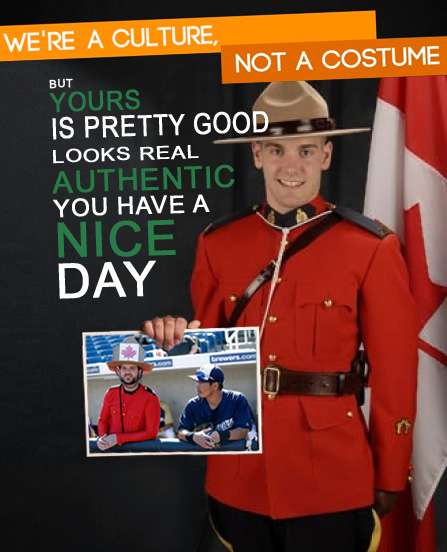
We're a Culture, Not a Costume

Take for example the phenomena we’ve seen the past few years take place on the internet about Halloween costumes. Started by a student group out of Ohio University, a campaign begun that attempted to bring down, or at least raise awareness about the insensitivity of, race or culture-based Halloween costumes.

Most of the comments and blogs posted about this campaign try to claim that people are just becoming too sensitive. That being PC has run away with itself, leaving nothing left for us to have fun with. This of course is far from the truth of what’s actually going on. These comments neglect these very same networks of understanding that permeate our cultural interactions and ignore the crossing of them that is taking place on the hem of these costumes.

In truth, the whole thing really isn’t about the costumes. When we take a deeper look at what’s happening behind this campaign and its responses, we find the interplay between social, cultural, political, racial, and historical contexts all thanks to different understandings of stuff and cultural identity.

During Halloween people generally believe that they should be able to dress up as whatever they want. In recent years these costumes have changed to incorporate more than your traditional ghouls and goblins from B reel horror movies—adding into the mix pop culture icons alongside these problematic racial guises. While inversions and dressing up as something else is nothing new—with ties dating back to Ancient Rome and the Middle Ages—the intersections of these disjunctive ideologies, contexts, and histories are bringing out latent race tensions within the population.

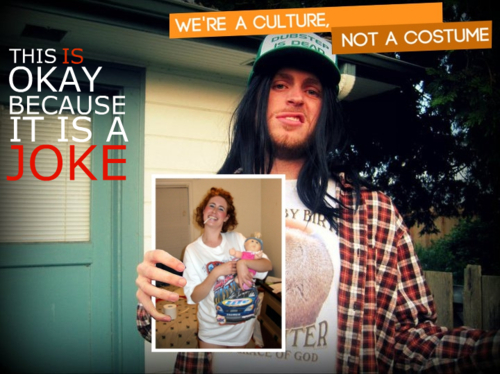
tumblr_ltjtbtNarq1qmt8uro1_500In all the posters promoted by the campaign, the offenders are always white and the wronged parties come from traditionally minority ethnic or cultural groups. The claims made against cultural adoption also follow this pattern. You’ll never find an official campaign poster showing a POC dressed up as another POC. All we find are pictures of white people metaphorically rubbing their superiority in the faces of subjugated populations, or so we’re made to believe.

In her blog post “That’s Racist,” Alex Felipe counters most of the problems raised by this debate quite succinctly:

“I don’t understand why the call is basically for White people NOT to do it Full stop. I mean why is it that we see costumes based on traditional dress racist? The usual refrain is: ‘we are a culture, not a costume.’ But if this is the case, would it not also be proper for Whites to decry costumes based on horned Vikings…or medieval knights? Now the answer to my question is obvious. It’s not the same because of the disparity in power relations.”

She continues, “When we people of colour see these costumes we are reminded of our subordinate place in society. We are reminded that our countries of origin were ravaged by colonialism, and are still exploited through modern imperialism…why do we stop at simply calling out the costume…If the costume is a symbol that offends…why do we stop at the symbol and not continue onto what it symbolizes?”

There’s no consensus on how we can deal with this situation but as an anthropologically inclined blog, my goal has been to try and draw your attention to our tricks of the trade—context. We need to be aware of how our stuff affects how we understand and live in the world not just for the good of ourselves, but also in how we can do better for others. We are limited in how we interpret the world by our own personal histories and cultures but in taking charge of that information we can start to have a dialogue with others in order to learn how to see each other’s side of the story.

Keep it all in mind, the next time you take a sip of your coffee or go to buy your next Halloween costume. It’s not all just black and white, right and wrong—the whole web is much more complicated and varied than we think. The phone or computer you’re reading this on, even now, probably says something about you just as pointedly as the status updates you post on Twitter or Facebook. And not all of it is necessarily good, so it’s probably best to keep it in check. Be aware, be conscious, and don’t let your things say more about you than your words or actions. No one wants to be reduced to what they can only see on the surface.

259