


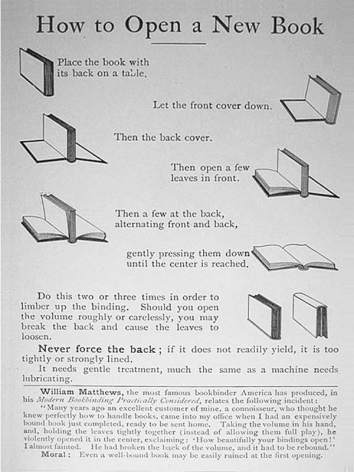
After class this week, I was elated to receive our pulp magazine in the mail, timely and well-packaged. I slipped it carefully out of its protective sleeve of cardboard and plastic, before gently flipping through its pages. Hints of stories to read flashed before my eyes as I gingerly touched its fragile pages. Then it struck me, I needed to document this magazine–to scan its pages, and upload them to the PMP. While I had known this all along, I was suddenly disheartened. The well-preserved mag possessed a very deliberate spine that didn’t seem to want to give way, even to read it wide open. Conservation would be troublesome at best, and I feared that I would have to break the spine in order to scan it properly. What is lost in breaking the original so that a digital copy may live?
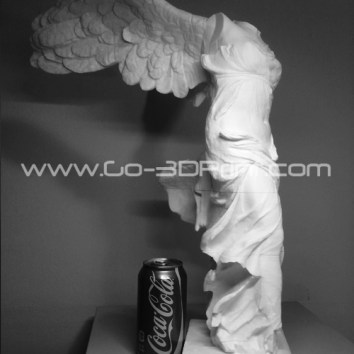
 A very à propos question to be sure, following our discussions from this week. What is lost in the digital preservation of pulp magazines? What is gained? We spent a great deal of time analyzing the ways in which scholarship and individuals could benefit from a database like the PMP. For my MA thesis I spent a great deal of time looking at archaeological artifacts and 3D replicas. In order to do this, I analyzed the semantics and meaning-networks of ‘originals’ vs. their digital replicas. While my thesis was focused on actual material replicas, I briefly touched upon purely digital replicas as well. Mass-access, availability, and production were all benefits to such a phenomenon. While not going into the ethics of digital replication (mainly of cultural objects you may have no authority to duplicate), I came to the conclusion that the benefits of digital reproduction and preservation outweighed the costs, at least for educational purposes. Most relevant to our topic this week however, I found that meanings and that something extra held within an original artifact only has meaning because we give it meaning. While something can be argued for seeing ‘the real thing,’ many people would not know any different if presented a reliably produced replica. While the old must of a vintage pulp magazine may be hard to duplicate, I wouldn’t be surprised if there were propmasters who could come up a solid approximation for the layperson, which would be indistinguishable, save for perhaps having them side by side.
Suffice to say, there are dangers to certain kinds of object-replication. In the case of the PMP, and something that never occured to me before I held one in my hand, is the potential need to break the spine in order to accurately scan the magazine. In this way, the original is broken, is altered due to digitization. My research explored non-invasive digitization of artifacts, and as a result, this adds an entirely new element to such a study. Do the scales shift when the act of digitization destroys, or at least alters, the thing we’re trying to save? Does the good of the many [scholars] outweigh the needs of the few [magazines]?
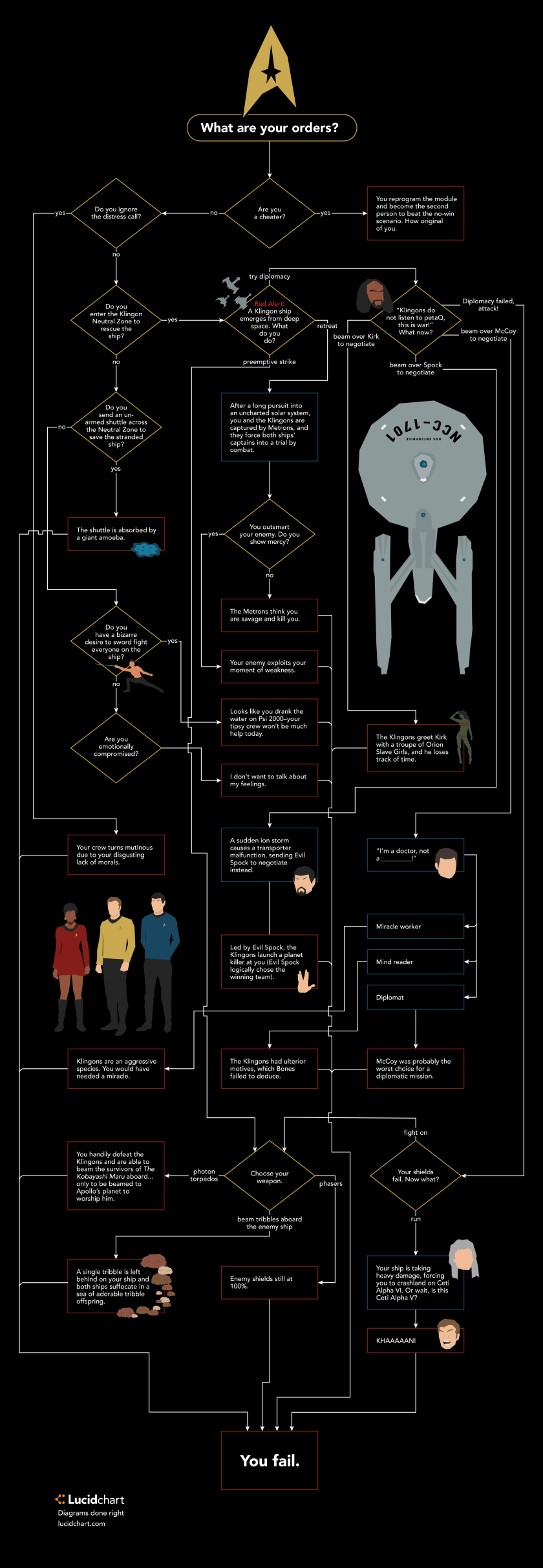
I have to say I’m philosophically at a loss as to the most correct answer in this regard. My inner archaeologist wants me to preserve the original at all costs. That being said, my inner scholar would rather see it digitized before the original crumbles to dust. That’s the thing about paper objects versus stone tools or clay pots–they deteriorate so much faster, and are in so much more need of early digitization to preserve their integrity. It would seem to me that in this case, that Spock was more correct than Kirk at the end of The Wrath of Khan. Sacrificing the physical integrity of the original object for a prolonged digital life, feels as though it’s the right thing to do. The paper copy will ultimately fade and fall apart, even with perfect preservation. It will deteriorate. Pulps were not made to last after all–it’s a miracle we have as many as we do. A digital replica, at least we hope, will never fade beyond the moment the original is scanned. It can be transmitted, duplicated, and shared without fear of lost pages or damages. In an ideal world, one can save both the magazine and create a perfect replica, but I have yet to see if we can pull off a proper Kobayashi Maru. Or are we, like Starfleet officers in training, meant to accept defeat for the greater good?
It seems to me that it’s good our group chose sci-fi after all. It has so much to teach us.
 My Life, or Something Like It