

The Legacy of Cheat Codes & The Game Genie

In order to truly understand the how and the why of cheating in videogames we need to look back at some of the earliest examples, namely the inclusion of cheat codes or inputs alongside off-brand cheating systems, like the Game Genie.

81hglu5s7ml-_sx342_
The original console command system.

Perhaps one of the earlier, and most well-known of these sanctioned cheat codes created by developers was the Konami code, or the Contra code, first ‘discovered’ in the original NES Contra game. This code, ↓ → → B A START, was found not only within this title, but also within other Konami games, hence earning it’s primary title as the “konami” code. Later it later became a staple of ‘gamer’ culture, appearing in non-Konami games, on clothing, and other paraphernalia. How does a code, one that gave players a mere 30 extra lives, an official cheat-system, gain such a cultural traction? It wasn’t just Contra and Konami games either that featured cheat codes like these in the earlier days of console gaming. Sonic 2, featured a level-select option within the ‘sound test’ section of the options menu, among other choices like debug mode or unlimited lives. Even games like Disney’s Aladdin featured a level-select mode on its Option menu, mirroring the style of the Konami code: A, C, A, C, A, C, A, C, B(x4).

While cheat codes were primarily instituted by game developers for playtesting purposes (having unlimited lives is a really good idea if your job is to potentially find glitches via death in Sonic), they were clearly never taken out of a wide array of games. Alongside the question of the popularity of cheat codes, we can similarly ask why these were left in at all by the developers? In the case of games like Sonic 2 or Aladdin, level-select was a very useful option for players who had beat the game a number of times and didn’t want to “work their way through” again, only to get to their favourite level. Lacking a cartridge save option, something that would be later included with Sonic 3, it made sense for players to have access to these kinds of perks, after being “in the know” to find them. That being said, Sonic 3 continued the tradition of cheat codes and still had its fair share of cheats.

It also wasn’t just thanks to the great sleuthing of early videogame fans that we found out about these codes either, in the pre-launch and early years of the internet. Participating in cheat code culture in social circles, scribblings in the back of Blockbuster rental copy game books, and even licenced game magazines like Nintendo Power, or even strategy guides, often included these to help other gamers find them. Soon after, the pseudo-mythological state of the cheat code was born, and it felt like everyone was on the lookout for the next one they could share with their friends, or fellow rentee.

Official codes weren’t the only things that players found in efforts to modify their gaming experiences at this time. The discovery of glitches, exploits, and in-game skips were also common inclusions in this realm of “cheating” and modification. I can remember playing the original Pokemon Blue and learning about the different ways I could cheat the code and glitch it into giving me things like unlimited pokeballs or items, alongside even getting a Mew super early in the game. A lot of these kinds of glitches, the Mew nonwithstanding, required access to other Gameboys or different bits of technology to get them to work. Following clever-use-of-game-mechanics (as Blizzard loves to label it), players could flash-restart, controller switch, or cartridge remove-replace their way to a whole array of new things that were very much part of the original code, even if not used as intended.

pokemon-red-blue-yellow-mew
Fancy meeting mew here.

Unlike learning that Mario can skip a bunch of worlds by dropping behind a white block in Super Mario Bros. 3 and using some fancy flute play, these kinds of glitches were off the books, even if their inclusion in the game was somewhat ‘intentional.’ We can take this to the next level at this point, to consider once again the Game Genie, and perhaps it’s odd and sanctioned cousin, Sonic & Knuckles.

The Game Genie was a 3rd party development released for a number of the early consoles, including the NES, SNES, Gameboy, and Sega Genesis. The device came with a book of codes which allowed players to cheat their way through a variety of games through the Game Genie’s bypass system. Essentially, because the device acted as a mediator between player, console, and cartridge, it allowed for the system to read the game code emitting from the cartridge differently from its actual output, allowing for the player to reap the benefits. In addition to the codes that shipped with the device, players were able to create their own codes by random generation, or even could subscribe for updates via a paid service. It was quite an era for cheating. However, it should come as no surprise that Nintendo in particular fought back hard against the system, trying to claim it infringed on copyright. The legal case settled in Game Genie’s favour, however, and their ‘unsanctioned’ cheats were safe.

In contrast, Sega was in full support of the system, as long as it didn’t provide cheats for games which allowed for saving. Sega’s approach to software circumvention adds an interesting layer to an analysis of cheating in videogames, as it again suggests that cheat codes, even unsanctioned ones, were meant to help players bypass unwanted content when saving along the way was not an option. It’s unsurprising that they followed this ideology, as Sonic & Knuckles allowed for players to have a pseudo-sanctioned version of the Game Genie already. The cartridge had a slot on the top which was intended for players to insert only Sonic games into it, allowing Knuckles to join the fray of Sonic 2 and others. Instead, it also allowed for players to have randomly-generated Chaos Emerald stages in the Sonic 3 style based on the code of nearly any Sega game that was inserted.

aqg1dwlhj9sx
Sonic & Knuckles stacked with Sonic 3 to create Sonic 3 & Knuckles

More commonly today, we see these kinds of cheats available through ROM-hacking emulators, console commands (PC), or unofficial patching/editing by the savvy game community. Further still, all of this so far has been related to software or “soft” cheating and modding of videogames, not even considering the hardware or “hard” modification, which requires going in and tweaking the actual hardware in order to run things you weren’t intended to. While there isn’t time to discuss this fully here, it’s interesting to consider again that by virtue of their design, videogames require an entirely different kind of systems for modification than their board game cousins. After all, it’s easy enough to make up your own pieces for a board game versus wanting to play N64 games on your Xbox 360. Yet again, there are also often more legal issues surrounding hardmodding, as we saw recently with Nintendo and modding chips.

While it’s becoming increasingly rare to see “official” cheat codes in video games (except in the case of games like The Sims, though more on that in a later blog), we do see the inclusion of console commands and the ability to modify games through “mods” available instead. We’ll look into this realm of modding and cheating later, but it highlights something within the gaming community: we can’t let games be. As soon as a game is released, especially for current systems, we are continually seeing them adapted, cracked, modified, and eviscerated by the community so that the original intended experience is no longer the only one we have access to. Why does there seem to be such an essential ‘need’ to cheat?


Academic References/Further Reading:

Bogost, Ian. Persuasive Games: The Expressive Power of Video Games (2010)

Why I’m Excited for the Nintendo Switch (And Why You Should Be Too)

When was the last time you got really excited for a console release? Ripping apart shreds of Christmas paper to reach your shiny new Nintendo 64 type excited…

I have been pretty fazed since the most recent generation transition from Xbox 360/Xbox One, PS3/PS4, and of course the Wii/Wii U debacle. Back in 2005, I built my first gaming-ready computer and in watching gaming trends, apart from certain console-specific exclusives, I haven’t felt the draw back to hitting the mean streets of console-land ever since. I was an avid console gamer from my first Sega Genesis system, and I was surprised to find such an easy transition to PC gaming when I finally made the leap. With the dividing lines between PC and console gaming becoming narrower, the decisions gamers must make about what to play on, requires more work on the part of companies to make their hardware stand out.

I’m sure many of us have at least dabbled in a form of mobile gaming other than our phones, if not having a DS or Vita kicking around collecting dust, outside of road trips or Pokémon title launches. As far back as Game Gear, or the original Game Boy, we’ve been kicking it mobile long before phones received anything more enticing than a game of Snake (and no, I don’t mean MGS). As phone-based mobile gaming has taken control of a strong share in the larger gaming market over the years, handheld gaming systems are struggling to find new ways of enticing consumers.

A closer look at the breakdown from last year.

Enter the Switch.

The Nintendo Switch purports to be an entirely new console experience. Seamlessly switching between an at-home console experience to a handheld one, as its namesake suggests, Nintendo seems to have put all its eggs in a convertible basket in order to try and stay relevant. And dare I say it? I think it’s worked. Players like me who have shied away from the brand as of late are drawn back in not only due to its innovative design, but also its attention to graphics and detail. Still the Nintendo we know and love, it has chosen to evolve and serve a consumer beyond the family-with-kids demographic. Surely, that market is not isolated from this design, and is in truth included, other gamers have more to find in the Switch than any Nintendo console since the 64. The goal to bridge the gap between home and mobile play will not be easy for Nintendo to breach, but they have a solid grasp on their attempt to try. Leading with one of the most gorgeous Zelda games in recent years, certainly helps Nintendo here as well.

While time will tell if the Nintendo Switch will be a hallmark of nex-gen gaming, like we expect to see out of augmented and virtual reality kits, remains to be seen. However, gamers can be sure that the hype is real, and is not unfounded. I’ll certainly be keeping an eye on the Switch as it releases this week, and I hope you join me.


What is your opinion on Nintendo’s latest release? Gimmick or game-breaking shift in console design? Let us know in the comments or join in the conversation on Facebook, Twitter, or Discord!

5 IPs That Should Be MMOs

Share on FacebookTweet about this on TwitterShare on RedditShare on TumblrShare on Google+Email this to someoneShare on LinkedIn

Recently, The Elder Scrolls made its transition from single-player campaign to a full MMO experience but there are plenty other franchises could be successful online communities. 

Continue reading “5 IPs That Should Be MMOs”

Pokémon GO Updates: August 8th

android pokemon go

If you’ve been playing Pokémon GO, or at least know someone who has been in its thrall the past few weeks, you’ve certainly encountered any number of issues plaguing the global phenomenon. Today, Niantic has taken steps towards solving some of these. The biggest lament of late, other than the shutting down of Pokévision and its like, has been the loss of tracking and a useful “nearby Pokémon” list. In the current patch notes, a variation of the current system is out for testing in the wild by a subset of Pokémon trainers. Accompanying this, according to Niantic, may also be an alteration of the existing Pokémon UI. In addition to general bug fixes, as well as some more detrimental ones, Niantic has added additional dialogue reminders to curtail playing while driving. A dialogue box will now not only ask players not to play above certain speeds, but also to require confirmation from Trainers that they aren’t Poké-driving. Trainers have also been given a one-time use name change option in the latest patch.

While it may not address issues for Trainers like Pokémon disparity in rural vs. urban centres, or pedometer failures, the promise of a return of any kind of reliable in-game tracking option is a welcome improvement.

For full details, please see the current patch notes: version 0.33.0 for Android, and 1.3.0 for iOS.

Images © Nintendo


Share Buttons

Share on FacebookTweet about this on TwitterShare on RedditShare on TumblrShare on Google+Email this to someoneShare on LinkedIn

Check DVS For More Pokémon News!


  • BrookstoneAdBanner
  • TheEconomistAdBanner
  1. 1
  2. 2


This Day In Gaming History: July 12

 Thisdayingaming

This Day in Gaming History is an editorial released 2-3 days per week, that takes you on a ride in its custom-built gaming history blue box. We take a look at titles all released on the same day throughout gaming history, while also giving extra facts and anecdotes as available or appropriate. Got a favorite game that you want to learn more about, or perhaps want to see featured on TDIGH? Send angel1573 a message on the forums, or leave a comment below!

While today’s post will be brief (a topic which will be discussed further in coming weeks), its a heavy hitter comes from a franchise which seems to be on everyone’s lips these days. If you haven’t been living under a rock, I’m sure you’ll catch my meaning. Whether or not you’re ready to master what we have in store for you today, it’s time to dive in and go!

CASTLEVANIA II: BELMONT’S REVENGE [JAPAN] (GAME BOY)

Also translated as “The Legend of Dracula“, and not to be confused with the NES game Castlevania II: Simon’s Quest, this title was released for the Game Boy on this day in 1991. The second title to be released for the Game Boy handheld, and sequel to Castlevania: The Adventure, it is set fifteen years after the events of its predecessor. Released in color in later versions, Castlevania II: Belmont’s Revenge was applauded for its inclusion of classic Castlevania items, and weapons, while also making better use of the Game Boy’s hardware than its predecessor. The title follows the story of Christopher Belmont and his quest to save his son and Transylvania from Dracula in newly regenerated human form.

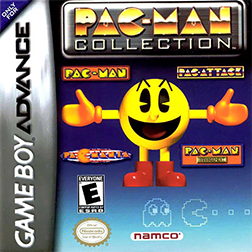
PAC-MAN COLLECTION (GAME BOY ADVANCE)

A compilation of four Pac-Man titles–Pac-Man, Pac-Mania, Pac-Man Arrangement, and Pac-AttackPAC-MAN Collection was released on this day in 2001. While the first three titles are all classic Pac-Man, and follow general Pac-Man gameplay, Pac-Attack is a falling-block puzzle game much like Tetris, and was originally released for the Genesis and SNES consoles. Due to the small screen of the GBA, players are given the option to view their chosen title in two different methods. In scroll-mode, the field of view automatically scrolls to follow Pac-Man, whereas full-screen shows the entire field of view in miniature form. With the exception of Pac-Attack, the player can tweak various settings such as lives, difficulty level, or bonus life counters, similar to the DIP switch enabled settings in the original arcade machines. The title was criticized for cutting out pieces of music and sound effects, a lack of save functionality, and inconsistencies with the field of view methods. Overall, however, the title was well received.

POKEMON BOX: RUBY & SAPPHIRE (GAMECUBE)

Last but not least, with all the Pokémon Go news since launch, it seems very appropriate that we should look at another Pokémon title. Originally available in North America, and only at the Pokémon Centre in New York City, Pokémon Box: Ruby & Sapphire was released on this day in 2004. More Poke-utility than game, for the days long gone where storage was a massive problem, Pokémon Box allowed players to store up to 1,500 Pokémon from Ruby or Sapphire. It allowed for ease of collection, organization, and searching of said Pokémon, and also allowed players to play Ruby or Sapphire on their TVs. In Europe, the box could be purchased in a GameCube bundle, which included Pokémon Colosseum, a memory card, and a GBA-GB game link cable. The title also facilitated transfer of Pokémon between Emerald, FireRed and LeafGreen.

The game also connects with GBA directly, allowing Trainers to deposit their Pokémon without having to trade. Once stored, players can view a spreadsheet-like stat list, featuring categories such as: original Trainer, moves, Pokémon Contest stats, friendliness, and level. Pokémon Box also features a “showcase” mode, which allows players to create a stage from a combination of ten backgrounds, ten stage patterns, and five types of display pieces, alongside one of eight music tracks to show off their selected Pokémon. The title has certain limitations before it can be used with any of they aformentioned Pokémon titles, all of which include having caught at least 100 Pokémon in their in-game Pokédex, plus additional title-specific requirements. After a certain number of Pokémon are deposited within the game cartridge, the player is gifted a Pokémon Egg, which will hatch into a Pokémon with a special move it would not learn normally. This move can be passed down through breeding.

Images © Konami, Namco, & Nintendo


Some other titles released on this day:

  • Warpman (Japan) – NES – 1985
  • FlatOut – Xbox/PS2 – 2005
  • Resident Evil 4: PLATINUM – iOS – 2009

This Day in Gaming History: June 23

Thisdayingaming

This Day in Gaming History is an editorial released 2-3 days per week, that takes you on a ride in its custom-built gaming history blue box. We take a look at titles all released on the same day throughout gaming history, while also giving extra facts and anecdotes as available or appropriate. Got a favorite game that you want to learn more about, or perhaps want to see featured on TDIGH? Send angel1573 a message on the forums, or leave a comment below!

Today, we’ll be returning to some classic titles and franchises, household names, and iconic characters in gaming history. Creations of the earliest console wars, their characters continue to be used as symbols for their brands. From the early days of Sonic the Hedgehog, through to a new generation of Mario and Link, let’s adventure alongside our childhood heroes on This Day in Gaming History.

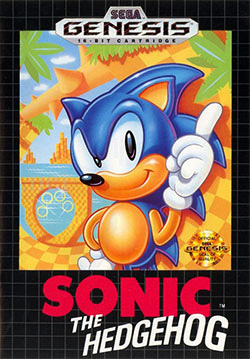
SONIC THE HEDGEHOG (SEGA GENESIS)

Released simultaneously in North America, Europe, and Australia on this day in 1991, Sonic the Hedgehog became the first game of the Sonic franchise. Following the game’s development in 1990, and after deciding on the anthropomorphic traits of Sonic, the team renamed themselves the “Sonic Team” to match their new character. Influenced by the Super Mario titles, Sonic the Hedgehog introduced a new technique to platforming: the ability to roll along curved scenery. Over time, this ability would evolve and become an integral part of Sonic’s gaming identity. The title itself was well received by critics, who praised its visuals, music, and pace of gameplay. The game was also commercially successful, helping to make the Sega Genesis console a key player in its era of console gaming.

In the 1991 holiday season, the Genesis outsold the Super Nintendo by a two-to-one ration, and in January of 1992, it peaked to claim 65% of the console market share. While Nintendo eventually overtook Sega, it was the first time since 1985 that Nintendo did not lead the console market. Sonic the Hedgehog has been ported to various media since, alongside clones and inspired offshoots, including various “animal with attitude” platformers like Aero the Acro-Bat, Earthworm Jim, or Crash Bandicoot.


NINTENDO 64 CONSOLE & SUPER MARIO 64

N64

Launched alongside one another in all markets, on this day in 1996 the Nintendo 64 console and Super Mario 64 were launched in Japan. Initially codenamed “Project Reality”, the design was finalized by mid-1995, but its launch was ultimately delayed until 1996. The console primarily competed with the PlayStation and Sega Saturn, as part of the fifth generation of console gaming. Alongside Super Mario 64, the console was launched with Pilotwings 64 worldwide, and Saikyo Habu Shogi in Japan only. The console was launched in a variety of colours and designs, including limited-edition controllers and systems.

The N64 was highly anticipated and was met with great praise as a result for its power and gaming delivery–allowing for a more powerful generation of games. The system was in high demand upon release, and during its first three days on the market, retailers sold 350 000 of 500 000 available units. However, the decision for the console to use cartridges rather than discs resulted in tapered sales and more expensive games than its counterparts. Ultimately, the N64 remains one of the most iconic consoles in gaming history, not only for its own profile, but also the games released for it.

Super Mario 64 is the best selling game of all time for the Nintendo 64 console, having sold more than eleven million copies worldwide. A remake was launched on the Nintendo DS in 2004, entitled Super Mario 64 DS and features modifications to the original title. The game left a lasting legacy on 3D game design, particularly with camera design and 360 degree analog control. Super Mario 64 is lauded by critics and fans alike as one of the greatest and most revolutionary games of all time.

Countless titles which followed its released were influenced by Super Mario 64‘s design, including: GoldenEye 007, the Grand Theft Auto series,  Kingdom Hearts, and countless others. Dan Houser, a prominent figure in the development of GTA, stated “Anyone who makes 3D games who says they’ve not borrowed something from Mario or Zelda [on the N64] is lying.” On May 5, 2011, Super Mario 64 was chosen as one of the 80 games to be displayed at the Smithsonian, as part of the “The Art of Video Games” exhibit which launched the following year.


PHANTOM HOURGLASS (NINTENDO DS) [JAPAN]

Much like the other two (or three if you’re going to be technical) gaming behemoths in our list today, The Legend of Zelda: Phantom Hourglass is another title in a long list of games in the Zelda franchise. An action-adventure game released on this day in 2007 in Japan, it is the fourteenth installment in the greater series, and the direct sequel to the 2002 Gamecube title Wind Waker. The game has been re-released for the Wii U via the Virtual Console in North America as of May 2016. The title features 3D cell-shaded graphics and an overhead camera perspective. Players utilize both the touchscreen and the microphone, alongside traditional controls, to progress the story.

While the title and its gameplay were generally praised upon release, Phantom Hourglass was criticized for its online features. Receiving several industry awards, the game would go on to sell 262,800 copies in its initial month in the U.S. By March of 2008, 4.13 million copies had been sold worldwide. Phantom Hourglass was praised as one of the better games to be launched on the Nintendo DS handheld. While the game changes pace and tone when compared to others like Twilight Princess on the Wii, it remained a worthy successor to Wind Waker. Several websites named it the 2007 Game of the Year for the Nintendo DS, and was listed as such in many mainstream magazines. While a point of criticism for some, the title was simultaneously praised for being the first Zelda title to successfully attract casual players.

Images © Nintendo & Sega


Some other titles released on this day:

  • Phantasy Star Online: Blue Burst (PC) – 2005
  • Dynasty Warriors 6 Empires (PS3) – 2009
  • Pokemon Black & White Version 2 [Japan] (DS) – 2012
  • Batman: Arkham Knight (PC/PS4/Xbox One) – 2015

This Day in Video Game History: April 14th

Continue reading “This Day in Video Game History: April 14th”

This Day in Video Game History: April 10th

Continue reading “This Day in Video Game History: April 10th”