
Consoles V. Computers: The Biggest Bang for Your Buck

It’s probably one of the oldest battles gamers have ever known: console or computer? Luckily we’re not here to settle the debate, but rather to give you an idea of what you’re getting into.

When faced with the prospect of upgrading your PC or changing consoles, most gamers will hit the internet. Either to talk to their greater social media, or to scour various forum posts and reviews in order to figure out where their money is better spent. Unfortunately for most gamers, this decision is not made lightly, and is often more complicated than simply spending what you have on hand. When purchasing your primary gaming system, are you in it for the long haul?

Source

Dollar Days

When investing in your gaming rig, price point is probably the most limiting factor. Do you only have $200-$300 to spend? Can you invest more than $800? While consoles are generally cheaper in the long run, they provide a lot of power for a smaller price tag. They’re guaranteed to work out of the box (or at least come with a warranty if they don’t), and usually come in bundles providing at least one game for you to get started. While extra controllers, fancier cords, and more games will cost you additional rates, a console will still offer you instant gaming at a reasonable rate. In addition, many online or local game resellers can provide used consoles at an even cheaper rate–not a bad deal.

Building your own PC however, or buying one pre-made, is a much larger initial investment than a console on average. In the long term however, it might actually provide better gaming benefits. While consoles aren’t quite aging as fast as they used to, the fact remains that a well-built computer will last you much longer than the current system en vogue. Games will load faster and generally look prettier for longer than a console can provide. Additionally, if you have a lot of gaming friends who have built their own rigs, chances are you can scoop up used pieces for a reduced or no cost to help offset the price point. Old monitors, computer towers, mice, keyboards, or speakers, are often held onto and passed down between gamers as needed. While most gaming computer builds will never be as cheap as their console bretheren, the benefits of their longevity help offset the costs.

Longevity

While consoles don’t age quite as fast as phones or cars, the truth remains that when buying a console you have a set number of days before it goes out of date. While new models are often released for existing systems, eventually, the newest system will come and replace it–often leaving you with an empty feeling before the joy of a new system kicks in. Additionally, consoles generally cannot be updated with additional power boosts unless you really know what you’re doing. And even then, it can be risky. Often, computers can be upgraded with minor improvements or additional sticks of RAM, which help to keep your games moving.

While longevity might be lacking for consoles in terms of playing the latest and greatest titles, older gaming consoles have proven their nostalgic staying-power. If getting your hands on those original SNES or SEGA games is what you want out of your gaming experience, you really can’t beat going the system route–computer emulators just aren’t the same.

Source

Exclusivity, DLCs, Social Media, Oh my…

Computers and consoles each come with their own cultures and interests. Similarly, each also often have their own exclusive game titles, DLCs, or social circles which do not necessarily play well between platforms. That one great FPS you’ve been waiting for a sequel for might only be coming out on a given console, locking in your purchase. Similarly, the group of friends you play with might only play their action-adventure game on their computers, and while a console version is available, they are set up on different servers. Do you like sharing everything you do to your various social media? You might be limited in what kinds of sharing you can accomplish based on which system you choose. Sadly quite often there are circumstances outside of a gamer’s control, which dictates the way they’ll spend their money, given the chance.

So What Should You Do?

Source

 When weighing the benefits of either gaming method, it’s clear that the decision isn’t easy. So what should you do?

TLDR: Consoles

  • Plug and play: a great gaming experience right out of the box, no adjustments necessary!
  • Lower up front cost investment.
  • Will likely have exclusive DLCs or titles that will not be available on a computer.
  • Great deals on used consoles and games, and the ability to relive the nostalgia of older systems in true form.

If you only have a bit of money to spare, and you want to start gaming now, a console is probably your best option. With a low end cost, you’ll have more money to spend on games for as long as the system is supported.

TLDR: Computers

  • A higher cost investment initially, but its power will likely last much longer than a console, even with minor tweaks.
  • A wider variety of titles available, including the option for modding your games.
  • More sales on newer and indie games (e.g. Steam).
  • A lot of options for sharing or interacting with your social sphere without having to rely on built-in options.

If you have a bit more to spend up front, and want to have more control over your gaming experience, then a computer is your best bet. Whether you build it yourself, or buy a pre-made system, a computer’s components are likely to outlive a console’s power in the long term, allowing you to game for longer without having to change things up.


Source

Whether you decide to buy a new console or build a PC, there are tons of gaming options available. Controllers are no longer console-exclusives, consoles are integrating more cross-platform interaction, and built-in emulators allow you to play your favourites no matter whether you’re looking at an Xbox or Windows UI. After all, it’s not what you game on, but how you game, that truly matters.

Featured Image Source

KH3 Prologue Gets New Launch Date & Trailer

During the 2016 PlayStation Press Conference in Japan earlier today, updates were given on a number of titles. This included Final Fantasy XV, as well as the new PS4 System Software Update. For dedicated Kingdom Hearts fans however, it was announced that the prequel to Kingdom Hearts 3 would be delayed until at least January 12, 2017 in Japan, and January 24, 2017 in North American markets. In E3 2016, Kingdom Hearts 2.8 Final Chapter Prologue (KH2.8) was originally set for a December 2016 release.

While slipping release dates are not uncommon in gaming production, hardcore fans of the series may worry that this delay will further push the highly anticipated Kingdom Hearts 3 down the line. However, the launch of the prequel will hopefully give fans something engaging to tide them over until Kingdom Hearts 3 is released. A new trailer for KH2.8 was launched alongside the announcement, featuring stunning graphical updates to the engine as well as an overview of what’s to come. KH2.8 itself is built from the KH3 engine and will include a new storyline to set the stage for KH3‘s events. The title also includes a remaster of Kingdom Hearts: Dream Drop Distance, as well as a new side-quest story, Kingdom Hearts Chi: Back Cover.

Unfortunately, Kingdom Hearts fans will have to wait until later this year for further information about Kingdom Hearts 3.

This Day in Gaming History: June 14th

This Day in Gaming History is an editorial released 2-3 days per week, that takes you on a ride in its custom-built gaming history blue box. We take a look at titles all released on the same day throughout gaming history, while also giving extra facts and anecdotes as available or appropriate. Got a favorite game that you want to learn more about, or perhaps want to see featured on TDIGH? Send angel1573 a message on the forums, or leave a comment below!

Things are falling into place today as we take a look at one of the most well known video games of all time, we delve into a Playstation 2 experiment title ahead of its time, and revisit one of the Playstation 3’s best story-driven titles; all on This Day in Gaming History!

TETRIS (GAMEBOY) [JAPAN]

Originally released on June 6th in 1984, Tetris found its way onto the Game Boy on this day in 1989 in Japan. Tetris was the first entertainment software to be exported from the then-USSR to the US, initially finding itself on the Commodore 64 and IBM PC.  The title is a popular use of “tetrominoes”, the four-element special case of “polyominoes.” The use of “polyominoes” have been used in popular puzzles since at least the early 1900’s; however, they date back as far as antiquity. The game has been released for nearly every video game console and computer operating system since its initial release, and has frequently been listed as one of the greatest video games of all time. In January of 2010, it was announced that the franchise had sold more than 170 million copies, approximately 70 million physical copies and over 100 million copies for mobile devices.

According to academic research, Tetris might actually increase your brain function and activity. As a user becomes more proficient, their brains show more efficient brain activity while playing. Even moderate playing can result in increased general cognitive function–critical thinking, reasoning, language, and processing. Tetris has been a focus of many other academic studies over the years. The title also inspired a number of film adaptations, including both a short animated film and the live action movie, both entitled Pixels.


PSI-OPS: THE MINDGATE CONSPIRACY (PS2)

Released in North America on this day in 2004, this traditionally-styled shooter incorporated a variety of psychic powers to differentiate itself in the market. Players take control of Nick Scryer, a ‘PSI-Operative’ whose mind has been wiped in order to infiltrate a terrorist organization. He is ultimately captured and must fight his way out, regaining his PSI powers along the way. The diverse set of psychic abilities, and limited tactical choices of weaponry, made PSI-OPS an entertaining excursion from the norm of shooters. It received generally favorable reviews from critics and players alike, but has yet to produce a sequel. The game was listed in 2010 as a game that should receive a sequel, as well as one to play before you die. In February of 2007, producer Midway Games faced a copyright infringement suit from William L. Crawford III who claimed similarities with his screenplay “Psi-Ops”. In December of 2008, Midway won the case, leaving the future of Psi-Ops open for potential revival.


THE LAST OF US (PS3)

Released only in 2013 on this day, The Last of Us is a third-person action-adventure survival-horror title (try saying that three times fast). The title was remastered for the PS4 in 2014. Players use firearms and improvised weapons alongside stealth to defend against enemy humans and cannibalistic creatures. Development of the title began in 2009, shortly after the release of Uncharted 2: Among Thieves. The central focus of the game lies on its two main characters, Joel and Ellie; all gameplay elements were developed around it. The actors chosen to play these key roles, were also used for motion capture of the characters.

Following its announcement in 2011, the title was widely anticipated, and received wide praise by many reviewers. Its acclaim centered around characterization, subtext, exploration of the human condition, its soundscape, its visuals, and its depiction of female characters. The game’s depictions of violence also became a source of discussion among critics. The title became one of the best selling PS3 games, and is widely considered to be one of the best video games of all time. Following its initial release, developer Naughty Dog released several DLCs as both prequel and sequel chapters. A sequel has been discussed, and is likely to be in development, following the recent release of Uncharted 4: A Thief’s End, in early May of this year.

Images © Capcom, List, Midway Games, & Sony Computer Entertainment


Some other titles released on this day:

  • Arc the Lad: End of Darkness  – PS2 – 2005
  • Eternal Sonata [Japan] – Xbox 360 – 2007
  • Alice: Madness Returns – PC/PS3/Xbox 360 – 2011
  • Fallout Shelter – iOS – 2015

This Day in Gaming History: June 11

Thisdayingaming

This Day in Gaming History is an editorial released 2-3 days per week, that takes you on a ride in its custom-built gaming history blue box. We take a look at titles all released on the same day throughout gaming history, while also giving extra facts and anecdotes as available or appropriate. Got a favorite game that you want to learn more about, or perhaps want to see featured on TDIGH? Send angel1573 a message on the forums, or leave a comment below!

Today, we’re taking a bit of a curve with our trajectory as we focus on a sole piece of gaming history today: the release of a Nintendo hendheld console, in a long line of handhelds. Let’s take a look at what the GBA has done for gaming history, shall we?

GAME BOY ADVANCE (GBA) – NORTH AMERICA

Game_Boy_Advance_Purple_Model

On this day in 2001, Nintendo released what would become one of the most successful handhelds in gaming history in North America. Celebrating its 15th anniversary this year, the Game Boy Advance was the sixth release in the Game Boy line, including advancements and different versions on the Game Boy and Game Boy Color. The Game Boy Advance itself also had two additional releases from its original model, including the Game Boy Advance SP released in 2003, and the 2005 Game Boy Advance Micro. The handheld maintained an extensive game collection, as well as a distinguished career run. The system has been supported as late as 2010 (in Australia). The Game Boy Advance is also touted as having one of the best hardware designs in Nintendo’s history for ergonomics and durability. The GBA was initially hinted at as far back as 1996 in EGM as a Game Boy successor being worked on by Nintendo, coded “Project Atlantis.”

The extensive and successful gaming library developed for the GBA following its release was highlighted by a number of well-known titles (some that you can expect to read about here in the future). According to IGN, the top ten of all time include: WarioWare: Twisted (2005), Castlevania: Aria of Sorrow (2004), Legend of Zelda: A Link to the Past with Four Swords (2003),  Advance Wars (2001), Tony Hawk Pro Skater 2 (2001), Mario Golf (2004), Super Mario Advance 3: Yoshi’s Island (2002), Final Fantasy VI [re-release] (2007), Metroid Zero Mission (2004), and Pokemon Ruby & Sapphire (2003). Much to the dismay of gamers wanting to revisit old GBA titles, there was a delay in Nintendo deciding to incorporate the Advance into the Virtual Console. Only recently, within the past year, have games begun to trickle into the official emulator. For an in-depth anniversary look at the GBA, check out this feature retrospective.

Image © Nintendo


Some other titles released on this day:

  • Mario Golf  [Japan] – Nintendo 64 – 1999
  • Bomberman Ultra – Playstation 3 – 2009
  • Tekken Revolution – Playstation 3 – 2013
  • LEGO Jurassic World – PC – 2015

This Day in Gaming History: June 5

Thisdayingaming

This Day in Gaming History is an editorial released 2-3 days per week, that takes you on a ride in its custom-built gaming history blue box. We take a look at titles all released on the same day throughout gaming history, while also giving extra facts and anecdotes as available or appropriate. Got a favorite game that you want to learn more about, or perhaps want to see featured on TDIGH? Send angel1573 a message on the forums, or leave a comment below!

We continue to drag our heels through the last few weeks of spring, looking towards a summer filled with sunshine…outside our windows as we sit inside and play video games. That’s how summers are spent, right? Regardless, we continue to have gaming history coming your way, even as historical releases are dwindling. Look for some summer special posts coming soon to help tide you over til mayhem hits in Q3. The blue box has some stories to tell today, so let’s take a look at one of the most well known-cult SNES titles, revisit some ancient ruins, and piece together a little bit more of the plotweb of Kingdom Hearts–all on This Day in Gaming History.

EARTHBOUND (SNES)

Also known as Mother 2 in Japan, this RPG title was modestly received on its release, only to carry a weighty global legacy. EarthBound has frequently been listed on top games every gamer should play at least once in their lives; often ranked rather highly as well. Critics, as well as players, find the title to be a “classic” of the RPG genre, as well as for its socio-political commentary. Praised for its humor, intelligence, and ability to captivate, EarthBound has continued to charm players of all kinds since its initial release. The title has also quite a cult following, developing slowly ever since its release. The community has struggled to gain access to North American releases of the greater Mother series, developed countless fan art and tributes, and has generally been quite vocal about the series more broadly–a fandom holding strong since EarthBound’s 1994 release.

The sequel to EarthBound/Mother 2 was originally to be released on the Nintendo 64 console, as EarthBound 64, but was later canceled. The title was later revived as a Japanese-only sequel in 2006 for the Gameboy Advance. EarthBound was re-released in 2013 for the Wii U Virtual Console. Beyond the game itself, the lead character Ness, has also become a fan-favorite icon since the game’s release. So much so, that fans advocated for his inclusion in Super Smash Bros. and its sequels). Ness thus has become perhaps more recognizable for his roles in Super Smash Bros than from his own game. Ness has even received his own amiibo figure.


TOMB RAIDER: ANNIVERSARY (PC/PS2)

Released in 2007, Tomb Raider: Anniversary is a remake of the original 1996 Tomb Raider. Utilizing an improved version of the “Legend” game engine, it includes all of the original environments from its prototype. While it was the least commercially successful game in the Tomb Raider series, the title was well received by critics. Nine official trailers and four developer diaries were released in anticipation of the remastered title; highlighting various zones and their updated graphics. Despite being an updated copy of the original, Anniversary featured new abilities, like pole swinging, which had been absent from initial gameplay. A game trailer showing footage of the game was released in June of 2006, however, the then-PSP title developed by Core Design was canceled; the had been leaked and was not meant to be released. In the week following the trailer’s leak, Eidos Interactive announced the Tomb Raider: 10th Anniversary Edition for PS2, PSP, and Windows, to be developed by Crystal Dynamics. Core Design is no longer legally allowed to produce Tomb Raider titles; the leaked trailer now considered to be copyright infringement.


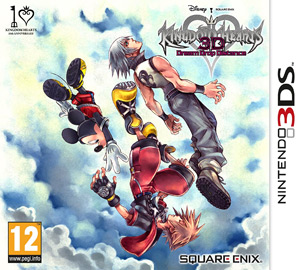
KINGDOM HEARTS: DREAM DROP DISTANCE (3DS)

Taking place after the events of Kingdom Hearts Re:coded, the game focuses on Sora and Riku as they prepare for the return of Master Xehanort. Besides these two well known characters, players can recruit Dream Eaters to assist them in fights. Square Enix decided to develop Dream Drop Distance, having been impressed by the quality of the Nintendo 3DS. Taking advantage of the handheld’s functionality, Square was able to include action elements from the series seen in Birth by Sleep, as well as to give plot hints for Kingdom Hearts III. The game has sold well, and an HD remastered version for the Playstation 4 was announced in September of 2015, as part of the upcoming compilation Kingdom Hearts HD 2.8 Final Chapter Prologue. 

Images © Eidos Interactive, Nintendo, & Square Enix


Some other titles released on this day:

  • Athena [Japan] – NES – 1987
  • Digimon World 3 – PlayStation – 2002
  • Hospital Tycoon – PC – 2007
  • The Incredible Hulk – PS2/PS3/Wii/Xbox360 – 2008
  • Final Fantasy Tactics  – Android OS – 2015

This Day in Gaming History: May 18

Continue reading “This Day in Gaming History: May 18”

This Day in Gaming History: May 9

Continue reading “This Day in Gaming History: May 9”

This Day in Gaming History: April 29th

Continue reading “This Day in Gaming History: April 29th”

This Day in Gaming History: April 27th

Continue reading “This Day in Gaming History: April 27th”