


My recent experiences with Fallout 4 and conversations about modding have got me thinking, how we get locked in and invested in the games we do, and why? Further still, why do we play games at all?
Forgive the featured image, but I can’t render the phrase “got me thinking” without picturing Skyrim. That fact alone, is a testament to my questions. I haven’t done a serious playthrough of Skyrim in years and yet there are specific references like this that continue to persevere. While studying or writing, I often find myself listening to the Oblivion or Skyrim soundtracks. I continue to have the game’s map tagged up at my work desk–a testament to the game’s place in my life once, even if it’s there no longer.
Our games, our video games, are cultural artifacts. They are designed with intent for specific outcomes, and yet, like many other games, they tend to develop a path of their own once in the hands of players in the wild.
But why do we play at all?
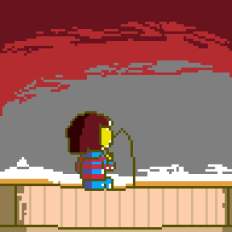
Last term when writing a paper about Undertale, I looked into some of the ways that video games tap into our minds at a very fundamental cognitive level. Well-executed games like Undertale subvert player expectations in order to create more engaging content. This content goes against RPG-trained gamers’ beliefs about the genre, and further still, about video games themselves. One of the ultimate messages in Undertale is to force players to question procedural narratives, the perceived kill-spare dichotomy, and notions of “progress.” This message is delivered not only through the narrative, but also how the game builds itself around the player’s decisions, even after many playthroughs. Undertale is successful in this way, due to its ability to really get inside the mind of the player (or at least pretend to do so). It too, questions why we play, but does so while you are playing.
In the research for that paper, I considered a number of figures in cognitive stylistics, including the writings of Kenneth Burke (1, 2, 3), Joanna Gavins, and perhaps most importantly for where I’m going with this series’ introduction: Gonzalo Frasca and Michael Kearns. Their notions of “simulation theory” (Frasca 2003) and “predictive play” (1996) are an excellent jumping point for exploring not only why we play, but also why video games as another form of storytellling, are so enticing. Essentially, simulation theory and predictive play suggest that we tell stories (and subsequently write novels, or by extension, make video games), because our brains are literally hardwired to want to do so. Not purely because we find them “entertaining,” but rather, that we enjoy participating in other worlds so that we can better learn how to navigate this one. The theory goes that evolutionarily speaking, the reason we got so good at navigating complex social situations or novel problem-solving was because we got so good at pretending they were happening through stories. Tell enough stories that deal with how to fight a bear in the woods, and you might have a better chance at fighting off a bear in the woods if it actually happens to you.
We’re not here to discuss the validity of this claim per-se, but it’s an interesting point to consider when we look at video games. If novels and storytelling more broadly are ways for us to exercise our minds in order to better manage reality, how much better (or worse) might video games and “real” simulations be at doing just that? Naturally we play video games because we find them entertaining, but perhaps they tap into something even more primal than that? Or at least that’s the excuse you should give someone the next time they say you play video games too much. Heh.
Alas, no matter what the reason we play games at all, there are certainly many reasons we play video games, and further still, why there are so many video game genres to suit almost any need. You have role-playing, shooting, adventure, platformer, puzzle, strategic, simulation, racing, and fighting games–only to name a few. This is compounded by different methods of playing video games–be it mobile, console, computer, or virtual-reality. At every step of the way, we have found a variety of environments to simulate and pass time in. Unlike traditional narratives, video games allow us to explore simulated spaces in previously impossible ways. Hand-eye coordination in particular, is something that is gained by stories-by-gaming environs. Unless someone telling you a tale happens to throw the book at you during the climax, chances are, that this part was missing from traditional mind exercises.
With the genres of video games extending past those of traditional narrative forms, blending with other forms of sport and play, and further splitting off into countless directions–how do any of them manage to keep our attentions at all?
They catch us on the hook.
| [Keeping our Interest: Part 2] | [Social Creatures: Part 3] |
| [ Time is Money, Friend: Part 4] | [Building Worlds: Part 5]|
| [Case Study: A Battle For Azeroth] |
Combined word count: 9, 825
Academic References All-Posts Compilation
(Non-course):
– Burke, Kenneth (1925) Psychology and Form
– Burke, Kenneth (1968[1931]) Lexicon Rhetoricae. Counter-statement
– Burke, Kenneth (1984) Permanence and change
– Frasca, Gonzalo (2003) Simulation vs. Narrative: Introduction to Ludology
– Gavins, Joanna (2007) Text World Theory: An Introduction
– Genette, Gérard and Marie Maclean (1991) Introduction to the Paratext
– Kearns, Michael (1996)Reading Novels: Toward a Cognitive Rhetoric
(Course):
– Bogost, Ian. (2010) Persuasive Games: The Expressive Power of Video Games
– De Koven, Bernard. (2013) The Well-Played Game.
– Flanagan, Mary. (2009) Critical Play.
– Gibbs, Martin et al. (2012) Tomestones, Uncanny Monuments and Epic Quests: Memorials in World of Warcraft
– Hart, Casey (2017) Getting Into the Game: An Examination of Player Personality Projection in Videogame Avatars (Game Studies)
– Isbister, Katherine (2016) How Games Move Us
– Juul, Jesper. (2013) The Art of Failure
– Kolo, Castulus and Timo Baur (2004) Living a Virtual Life: Social Dynamics of Online Gaming (Game Studies)
– Krzywinska, Tanya (2008) World Creation and Lore: World of Warcraft as Rich Text in Digital Culture, Play, and Identity: A World of Warcraft Reader, Hilde G. Corneliussen and Jill Walker Rettberg eds.
– LaRell Anderson, Sky (2017) Watching People is Not a Game: Interactive Online Corporeality, Twitch.tv and Videogame Streams (Game Studies)
– Pearce, Celia (2009) Communities of Play: Emergent Cultures in Multiplayer Games and Virtual Worlds
– Ruch, Adam (2009) World of Warcraft: Service or Space?
– Sharp, John (2015) Works of Game: On the Aesthetics of Art

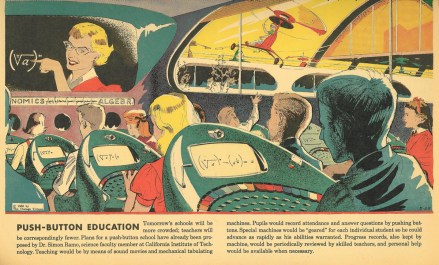 One might argue that any genre could have been created in this way, which is true I suppose, but SF latched on at the exact right nexus of context to blossom into what it became–further evidenced by how much SF developed after Amazing Stories gave it a label. We see the first SF film
 My Life, or Something Like It