

This Day in Gaming History is an editorial released 2-3 days per week, that takes you on a ride in its custom-built gaming history blue box. We take a look at titles all released on the same day throughout gaming history, while also giving extra facts and anecdotes as available or appropriate. Got a favorite game that you want to learn more about, or perhaps want to see featured on TDIGH? Send angel1573 a message on the forums, or leave a comment below!
While today’s post will be brief (a topic which will be discussed further in coming weeks), its a heavy hitter comes from a franchise which seems to be on everyone’s lips these days. If you haven’t been living under a rock, I’m sure you’ll catch my meaning. Whether or not you’re ready to master what we have in store for you today, it’s time to dive in and go!
CASTLEVANIA II: BELMONT’S REVENGE [JAPAN] (GAME BOY)

Also translated as “The Legend of Dracula“, and not to be confused with the NES game Castlevania II: Simon’s Quest, this title was released for the Game Boy on this day in 1991. The second title to be released for the Game Boy handheld, and sequel to Castlevania: The Adventure, it is set fifteen years after the events of its predecessor. Released in color in later versions, Castlevania II: Belmont’s Revenge was applauded for its inclusion of classic Castlevania items, and weapons, while also making better use of the Game Boy’s hardware than its predecessor. The title follows the story of Christopher Belmont and his quest to save his son and Transylvania from Dracula in newly regenerated human form.
PAC-MAN COLLECTION (GAME BOY ADVANCE)
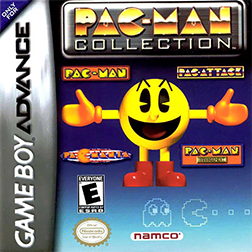
A compilation of four Pac-Man titles–Pac-Man, Pac-Mania, Pac-Man Arrangement, and Pac-Attack—PAC-MAN Collection was released on this day in 2001. While the first three titles are all classic Pac-Man, and follow general Pac-Man gameplay, Pac-Attack is a falling-block puzzle game much like Tetris, and was originally released for the Genesis and SNES consoles. Due to the small screen of the GBA, players are given the option to view their chosen title in two different methods. In scroll-mode, the field of view automatically scrolls to follow Pac-Man, whereas full-screen shows the entire field of view in miniature form. With the exception of Pac-Attack, the player can tweak various settings such as lives, difficulty level, or bonus life counters, similar to the DIP switch enabled settings in the original arcade machines. The title was criticized for cutting out pieces of music and sound effects, a lack of save functionality, and inconsistencies with the field of view methods. Overall, however, the title was well received.
POKEMON BOX: RUBY & SAPPHIRE (GAMECUBE)

Last but not least, with all the Pokémon Go news since launch, it seems very appropriate that we should look at another Pokémon title. Originally available in North America, and only at the Pokémon Centre in New York City, Pokémon Box: Ruby & Sapphire was released on this day in 2004. More Poke-utility than game, for the days long gone where storage was a massive problem, Pokémon Box allowed players to store up to 1,500 Pokémon from Ruby or Sapphire. It allowed for ease of collection, organization, and searching of said Pokémon, and also allowed players to play Ruby or Sapphire on their TVs. In Europe, the box could be purchased in a GameCube bundle, which included Pokémon Colosseum, a memory card, and a GBA-GB game link cable. The title also facilitated transfer of Pokémon between Emerald, FireRed and LeafGreen.
The game also connects with GBA directly, allowing Trainers to deposit their Pokémon without having to trade. Once stored, players can view a spreadsheet-like stat list, featuring categories such as: original Trainer, moves, Pokémon Contest stats, friendliness, and level. Pokémon Box also features a “showcase” mode, which allows players to create a stage from a combination of ten backgrounds, ten stage patterns, and five types of display pieces, alongside one of eight music tracks to show off their selected Pokémon. The title has certain limitations before it can be used with any of they aformentioned Pokémon titles, all of which include having caught at least 100 Pokémon in their in-game Pokédex, plus additional title-specific requirements. After a certain number of Pokémon are deposited within the game cartridge, the player is gifted a Pokémon Egg, which will hatch into a Pokémon with a special move it would not learn normally. This move can be passed down through breeding.
Images © Konami, Namco, & Nintendo
Some other titles released on this day:
- Warpman (Japan) – NES – 1985
- FlatOut – Xbox/PS2 – 2005
- Resident Evil 4: PLATINUM – iOS – 2009

 My Life, or Something Like It