
Heroines of Warcraft: Magical Maidens Edition

This week, In honor of Women’s History month, we conclude our heroines series with two of the most powerful mages Azeroth has ever known.

This week, In honor of Women’s History month, we conclude our Heroines series with two of the most powerful mages Azeroth has ever known.

MAGNA AEGWYNN, GUARDIAN OF TIRISFAL

“I was facing dangers far worse than that little twerp of a demon when your great-grandparents were infants.” – Cycle of Hatred, 209

Aegwynn was one of five human apprentices under Guardian Magna Scavell, and was the only woman. They often goaded her, trying to dissuade her from her studies to be a wizard. She persevered, despite their antics, and went on to master the Meitre scrolls, great ancient Highborne magic documents left behind nine thousand years before Aegwynn’s classes. These scrolls were often left for human mages at the end of their training, and even most elven mages didn’t even look at the scrolls until their tenth year. This accomplishment ensured her place in line as the next Guardian of Tirisfall, following Scavell. Her peers complained, but the council insisted that she was best suited for the job. She spared no time in getting started as Azeroth’s next Guardian once she was given the powers of the Tirisfalen.

For 500 years she stood steadfast against demons and ill turns of fate for the globe before she came to meet Sargeras, or at least his avatar. In Northrend, she battled a group of demons which were attacking dragons there. Near the ashes of the burned demons, arose the avatar of Sargeras. The dragons rose to her aid, and combined, they defeated the avatar, or so she thought. Unbeknownst to her, Sargeras’ essence had sealed itself within her. This battle would come to set the many paths of Azeroth and Draenor’s denizens into the events which would ultimately comprise the Warcraft titles, as well as World of Warcraft today.

Current Legion model for the Avatar of Sargeras

Unknowingly imbued with the Dark Titan’s powers, Aegwynn grew arrogant following the historic battle. She turned her back on the council and its ways, deciding that it would be she who would determine her successor, not the council. After this decision was made, Aegwynn disappeared and became increasingly distant from human affairs. She used her magic powers to extend her life, and elude various traps and trackers set out by the council, in efforts to reel her in. Eventually, Aegwynn came to Karazhan, a tower of solace she had built and kept secret for a long time. Eventually, the mages found her, and she was forced to escape into the shattered remains of Suramar, where she would remain for over two hundred and fifty years.

About seventy years before the start of the World of Warcraft timeline, Aegwynn emerged from her solitude as she knew she would have to find a successor for her powers. Still determined to prevent the council any say in where those powers went, she ultimately chose to consort with Nielas Aran. This union would result in the birth of Medivh (Keeper of Secrets in Highborne), a well-known figure in the minds of current World of Warcraft players for his association with Karazhan dungeon/raid and the Black Morass dungeon, where players relive the opening of the Dark Portal, which brought Orcs to Azeroth from Draenor. But Medivh’s story is not our focus today.

In giving birth to Medivh, the essence of Sargeras passed into his body, freeing her from its influence alongside the loss of her Guardian abilities. When he reached maturity, Sargeras’ plan for Medivh began to reveal itself. Aegwynn tried to warn King Llane about the impending invasion by the orcs, however, now lacking the powers of a Guardian, she knew there was very little else she could do for Azeroth. She took to her refuge and intended to die away from the peoples of Azeroth – a goal which was frequently interrupted. Once, events caused her to revive her fallen son after his corruption had passed, and two, when Jaina Proudmoore located her and beseeched her help in hunting a herd of thunder lizards. In this quest, Jaina and Aegwynn were sealed away by Aegwynn’s old foe and narrowly escaped. Aegwynn sacrificed most of herself by imbuing Jaina with her essence, in order to escape the demon who trapped them. Afterward, she accepted an advisor position along Jaina’s side, under the premise that her true identity never be revealed. Some players have speculated her presence within World of Warcraft in either the characters of Pained or Tabetha.

LADY JAINA PROUDMOORE

“You can control the winds as a shaman. But the winds of war are blowing, and if we do not stop Garrosh now, many innocents will pay the price for our hesitation.” – Tides of War 

Lady Jaina Proudmoore has been a prominent figure throughout Warcraft and World of Warcraft‘s titles. Jaina is the youngest of Admiral Daelin Proudmoore of Kul Tiras, a human naval empire, and ally to Lordaeron before the First War. Jaina grew up in the ranks of human nobility and after demonstrating significant magical prowess at a young age Jaina edged her way into the student ranks at Dalaran, under Antonidas. Like Aegwynn, she too was one of the few female wizards studying at the time. Throughout her studies, she struggled to maintain focus on magic, alongside her royal responsibilities. Through these responsibilities, she would be ultimately matched with then Prince Arthas. While they maintained a friendship, their impending union was questioned by Arthas, and caused them to go their separate ways in order to focus on themselves first.

As naturally happens in tragic stories, the Third War broke out and Jaina was sent to investigate the Plague in Lordaeron’s kingdom. It is during this time that the events of Warcraft III take place, and where ultimately Arthas would be turned into the Lich King. While she fought alongside Arthas as long as she could, ultimately he was turned and she was forced to abandon his side after the events at Stratholme.

Following the events at Stratholme, Jaina found herself sent by a mysterious prophet (aka Medivh) to Kalimdor, where at first she did battle with the orcs there. When she came upon Thrall and Caine, the three were prevented from fighting upon interference from the prophet/Medivh. Due to this encounter, Thrall and Jaina became allies and would share a mutual respect for many years to come.

Eventually, Jaina would come to found the city of Theramore, one of the only Alliance points on the continent of Kalimdor, outside of the Night Elf zones. Jaina continued to be a force throughout Wrath of the Lich King as we saw her diplomacy after the events of the Wrathgate, throughout the exploration of Ulduar, and finally the battle against the Lich King. When retrieving the item “Jaina’s Locket” following the defeat of the Lich King, Jaina weeps for what was left of Arthas inside the Lich.

“You spit on mercy? Then you will have NONE. You want carnage?! Garrosh will get more blood than EVER he bargained for!” – Jaina, following destruction of Theramore

As events have continued to unfold for Jaina throughout World of Warcraft, she has continued to see defeats and betrayals on behalf of the Horde and the Kirin Tor. Following the destruction of Theramore by Garrosh Hellscream in Mists of Pandaria, Jaina was forever changed. In retaliation, she tried to urge Stormwind onto war, but they refused. The Kirin Tor of Dalaran too remained steadfast in their neutral ambitions. Her last blow was to nearly drowned Orgrimmar with her water elementals. Thrall attempted to stop her but failed and it was Kalcegos who ultimately did. While her rage was ultimately tempered, she purged the Blood Elves from Dalaran after learning that they had helped the Horde, despite the Kirin Tor’s neutrality.

This hatred and feelings of betrayal would only hasten through the events of Warlords of Draenor and early Legion. While Jaina has been missing since the early days of the most recent expansion, there remains a large amount of speculation over what her return to the story will bring alongside her. Will we see the rise of Kul Tiras? Will Jaina return to being a diplomatic figure in our eventual trip to Argus?

After so much pain and struggle in her life, much like Sylvannas, is it any wonder Jaina was finally pushed to her breaking point? It remains to be seen what will come of her in patches to come, however, she remains one of the strongest female figures still active in the game today. Let us hope, she saves herself from the darkness which has swept away Sylvannas.


What do you think about the power and stories of the mages we discussed today? How have you enjoyed our spotlight WoW women spotlight this month? Let us know your insights, theories, and comments in the comments below, on Facebook, Twitter, or our Discord.

Heroines of Warcraft: The Windrunners Edition

In honor of Women’s History month, we are running a series surveying the lore and history surrounding some of Azeroth’s most notable heroines and figures. This week, we look into one of the most prominent and skillful ranger families in Azeroth’s history.

In honor of Women’s History month, we are running a series surveying the lore and history surrounding some of Azeroth’s most notable heroines and figures. This week, we look into one of the most prominent and skillful ranger families in Azeroth’s history.

Whether you play Horde or Alliance, you’ll know the surname Windrunner, notably attached to Lady Sylvanas. The current Warchief of the Horde, and long-standing Banshee Queen of the Undead, Sylvanas is but one of three sisters from the Windrunner family. A high-elf family of high repute, the Windrunner dynasty touts one of the most tragic familial stories in Warcraft lore. Now spread between the Alliance and the Horde, the family’s legacy for producing the best rangers in Azoerth’s history lives on in its surviving members.

ALLERIA WINDRUNNER

“There is no problem. The Alliance wants every orc dead. So do I. We can work together on that.” ~ Alleria in Beyond the Dark Portal

Alleria is the oldest of the three Windrunner sisters and has served both the High Elf faction, as well as the Alliance throughout her longstanding career as a ranger. As early as the Second War, she aided Lordaeron and its King in defending the city against the invasion of the Horde. Alleria held the belief that the Horde would be a threat to the kingdom of Quel’Thalas, unlike many of her kind, leading her to send rangers to Southshore to help bolster defenses there. She continued helping the Alliance, working closely with Khadgar and Turalyon in the defense of Silvermoon.

She fought alongside her sister Sylvanas and successfully protected their home city. Unfortunately, this battle saw a change in Alleria, and she came to see Orcs as vermin. As a result, she hunted down as many of the Bleeding Hollow clan as she could find. She pursued them all the way through the Dark Portal. The conflict on the other side of the Dark Portal resulted in large-scale destruction in Outland, in their efforts to protect Azeroth. They successfully closed the portal from Draenor but were forced to leap into the Twisting Nether in order to avoid dying with the planet. While many survived this leap, and journeyed to Honor Hold or were able to return to Azeroth, Alleria was not heard of in-game until she was uncovered in the Broken Isles, alongside her husband Turalyon.

Before leaving to fight in Outland, Alleria had her prize necklace (a gift from her parents containing a ruby, an emerald, and a sapphire) broken down and split between herself and her two sisters, giving the ruby to Vareesa, and the sapphire to Sylvanas. While she was presumed dead for many years, her memory lived on throughout the cultures of both Outland and Azeroth, and in both the factions. In Stormwind, there remains a statue of Alleria, inscribed:

“Renowned Troll Hunter of Quel’Thalas. Lead Scout and Intelligence Agent for the Alliance Expedition that marched into the orc homeworld Draenor. Presumed deceased. Your Heart flew straight as any arrow upon the wind, sister. You were the brightest of our Order. You were the most beloved of our kin. – Sylvanas Windrunner – Ranger General of Quel’Thalas.”

VERESSA WINDRUNNER

Vereesa Windrunner, much like her eldest sister, continues to fight alongside the Alliance. The youngest of the Windrunner sisters, she helped Rhonin in destroying the Demon Soul and freeing Alexstraza–a mission which would bring Vereesa and Rhonin together in love. She also served as Alliance Ambassador, touring the Alliance and reminding them of fears beyond orcs. She was one of the few well-known survivors of the plague which destroyed Lordaeron, Dalaran, and Quel’Thalas after the rise of Arthas as the Lich King.

“Quel’Thalas is as much my home as it is yours and I would not see it fall to our ancient enemy.” ~ With my bow, I have shot orcs dead at a hundred yards. I have battled trolls, demons, and more. I have nearly traveled the length and breadth of Azeroth…yes my love, I think I can handle the situation until Jalia arrives.” ~ Vereesa in War of the Ancients 1: The Well of Eternity

Many years later, Vereesa would also help Jaina Proudmoore in the defense of Theramore in the days before its destruction by Garrosh Hellscream using what he dubbed the Mana Bomb. In this battle, Vereesa lost Rhonin, as he sacrificed himself to save Jaina as the future of the Kirin Tor. His actions also spared Kalecgos, Vereesa, Shandris Feathermoon, and a number of scouting parties.

Before Garrosh’s betrayal, Vereesa could be found in the Violet Citadel of Northrend’s Dalaran, alongside Rhonin, as the leader of the Silver Covenant. The militant high elf group stood in opposition to the inclusion of the blood elves into the Kirin Tor at the time. She has been actively involved in player quests within World of Warcraft ever since, including the uncovering of Alleria’s whereabouts. Most recently, she aided in the founding of the Unseen Path, the Hunter order hall, in Legion.

LADY SYLVANAS WINDRUNNER, THE BANSHEE QUEEN

The middle of the Windrunner sisters, Sylvanas is probably the most well-known to Warcraft players, even outside of World of Warcraft. She featured prominently in Warcraft III and has ever since been a tragic tale within the game series’ lore. In Warcraft III, players experience both Sylvanas’ time as Ranger-General of Silvermoon, a military leader of all high elf forces, but also her fall to Arthas in the city’s defense. This failure would lead to her corruption by the Lich King into the Banshee Queen, a creature under his thrall for a long duration of the war.

Eventually, the Lich King began losing control over his minions, and in this time Sylvanas regained her free will. She plotted against him with the help of other Undead who had regained their free will, alongside the Nathrezim. While she failed at her attempted assassination of the Lich King, she eventually took over what was left of Lordaeron for herself, renaming it “The Undercity”.

During this time, an official story had been touted by the elves of Silvermoon – namely that Sylvanas had perished in the great fire which had ensorcelled most of the city during the attack by the Scourge. After breaking free from the control of the Lich King, she eventually founded a dark order of rangers and began building the Forsaken and collecting other minions which would serve her along the way.

Even in death, Sylvanas still considers herself to be a protector of Quel’Thalas. When the Blood Elves came to World of Warcraft, in Burning Crusade, she opened the Undercity to them when the Alliance refused. She brokered their admission into the Horde shortly thereafter, despite the fears of the Blood Elves after so many years detesting the faction.

Sylvanas has been involved a lot of questionable behaviors since Wrath of the Lich King and many lore enthusiasts find themselves questioning her end-goals and background motivations. Following events like the “Battle for the Undercity”, the production of the Forsaken Blight, and most recently, her attempt to enslave a Val’kyr in Stormheim, Sylvanas continues to be a character of intrigue.

While she is now Warchief of the Horde, her story is filled with tragedy and bloodshed – both within her family and without. While her love for her family remained, she has struggled to maintain any degree of relationship with them, Vereesa in particular. At one point, she and Vereesa plotted to assassinate former Warchief Garrosh, lacing his meal with an untraceable poison. Following this Vereesa debated joining her sister in the leadership of the Forsaken, despite leaving her children behind to do so. However, Sylvanas realized that the Forsaken would not accept a living creature in their leadership, and began planning to murder her sister in order to raise her as an Undead. Vereesa eventually relented and warned the Alliance of the attempted poisoning, thus severing ties with her sister once more. This betrayal affected Sylvanas greatly.

Lore enthusiasts and in-game characters alike have also begun questioning Sylvanas’ behavior as of late, as she continues to be further changed. Following a battle against Gilneas, Sylvanas is killed by Lord Godfrey. She was ushered to Shadowfang Keep where three of her Val’kyr sacrifice themselves in order to raise her, ultimately leading to Sylvanas’ plan for a new Forsaken future. This was the second time Sylvanas has died since becoming the Banshee Queen, the first being her suicide following the death of the Lich King, by throwing herself from Icecrown Citadel. Here too, she was raised by Val’kyr–ones which sought a place by her side. After each foray with death, and finding that it will find her no comfort, she has become markedly more selfish, vicious, and cold as the story moves forward.

While an entire article can be written on Sylvanas and her story, she is without a doubt one of the most tragic and formidable women in Warcraft’s history. It’s hard to imagine that if any of us were faced with what she has, that we would not choose the same paths for ourselves. “The Forsaken’s ruthless leader is a formidable champion of her people. But with the Burning Legion invasion, the stakes for the Dark Lady have never been higher. Should Sylvanas perish, her demise will be the beginning of her eternal damnation. All that stands between her and this doom are her Val’kyr, yet few of these spirit guardians remain. As her fate edges closer to the abyss, Sylvanas must decide how far she’ll go to protect her people and whether they’re more precious to her than her soul.” ~ World of Warcraft official website “Heroes & Villains: A World Divided”


What do you think about the Windrunner sisters? Is Sylvanas as shady as she seems these days or is there more we have yet to uncover? Do you believe she’s still sympathetic or has simply gone off the rails after visiting death one too many times? Let us know in the comments below or join in the conversation on Facebook, Twitter, and in our Discord.

Heroines of Warcraft: Around the Well of Eternity Edition

This week, we visit the Well of Eternity…

In honor of Women’s History month, beginning March 8th, we’ll be running a series of editorials surveying the lore and history surrounding some of Azeroth’s most notable heroines and figures. This week, we visit the Well of Eternity…

In World of Warcraft: Chronicle Volume 1, we were told that the night elves came about as a race descendant from dark trolls who found their way to the Well of Eternity. At the Well, they discovered Elune and would be forever changed. Through the twisting powers of the arcane font, the trolls were transformed into Night Elves, or Kal’dorai “Children of the Stars”. From that race would be born many strong leaders and figures who have come to make their mark on World of Warcraft lore, good and evil alike. Their notoriety has reached beyond just Warcraft and has found its way into countless tie-in novels, and other Blizzard titles. Let’s take a closer look.

QUEEN AZSHARA

“It was during this era of unprecedented growth that the night elves’ most prolific leader came to power. Her name was Queen Azshara. Through her unbridled ambition, she would elevate her peolpe to extraordinary new heights…and sow the seeds of their destruction” – World of Warcraft Chronicle: Volume 1, 94

Many people have known and been defeated by the Burning Legion. Queen Azshara, however, is the only one (that we’re aware of) to look at them as an opportunity to find greater power, and an equal in the Dark Titan Sargeras.

It’s not surprising given Queen Azshara’s position within the Kal’dorei world. They adored her—perhaps a little too much to be considered outside the realm of a spell. She was powerful and people fell at her feet. Those who disobeyed were met with exile and steep punishment. She was born with golden eyes, something the Kal’dorei believed would predict greatness in her. While her greatness and ambition brought about the War of the Ancients (and the initial attack of the Burning Legion 10,000 years before the game starts), her fate was not sealed that day.

As the Well of Eternity exploded at the hands of rebellious Night Elves during the Great Sundering and the water rushed around her, the Old Gods whispered to her and offered her more power. More importantly, the power to survive. Azshara accepted and was twisted into a Naga along with her followers. She would continue her efforts for power and domination secretly below the waves of Azeroth’s tremulous seas.

A grand sorceress even before the Old Gods gave her more power, Azshara’s motives remain unknown at this time. She pops up briefly during our trip through Azuna, but we’ve seen little direct contact with their agents since Cataclysm. It raises the question of what she may be up to, now that her would-be consort Sargeras has come knocking on Azeroth’s door?

TYRANDE WHISPERWIND

“For her part, the priestess Tyrande emerged as one of the greatest members of the Sisterhood of Elune…In time, Tyrande would be come the high priestess of Elune, the revered leader of her sacred Sisterhood.” – World of Warcraft Chronicle: Volume 1, 100

Born of the same generation as Azshara, Tyrande remains the modern-day Night Elf faction leader of what remained after the Great Sundering. A former general for the sentinels, she has remained in power ever since Azshara fell below the waves. Along with her mate Malfurion Stormrage, she helped to transform the Night Elf people and their ways, in efforts to repair their civilization, and to purge it from behaviours which they believed had drawn the Burning Legion to Azeroth in the first place: Arcane magics.

As part of this, Tyrande was forced to ban Arcane magics used within the Night Elf civilization. This population of scattered elves was comprised of the victorious rebels under Tyrande’s forces, as well as those who had seen the light after following Azshara, and wished for things to return to normal. Many of Azshara’s former followers had been grand masters of the arcane and struggled with leaving the spell-type behind. They began practicing their arts in secret, but were eventually uncovered. Initially their sentence was death, but Tyrande proved slightly more lenient and instead exiled them. This group would eventually become the High Elves, and later the Blood Elves we know today.

Tyrande has been a major feature in pretty much every major battle since the Great Sundering, including in the original Warcraft III title. She was paramount in the Battle of Mount Hyjal, in helping with the Scourge Invasion, and is an ongoing presence in the struggle for Azeroth’s survival since the launch of World of Warcraft. Most recently, after the events in Val’sharah, Tyrande has aided players in taking back the Nightborne city of Suramar in the questlines leading to the launch of the Nighthold raid.

Despite so much tragedy, Tyrande stands as a beacon for her people—as steadfast as a sentinel, and beaming with the light of Elune. Few characters have seen as much as she in 10,000 years, and further few still who would continue to push forward in faith of a better tomorrow for Azeroth and their people.


GRAND MAGISTRIX ELLISANDE 

“Grand Magistrix Elisande, feared that the Legion did not have the Highborne’s best interests in mind. The monstrous demons had already destryoed much of the night elves’ glorius empire and poisoned the surounding land with their fel magics. Elisande’s distrust of the Legion only deepened…” – World of Warcraft Chronicle: Volume 1 – 103

We see very little of Grand Magistrix Elisande in comparison to the others on this list. While Queen Azshara herself has graced the pixels of World of Warcraft even less than Elisande, her presence and her story were more widely spread. Unsurprising given her legacy. Elisande, on the other hand, has an equally important story to tell.

When we see Elisande in the most recent expansion, she is pushed to the edge. Having rebelled 10,000 years ago in order to save her people, she sealed herself and her followers away in a prison of their own making. Saved from the Legion and the Great Sundering, yet forced to live in a never-ending cycle of what they had already built. No room to expand, no fresh water, or fresh food to sustain themselves, they were forced to live from the Nightwell’s energies alone and changed into the Nightborne. While her initial actions came out of a distrust of Azshara’s motives and the Burning Legion, she ultimately found herself in much the same position she originally rebelled against. After 10,000 years in solitude, Gul’dan breached the barrier surrounding the city with little effort. Shaken, Elisande was given three days to chose whether to allow the Legion in or face destruction. By now, I’m sure you know the rest.

When you face Elisande in the Nighthold raid, however, she is remorseful at the end of the battle. Rather than kill her, she offers us her aid in defeating the Legion. Having taken the only course she believed would save her people, much like she had done before the Great Sundering, Elisande becomes a sympathetic character. She was not out for power, nor for taking the Nightwell for herself. Like Tyrande, she was only interested in saving what she could before the Legion took everything else. She succeeded to some degree, but at what cost? We have an expansion to learn what help Elisande may or may not provide in fighting the Legion as time goes on from our encounter with her.


Do you have any favourite Night Elves, Nightborne, or Highborne? Let us know in the comments below, or join the conversation on Facebook, Twitter, or our forums!

Heroines of Warcraft: They Came Before Edition

In honor of Women’s History month, beginning March 8th, we’ll be running a series of editorials surveying the lore and history surrounding some of Azeroth’s most notable heroines and figures.

In honor of Women’s History month, beginning March 8th, we’ll be running a series of editorials surveying the lore and history surrounding some of Azeroth’s most notable heroines and figures.

EONAR, THE LIFE-BINDER

“No one knows when or why the first titan awoke, but legends hold that his name was Aman’Thul” – World of Warcraft Chronicle: Volume 1, 19

One of the earliest notable female figures in Azeroth’s history comes from a time before history was even known on Azeroth; possibly before even Azeroth itself. Hailing from the race of celestial wanderers, the Titans, Eonar is the only confirmed female titan. While there are some in-game and fan theories suggesting that Azeroth too may be a female, Eonar was at least the first.

Awakened by Aman’Thul, the Highfather, Eonar would become his bronze-skinned consort. She carried an alabaster staff through the cosmos as she stood vigilant as the protector of life, nature, and healing in the universe. She often kept from the field of battle, preferring a supporting role in the great Titan Pantheon. If brought to fight, she remained a fierce force who would confuse and disperse her enemies before engaging them. She stood in opposition to the dark Titan Sargeras, and aided the Pantheon in combating him until her ultimate demise at his hand.

Eonar also spent a great deal of time establishing the titanforged which would one day nurture Azeroth, in addition to empowering the naturally-occurring life which Azeroth itself created, namely, the dragons. While Eonar was defeated, her essence and gifts lived on in the populations of Azeroth. She is worshiped where her memory remains, including both the great red and green Dragonflights, which tasked themselves with combating chaos and destruction, while maintaining nature, healing, and life, within the world.

Some hypothesize a connection between Eonar and Elune, as well as the Tauren’s Earthmother, as all three share many common threads of beliefs and traits; however, at this time, we have no formal notes from Blizzard about how these entities are connected.

ALEXSTRASZA, THE LIFE-BINDER & DRAGONQUEEN

“The nurturing and ever-merciful Freya called upon her creator, Eonar, to empower the proto-dragon Alexstrasza. Known thereafter as the Life-Binder…” World of Warcraft Chronicle: Volume 1, 46

While the Titans would eventually come to create the titanforged to safeguard Azeroth, the planet had already gone about creating its own species of life, one of these were the dragons. While the Pantheon created the Keepers (better known for their appearance in-game in Ulduar) to safeguard the planet and the mechanization they had set in motion, there was nothing let to govern Azeroth’s native entities. Over time, one dragon came to overtake them all and tore about Kalimdor destroying and consuming everything in its path. His name was Galakrond. The Keepers came to decide that they would empower the smartest of the nascent species and help to take the great beast down. These would come to be known as the Dragon Aspects, of which Alexstrasza was one. The Keeper Freya had been created by Eonar and it was she who infused Alexstrasza and her dragonflight with guardianship of all life on Azeroth.

In-game, the Life-Binder can be found in many areas, including atop the Wyrmrest Temple in Dragonblight, and in the Dragon Soul raid. No longer content to step aside and watch the world in its suffering, she brought the Dragon Aspects and their flights together in order to actively defend against evils which would harm life on her beloved planet. Even in light of sacrificing her power to save the world from Deathwing, her fallen brother Neltharion, back in Cataclysm, the Dragon Mother remains the most powerful, if not the eldest dragon alive today. She is also one of the last remaining of the original Dragon Aspects.

YSERA, THE DREAMER

“Freya also beseeched Eonar to bless Alexstrasza’s younger sister, the proto-dragon Ysera, with natures influence. Ysera was charged with keeping watch over the flowering wilds of Azeroth from within the Emerald Dream.” – World of Warcraft Chronicle: Volume 1, 46

While Alexstrasza’s charge was to guard the life of the world, Ysera was in charge of its dream, the Emerald Dream, a place which held the original blueprint for Azeroth’s ordering by the Titans. All creatures would visit the Dream in their rest, but it was Ysera’s domain to watch over. Like her older sister, she would be a part of all lives on Azeroth, and would also take up arms to protect it. She fought alongside her siblings in protecting Azeroth, titanforged and native creatures alike. Ysera spent a great deal of time asleep in order to defend the Emerald Dream, waking only so often when situations were dire enough to warrant it. As a result, in-game, we bore witness to Ysera’s active role in Cataclysm throughout Mount Hyjal, as well as in the Dragon Soul raid, where she used the latent power of Eonar which made her an Aspect of the green dragonflight, in order to help stop Neltharion.

While tragedy befell her this expansion during the campaign in Val’sharah, her spirit lives on in the Emerald Dream and wanders through its purified fields, no longer a creature of both worlds.

Do you have any favourite female characters from the dawn of the world of Azeroth? Let us know in the comments below, or join in the conversation on Facebook, Twitter, or Discord!


Images © Blizzard Entertainment

Ghoul On! Horror Video Games, Then & Now

Pumpkins are on every post in World of Warcraft and our heroes are dressing up in Overwatch—it’s that time of year to get spooky and break out the horror games.

Continue reading “Ghoul On! Horror Video Games, Then & Now”

This Day In Gaming History: July 12

 Thisdayingaming

This Day in Gaming History is an editorial released 2-3 days per week, that takes you on a ride in its custom-built gaming history blue box. We take a look at titles all released on the same day throughout gaming history, while also giving extra facts and anecdotes as available or appropriate. Got a favorite game that you want to learn more about, or perhaps want to see featured on TDIGH? Send angel1573 a message on the forums, or leave a comment below!

While today’s post will be brief (a topic which will be discussed further in coming weeks), its a heavy hitter comes from a franchise which seems to be on everyone’s lips these days. If you haven’t been living under a rock, I’m sure you’ll catch my meaning. Whether or not you’re ready to master what we have in store for you today, it’s time to dive in and go!

CASTLEVANIA II: BELMONT’S REVENGE [JAPAN] (GAME BOY)

Also translated as “The Legend of Dracula“, and not to be confused with the NES game Castlevania II: Simon’s Quest, this title was released for the Game Boy on this day in 1991. The second title to be released for the Game Boy handheld, and sequel to Castlevania: The Adventure, it is set fifteen years after the events of its predecessor. Released in color in later versions, Castlevania II: Belmont’s Revenge was applauded for its inclusion of classic Castlevania items, and weapons, while also making better use of the Game Boy’s hardware than its predecessor. The title follows the story of Christopher Belmont and his quest to save his son and Transylvania from Dracula in newly regenerated human form.

PAC-MAN COLLECTION (GAME BOY ADVANCE)

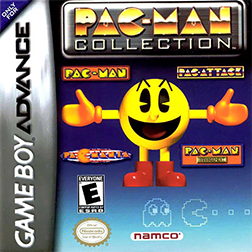
A compilation of four Pac-Man titles–Pac-Man, Pac-Mania, Pac-Man Arrangement, and Pac-AttackPAC-MAN Collection was released on this day in 2001. While the first three titles are all classic Pac-Man, and follow general Pac-Man gameplay, Pac-Attack is a falling-block puzzle game much like Tetris, and was originally released for the Genesis and SNES consoles. Due to the small screen of the GBA, players are given the option to view their chosen title in two different methods. In scroll-mode, the field of view automatically scrolls to follow Pac-Man, whereas full-screen shows the entire field of view in miniature form. With the exception of Pac-Attack, the player can tweak various settings such as lives, difficulty level, or bonus life counters, similar to the DIP switch enabled settings in the original arcade machines. The title was criticized for cutting out pieces of music and sound effects, a lack of save functionality, and inconsistencies with the field of view methods. Overall, however, the title was well received.

POKEMON BOX: RUBY & SAPPHIRE (GAMECUBE)

Last but not least, with all the Pokémon Go news since launch, it seems very appropriate that we should look at another Pokémon title. Originally available in North America, and only at the Pokémon Centre in New York City, Pokémon Box: Ruby & Sapphire was released on this day in 2004. More Poke-utility than game, for the days long gone where storage was a massive problem, Pokémon Box allowed players to store up to 1,500 Pokémon from Ruby or Sapphire. It allowed for ease of collection, organization, and searching of said Pokémon, and also allowed players to play Ruby or Sapphire on their TVs. In Europe, the box could be purchased in a GameCube bundle, which included Pokémon Colosseum, a memory card, and a GBA-GB game link cable. The title also facilitated transfer of Pokémon between Emerald, FireRed and LeafGreen.

The game also connects with GBA directly, allowing Trainers to deposit their Pokémon without having to trade. Once stored, players can view a spreadsheet-like stat list, featuring categories such as: original Trainer, moves, Pokémon Contest stats, friendliness, and level. Pokémon Box also features a “showcase” mode, which allows players to create a stage from a combination of ten backgrounds, ten stage patterns, and five types of display pieces, alongside one of eight music tracks to show off their selected Pokémon. The title has certain limitations before it can be used with any of they aformentioned Pokémon titles, all of which include having caught at least 100 Pokémon in their in-game Pokédex, plus additional title-specific requirements. After a certain number of Pokémon are deposited within the game cartridge, the player is gifted a Pokémon Egg, which will hatch into a Pokémon with a special move it would not learn normally. This move can be passed down through breeding.

Images © Konami, Namco, & Nintendo


Some other titles released on this day:

  • Warpman (Japan) – NES – 1985
  • FlatOut – Xbox/PS2 – 2005
  • Resident Evil 4: PLATINUM – iOS – 2009

This Day in Gaming History: June 23

Thisdayingaming

This Day in Gaming History is an editorial released 2-3 days per week, that takes you on a ride in its custom-built gaming history blue box. We take a look at titles all released on the same day throughout gaming history, while also giving extra facts and anecdotes as available or appropriate. Got a favorite game that you want to learn more about, or perhaps want to see featured on TDIGH? Send angel1573 a message on the forums, or leave a comment below!

Today, we’ll be returning to some classic titles and franchises, household names, and iconic characters in gaming history. Creations of the earliest console wars, their characters continue to be used as symbols for their brands. From the early days of Sonic the Hedgehog, through to a new generation of Mario and Link, let’s adventure alongside our childhood heroes on This Day in Gaming History.

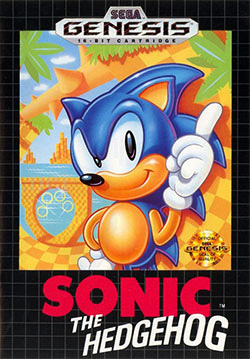
SONIC THE HEDGEHOG (SEGA GENESIS)

Released simultaneously in North America, Europe, and Australia on this day in 1991, Sonic the Hedgehog became the first game of the Sonic franchise. Following the game’s development in 1990, and after deciding on the anthropomorphic traits of Sonic, the team renamed themselves the “Sonic Team” to match their new character. Influenced by the Super Mario titles, Sonic the Hedgehog introduced a new technique to platforming: the ability to roll along curved scenery. Over time, this ability would evolve and become an integral part of Sonic’s gaming identity. The title itself was well received by critics, who praised its visuals, music, and pace of gameplay. The game was also commercially successful, helping to make the Sega Genesis console a key player in its era of console gaming.

In the 1991 holiday season, the Genesis outsold the Super Nintendo by a two-to-one ration, and in January of 1992, it peaked to claim 65% of the console market share. While Nintendo eventually overtook Sega, it was the first time since 1985 that Nintendo did not lead the console market. Sonic the Hedgehog has been ported to various media since, alongside clones and inspired offshoots, including various “animal with attitude” platformers like Aero the Acro-Bat, Earthworm Jim, or Crash Bandicoot.


NINTENDO 64 CONSOLE & SUPER MARIO 64

N64

Launched alongside one another in all markets, on this day in 1996 the Nintendo 64 console and Super Mario 64 were launched in Japan. Initially codenamed “Project Reality”, the design was finalized by mid-1995, but its launch was ultimately delayed until 1996. The console primarily competed with the PlayStation and Sega Saturn, as part of the fifth generation of console gaming. Alongside Super Mario 64, the console was launched with Pilotwings 64 worldwide, and Saikyo Habu Shogi in Japan only. The console was launched in a variety of colours and designs, including limited-edition controllers and systems.

The N64 was highly anticipated and was met with great praise as a result for its power and gaming delivery–allowing for a more powerful generation of games. The system was in high demand upon release, and during its first three days on the market, retailers sold 350 000 of 500 000 available units. However, the decision for the console to use cartridges rather than discs resulted in tapered sales and more expensive games than its counterparts. Ultimately, the N64 remains one of the most iconic consoles in gaming history, not only for its own profile, but also the games released for it.

Super Mario 64 is the best selling game of all time for the Nintendo 64 console, having sold more than eleven million copies worldwide. A remake was launched on the Nintendo DS in 2004, entitled Super Mario 64 DS and features modifications to the original title. The game left a lasting legacy on 3D game design, particularly with camera design and 360 degree analog control. Super Mario 64 is lauded by critics and fans alike as one of the greatest and most revolutionary games of all time.

Countless titles which followed its released were influenced by Super Mario 64‘s design, including: GoldenEye 007, the Grand Theft Auto series,  Kingdom Hearts, and countless others. Dan Houser, a prominent figure in the development of GTA, stated “Anyone who makes 3D games who says they’ve not borrowed something from Mario or Zelda [on the N64] is lying.” On May 5, 2011, Super Mario 64 was chosen as one of the 80 games to be displayed at the Smithsonian, as part of the “The Art of Video Games” exhibit which launched the following year.


PHANTOM HOURGLASS (NINTENDO DS) [JAPAN]

Much like the other two (or three if you’re going to be technical) gaming behemoths in our list today, The Legend of Zelda: Phantom Hourglass is another title in a long list of games in the Zelda franchise. An action-adventure game released on this day in 2007 in Japan, it is the fourteenth installment in the greater series, and the direct sequel to the 2002 Gamecube title Wind Waker. The game has been re-released for the Wii U via the Virtual Console in North America as of May 2016. The title features 3D cell-shaded graphics and an overhead camera perspective. Players utilize both the touchscreen and the microphone, alongside traditional controls, to progress the story.

While the title and its gameplay were generally praised upon release, Phantom Hourglass was criticized for its online features. Receiving several industry awards, the game would go on to sell 262,800 copies in its initial month in the U.S. By March of 2008, 4.13 million copies had been sold worldwide. Phantom Hourglass was praised as one of the better games to be launched on the Nintendo DS handheld. While the game changes pace and tone when compared to others like Twilight Princess on the Wii, it remained a worthy successor to Wind Waker. Several websites named it the 2007 Game of the Year for the Nintendo DS, and was listed as such in many mainstream magazines. While a point of criticism for some, the title was simultaneously praised for being the first Zelda title to successfully attract casual players.

Images © Nintendo & Sega


Some other titles released on this day:

  • Phantasy Star Online: Blue Burst (PC) – 2005
  • Dynasty Warriors 6 Empires (PS3) – 2009
  • Pokemon Black & White Version 2 [Japan] (DS) – 2012
  • Batman: Arkham Knight (PC/PS4/Xbox One) – 2015

This Day in Gaming History: June 14th

This Day in Gaming History is an editorial released 2-3 days per week, that takes you on a ride in its custom-built gaming history blue box. We take a look at titles all released on the same day throughout gaming history, while also giving extra facts and anecdotes as available or appropriate. Got a favorite game that you want to learn more about, or perhaps want to see featured on TDIGH? Send angel1573 a message on the forums, or leave a comment below!

Things are falling into place today as we take a look at one of the most well known video games of all time, we delve into a Playstation 2 experiment title ahead of its time, and revisit one of the Playstation 3’s best story-driven titles; all on This Day in Gaming History!

TETRIS (GAMEBOY) [JAPAN]

Originally released on June 6th in 1984, Tetris found its way onto the Game Boy on this day in 1989 in Japan. Tetris was the first entertainment software to be exported from the then-USSR to the US, initially finding itself on the Commodore 64 and IBM PC.  The title is a popular use of “tetrominoes”, the four-element special case of “polyominoes.” The use of “polyominoes” have been used in popular puzzles since at least the early 1900’s; however, they date back as far as antiquity. The game has been released for nearly every video game console and computer operating system since its initial release, and has frequently been listed as one of the greatest video games of all time. In January of 2010, it was announced that the franchise had sold more than 170 million copies, approximately 70 million physical copies and over 100 million copies for mobile devices.

According to academic research, Tetris might actually increase your brain function and activity. As a user becomes more proficient, their brains show more efficient brain activity while playing. Even moderate playing can result in increased general cognitive function–critical thinking, reasoning, language, and processing. Tetris has been a focus of many other academic studies over the years. The title also inspired a number of film adaptations, including both a short animated film and the live action movie, both entitled Pixels.


PSI-OPS: THE MINDGATE CONSPIRACY (PS2)

Released in North America on this day in 2004, this traditionally-styled shooter incorporated a variety of psychic powers to differentiate itself in the market. Players take control of Nick Scryer, a ‘PSI-Operative’ whose mind has been wiped in order to infiltrate a terrorist organization. He is ultimately captured and must fight his way out, regaining his PSI powers along the way. The diverse set of psychic abilities, and limited tactical choices of weaponry, made PSI-OPS an entertaining excursion from the norm of shooters. It received generally favorable reviews from critics and players alike, but has yet to produce a sequel. The game was listed in 2010 as a game that should receive a sequel, as well as one to play before you die. In February of 2007, producer Midway Games faced a copyright infringement suit from William L. Crawford III who claimed similarities with his screenplay “Psi-Ops”. In December of 2008, Midway won the case, leaving the future of Psi-Ops open for potential revival.


THE LAST OF US (PS3)

Released only in 2013 on this day, The Last of Us is a third-person action-adventure survival-horror title (try saying that three times fast). The title was remastered for the PS4 in 2014. Players use firearms and improvised weapons alongside stealth to defend against enemy humans and cannibalistic creatures. Development of the title began in 2009, shortly after the release of Uncharted 2: Among Thieves. The central focus of the game lies on its two main characters, Joel and Ellie; all gameplay elements were developed around it. The actors chosen to play these key roles, were also used for motion capture of the characters.

Following its announcement in 2011, the title was widely anticipated, and received wide praise by many reviewers. Its acclaim centered around characterization, subtext, exploration of the human condition, its soundscape, its visuals, and its depiction of female characters. The game’s depictions of violence also became a source of discussion among critics. The title became one of the best selling PS3 games, and is widely considered to be one of the best video games of all time. Following its initial release, developer Naughty Dog released several DLCs as both prequel and sequel chapters. A sequel has been discussed, and is likely to be in development, following the recent release of Uncharted 4: A Thief’s End, in early May of this year.

Images © Capcom, List, Midway Games, & Sony Computer Entertainment


Some other titles released on this day:

  • Arc the Lad: End of Darkness  – PS2 – 2005
  • Eternal Sonata [Japan] – Xbox 360 – 2007
  • Alice: Madness Returns – PC/PS3/Xbox 360 – 2011
  • Fallout Shelter – iOS – 2015

This Day in Gaming History: June 11

Thisdayingaming

This Day in Gaming History is an editorial released 2-3 days per week, that takes you on a ride in its custom-built gaming history blue box. We take a look at titles all released on the same day throughout gaming history, while also giving extra facts and anecdotes as available or appropriate. Got a favorite game that you want to learn more about, or perhaps want to see featured on TDIGH? Send angel1573 a message on the forums, or leave a comment below!

Today, we’re taking a bit of a curve with our trajectory as we focus on a sole piece of gaming history today: the release of a Nintendo hendheld console, in a long line of handhelds. Let’s take a look at what the GBA has done for gaming history, shall we?

GAME BOY ADVANCE (GBA) – NORTH AMERICA

Game_Boy_Advance_Purple_Model

On this day in 2001, Nintendo released what would become one of the most successful handhelds in gaming history in North America. Celebrating its 15th anniversary this year, the Game Boy Advance was the sixth release in the Game Boy line, including advancements and different versions on the Game Boy and Game Boy Color. The Game Boy Advance itself also had two additional releases from its original model, including the Game Boy Advance SP released in 2003, and the 2005 Game Boy Advance Micro. The handheld maintained an extensive game collection, as well as a distinguished career run. The system has been supported as late as 2010 (in Australia). The Game Boy Advance is also touted as having one of the best hardware designs in Nintendo’s history for ergonomics and durability. The GBA was initially hinted at as far back as 1996 in EGM as a Game Boy successor being worked on by Nintendo, coded “Project Atlantis.”

The extensive and successful gaming library developed for the GBA following its release was highlighted by a number of well-known titles (some that you can expect to read about here in the future). According to IGN, the top ten of all time include: WarioWare: Twisted (2005), Castlevania: Aria of Sorrow (2004), Legend of Zelda: A Link to the Past with Four Swords (2003),  Advance Wars (2001), Tony Hawk Pro Skater 2 (2001), Mario Golf (2004), Super Mario Advance 3: Yoshi’s Island (2002), Final Fantasy VI [re-release] (2007), Metroid Zero Mission (2004), and Pokemon Ruby & Sapphire (2003). Much to the dismay of gamers wanting to revisit old GBA titles, there was a delay in Nintendo deciding to incorporate the Advance into the Virtual Console. Only recently, within the past year, have games begun to trickle into the official emulator. For an in-depth anniversary look at the GBA, check out this feature retrospective.

Image © Nintendo


Some other titles released on this day:

  • Mario Golf  [Japan] – Nintendo 64 – 1999
  • Bomberman Ultra – Playstation 3 – 2009
  • Tekken Revolution – Playstation 3 – 2013
  • LEGO Jurassic World – PC – 2015

This Day in Gaming History: June 5

Thisdayingaming

This Day in Gaming History is an editorial released 2-3 days per week, that takes you on a ride in its custom-built gaming history blue box. We take a look at titles all released on the same day throughout gaming history, while also giving extra facts and anecdotes as available or appropriate. Got a favorite game that you want to learn more about, or perhaps want to see featured on TDIGH? Send angel1573 a message on the forums, or leave a comment below!

We continue to drag our heels through the last few weeks of spring, looking towards a summer filled with sunshine…outside our windows as we sit inside and play video games. That’s how summers are spent, right? Regardless, we continue to have gaming history coming your way, even as historical releases are dwindling. Look for some summer special posts coming soon to help tide you over til mayhem hits in Q3. The blue box has some stories to tell today, so let’s take a look at one of the most well known-cult SNES titles, revisit some ancient ruins, and piece together a little bit more of the plotweb of Kingdom Hearts–all on This Day in Gaming History.

EARTHBOUND (SNES)

Also known as Mother 2 in Japan, this RPG title was modestly received on its release, only to carry a weighty global legacy. EarthBound has frequently been listed on top games every gamer should play at least once in their lives; often ranked rather highly as well. Critics, as well as players, find the title to be a “classic” of the RPG genre, as well as for its socio-political commentary. Praised for its humor, intelligence, and ability to captivate, EarthBound has continued to charm players of all kinds since its initial release. The title has also quite a cult following, developing slowly ever since its release. The community has struggled to gain access to North American releases of the greater Mother series, developed countless fan art and tributes, and has generally been quite vocal about the series more broadly–a fandom holding strong since EarthBound’s 1994 release.

The sequel to EarthBound/Mother 2 was originally to be released on the Nintendo 64 console, as EarthBound 64, but was later canceled. The title was later revived as a Japanese-only sequel in 2006 for the Gameboy Advance. EarthBound was re-released in 2013 for the Wii U Virtual Console. Beyond the game itself, the lead character Ness, has also become a fan-favorite icon since the game’s release. So much so, that fans advocated for his inclusion in Super Smash Bros. and its sequels). Ness thus has become perhaps more recognizable for his roles in Super Smash Bros than from his own game. Ness has even received his own amiibo figure.


TOMB RAIDER: ANNIVERSARY (PC/PS2)

Released in 2007, Tomb Raider: Anniversary is a remake of the original 1996 Tomb Raider. Utilizing an improved version of the “Legend” game engine, it includes all of the original environments from its prototype. While it was the least commercially successful game in the Tomb Raider series, the title was well received by critics. Nine official trailers and four developer diaries were released in anticipation of the remastered title; highlighting various zones and their updated graphics. Despite being an updated copy of the original, Anniversary featured new abilities, like pole swinging, which had been absent from initial gameplay. A game trailer showing footage of the game was released in June of 2006, however, the then-PSP title developed by Core Design was canceled; the had been leaked and was not meant to be released. In the week following the trailer’s leak, Eidos Interactive announced the Tomb Raider: 10th Anniversary Edition for PS2, PSP, and Windows, to be developed by Crystal Dynamics. Core Design is no longer legally allowed to produce Tomb Raider titles; the leaked trailer now considered to be copyright infringement.


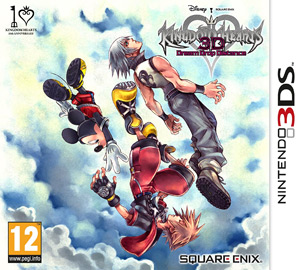
KINGDOM HEARTS: DREAM DROP DISTANCE (3DS)

Taking place after the events of Kingdom Hearts Re:coded, the game focuses on Sora and Riku as they prepare for the return of Master Xehanort. Besides these two well known characters, players can recruit Dream Eaters to assist them in fights. Square Enix decided to develop Dream Drop Distance, having been impressed by the quality of the Nintendo 3DS. Taking advantage of the handheld’s functionality, Square was able to include action elements from the series seen in Birth by Sleep, as well as to give plot hints for Kingdom Hearts III. The game has sold well, and an HD remastered version for the Playstation 4 was announced in September of 2015, as part of the upcoming compilation Kingdom Hearts HD 2.8 Final Chapter Prologue. 

Images © Eidos Interactive, Nintendo, & Square Enix


Some other titles released on this day:

  • Athena [Japan] – NES – 1987
  • Digimon World 3 – PlayStation – 2002
  • Hospital Tycoon – PC – 2007
  • The Incredible Hulk – PS2/PS3/Wii/Xbox360 – 2008
  • Final Fantasy Tactics  – Android OS – 2015