
Time is Money, Friend

We’ve established every freedom we need in order to play well together. We know we can be silly when we want to, serious when we have to. We even know that we don’t have to do or be anything at all. But it’s different when you have to spend money for it. Even if you are only buying a game. It’s hard to take back. After all, that’s how games are sold. That’s how money is made. You buy it, and, baby, it’s yours forever (De Koven 105).

In more ways than one, money and time are huge factors in discussing how players engage with video games. There are obvious areas like barriers to games due to monetary reasons, or a lack of willingness to spend out of fear of lackluster content, but the reality runs much deeper.

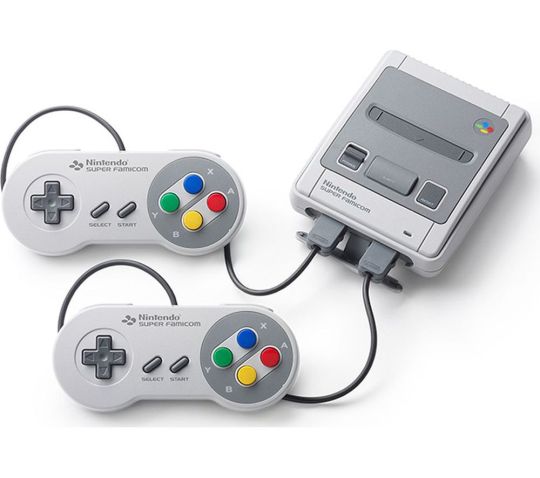
The concept discussed in the De Koven quote above, is particularly interesting in light of the newest crackdown on ROMs and emulated content. I discussed this briefly in my post on the Game Genie and old cheat codes, but recently there’s been even more push against older content, with new laws valuing Nintendo ROMs at upwards of $150,000! The way things are going, Nintendo doesn’t even want you to be able to have ROM or emulated copies of the games you already own in physical formats. They want you to buy their updated version of the game, now that they have the NES and SNES Minis on the marketplace.
u_10178213

Many of us have nostalgic memories and value associated with our times spent with older games. In the digital age, and with old consoles no longer working, or no longer showing up properly on high-definition television screens, we sought other options.

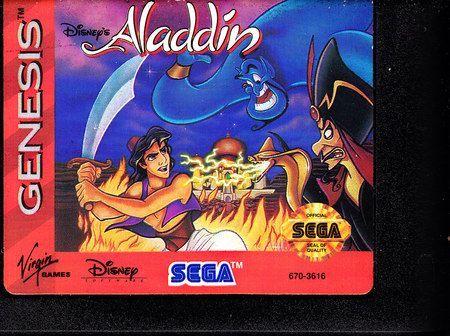
Over the years, I have physically purchased at least four different variations on a “Sonic Mega Collection,” via PS2, Xbox360, Nintendo DS, and most recently, via Steam. Sonic 2  for the Sega Genesis was the first video game that I personally owned the console. It’s forever held a very large place in my heart ever since. While I no longer own a copy of Sonic 2, I still have the original copy of Sonic 3 I received not to long afterwards. I spent countless hours spinning Sonic in all directions, clearing zones, gaining Chaos Emeralds. Through the time I invested, I was impressed upon. To this day, I still believe that Sega was ahead of its time and should have won the console wars. Alas, all I’ve been able to do, is to continue to support them by buying new versions of old titles. In truth, I don’t think any of my “collections” have received anywhere close to the attention they did when I was a child, and yet, I insisted on having a copy on whatever my gaming platform de jeur was. I also possess a number of ROMs and a Sega emulator for the titles I could less easily find: AladdinThe Lion KingJurassic Park (apparently I liked movie games).

In Nintendo’s new paradigm, the only way we can gain access to our nostalgia, short of owning the original copies, is to now hope that they deem the game you want worthy of being ported to the newest system. It doesn’t matter how much you invested in the past, they want to continue to take your money today, to resell you the experience you remember.
198751

Not all monetary investment is quite so stark. Players can also become invested in their video games depending on the amount of money they have or have not spent.

By the time I transitioned to an N64 from my Sega Genesis, I continued to rent or borrow video games, and only had a very small collection of my own personal titles. Money was tight and while I had rented and beat The Legend of Zelda: Ocarina of Time, I had recently learned that the next instalment Majora’s Mask was set to release soon. I scrimped and saved leading up to the release date, and as luck would have it, I was able to buy the game pretty close to its launch. Naturally, my thirteen-year-old self had neglected to realize that Majora’s Mask required the memory expansion pack for the N64, which it did not come with, and which I did not possess. Saddened and disheartened, I quickly realized that I would be able to rent Donkey Kong 64 which came with the memory expansion, and be able to play Majora’s Mask without having to find money I did not have to buy one. In light of the struggle it took for me to acquire and finally play Majora’s Mask, it is a game I have a much stronger attachment to than the original Ocarina.

Looking back, many of my fond gaming memories and “favourite” games, have similar kinds of stories. My nostalgic attachment to my games came not necessarily just from the games themselves or my experiences with them, but the memories of how I received the games. My Sega Genesis made Sega king in my eyes for the early console wars. I favoured 007: The World is Not Enough over 007: Goldeneye, because it was the game I owned. These feelings were particularly strong in my youth, and now through the lens of nostalgia.

However, the reverse can now be seen as true. I have a modest but still overwhelming amount of games sitting in my Steam library. I have countless copies of dusty Xbox 360 and PS2 games sitting on my shelves, next to distantly-used consoles. I continue to buy games not only on Steam, but also for these seldom-used consoles. In the case of the consoles, because the titles somehow carry distant meaning from a long time ago, and sometimes even on Steam for the same reason–and yet I do not play them.

At what point can we officially call this out as being more about the joy of picking up cheap games than the games themselves? I’m not sure, but I suspect Valve zoomed past it in a rocket ship quite some time ago, and if we can still see it, it’s only because it’s doing a victory lap.

But of course, the sale is only part of the story. When it fades, what’s left? A long list of games with metaphorical bite marks that you tell yourself you’ll totally go back to, but which inevitably slide down the priorities list by dint of being so last month. Dim, blurred memories (Cobbett 2014 via Eurogamer).

What is to be said for this kind of lingering engagement or investment. If we continue to pay for the content, countless times over, and yet the titles simply sit on a shelf, or as clogged-up megabytes on a harddrive, how engaged can we possibly be? Is it instead engagement with a memory? Or are we more enthralled with the thrill of the good deal, as Cobbett suggests? Are we trying to bridge the gap in order to create meaning and connection to our pasts through whatever tangible means necessary?
maxresdefault

Or perhaps, it’s some twisted version of the Sunk Cost Fallacy? One of the other kinds of investment and engagement we need to consider is the amount of time AND money that people put into their gaming experiences. DLCs, microtransactions, new equipment, fancy internet connections on the financial side, hours, days, months, or years on the side of time. “Your decisions are tainted by the emotional investments you accumulate, and the more you invest in something the harder it becomes to abandon it” (McRaney 2011). Basically, if you already feel you’ve already put a point-of-no-return amount into something (be it time or money), you’ll feel less inclined to leave it.

Common in the minds of gamblers, video game arcades are arguably one of the earliest attachments to this model. Have you been to an arcade recently? Do you remember what it’s like to drain quarter after quarter into a machine for another chance to get the next highest score? It sounds a lot like slot machines, and in some ways it was, just for score digits instead of monetary ones. Alas, modern micro-transactions, especially in mobile gaming, echo this model. In many cases, the game is designed to pull you along long enough, to make the rewards quick and ready enough, until things slow down. “I only have to wait a day for this thing to unlock” you may say to yourself. But you are impatient, and the ability to fast-track your research task only costs five coins, and you have fifty! Your one fast-track spirals into another, until you’ve quickly drained your coins. Suddenly you’re at the precipice of spending real money to gain more coins and progress further. You could wait, but you’ve already gotten this far, it’s only a little further.

maxresdefault1

Once money has been spent, especially on a game you’ve been playing long enough, it’s hard to turn back. Through this profit-model, ‘free’ games don’t stay free for very long.

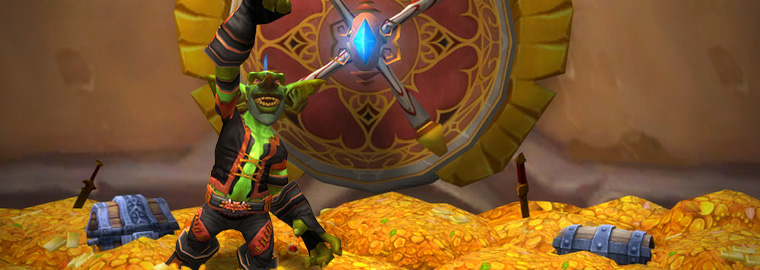
The Sunk Cost Fallacy also applies to more complex games like MMOs. Once you’ve spent enough time or money into one MMO, it can be difficult to jump ship to a different one. There’s a fear of losing progress, of failing. “World of Warcraft is interesting in that it caters well to…three goal types: it can be played for the goal of reaching the current maximum level, but it is also possible to play with the improvement goal for acquiring ever more points, possessions, and higher social status, and it is common to play many characters to the maximum level, making it into a game of transient goals, to be reached multiple times” (Juul 87). If you’ve accumulated enough “wealth” of whatever goal you wish, it can be difficult to pull away and be the bottom of the totem pole. It can be easily argued that this is one of the ways in which World of Warcraft has remained so successful–it’s just so hard for people to leave altogether, especially if they’ve been playing a long time.

In order to get to that point, of course, a game has to be enticing enough of an environment to begin with. [Part 5]


– De Koven, Bernard. (2013) The Well-Played Game
– Juul, Jesper. (2013) The Art of Failure

Keeping our Interest

There are a lot of methods that developers use to gain and maintain our interest in video games. Further still, there are external elements at work that also serve to drive us more into our games, as much as there are forces trying to drive us away. The network is as complex as it is interesting.

One of the first ways developers may gain our interest in their video game products, be the game itself or the method for playing the game (e.g. console, proprietary software, etc.). In many cases, especially in today’s market, a player’s decision about a title might be made up before they even have the game in their hands. Advertisements, reviews, unboxing videos, games conventions–all of them are driving people towards the socially agreed upon games for people to play. What’s the hottest ticket this year? What’s the new DLC for that EA game? What collector’s editions have the shiniest inclusions? What did that top Twitch streamer give special item drops for watching their stream?

Further still, advertisements and community driven conversations surrounding games are only part of this puzzle. Marketing and developer teams also try to appeal to whatever markets they perceive as being the most viable. At E3 this year, I remember reading a number of stories and news posts about angry Twitter or Facebook users criticizing the ongoing inclusion of female protagonists as within upcoming titles as a travesty, particularly when players would be unable to choose a male protagonist, or if players thought it wasn’t “accurate,” as happened with EA’s backlash for Battlefield VDespite the increased perception of female protagonists, according to Polygon’s post, the numbers aren’t actually changing all that much:

When a game features a set female protagonist, every player who enters those worlds must experience them through the lens of whoever the female protagonist might be. These games work to normalize the notion that male players should be able to project themselves onto and identify with female protagonists just as female players have always projected ourselves onto and identified with male protagonists.

A lot of vocal male gamers react to this because their identity is tied up with the role they live, but also the roles they play in their video games. It’s perceived as being so intertwined, in fact, that while these individuals may have chosen to play a female or male character before, the act of being “forced” to play from the female perspective, is somehow an affront to them personally. Nevermind that FemShep from the original Mass Effect trilogy was obviously the better cannon choice…but I digress.

1cf9d25436a25ad4f7154a38b3189a1f

Before we even get our hands on the games, people are already being told what they can, cannot, should, or should not be playing. It’s tied up in people’s identities, and threaten’s some individual’s perception of their flow (Isbister 5), their immersion, if it doesn’t match what they believe it should be. Even though, that flow isn’t broken by say, playing a bright blue super-fast hedgehog in the curvy streets of Metropolis (or perhaps that’s because he’s male?). Play helps to perform acts “of bonding, including the exhibition and validation or parody of membership and traditions in a community” (Flanagan 5), which subsequently helps to reinforce and create community, as well as to stand up against or alongside social norms. When the group identity is called into question by the identity of our game’s protagonists, turmoil erupts. However, engagement does not necessarily cease here, but rather is transformed. Rather than direct play with the game itself, would-be players become embroiled with anger against the creation of their perceived abomination–there interest is oft maintained, even if in…different circumstances.

Conversely, the broadening and redefining of our social norms helps to provide better representation, to allow new communities to grow and become enthralled with a video game’s world. Representation matters, and while I probably still would have played the original Mass Effect trilogy, I don’t think I would have been as emotionally invested in the story, my decisions, or the future of the galaxy, had it not been for FemShep. Similarly, every chance I get, be it Dragon AgeSkyrim, Oblivion, World of Warcraft…pretty much every adventure or action RPG I’m given the option to play a female character, I will. I see myself in those roles, and I play my characters accordingly. It’s not that non-male individuals can’t get hyped about playing as male characters in our video games, quite the contrary. However, we might not see ourselves as the characters we play, as much as our male counterparts might. Individuals may become less invested in video games in general, become withdrawn from the community and advertisements already not targeted at them, and the prophecy becomes self-fulfilled.

The original Mass Effect trilogy was one of my favourite series, possibly of all time. Not only because the storyline was amazing, the world was stellar (pun intended), the voice acting, and music were superb, but also because for the first time in my already-then some twelve to fifteen years of gaming, I was finally able to really play myself. I made all of the Paragon decisions, not just because I wanted to play that role, but because I knew that’s how I would have responded in those situations. It was the truest essence of roleplay, something I had enjoyed doing in a pen-and-pencil environment, come to life in full voice-acted splendour. I carried this motif the whole way through, I made the hard decisions, I felt the struggles, and I was fully immersed in the entire journey.

At one point, for the achievements, I decided to try to go back and play the Renegade options, starting at Mass Effect 2. Suffice to say, I found it impossible. Even following the creation of my own mythos that my Sheppard was lost at the end of Mass Effect 1, and this ME2-alternative Sheppard was a miswired-during-revival version, I still couldn’t bring myself to play that kind of role. To this day, I still do not have those achievements.

In this way, the virtual worlds we visit are no less complex than the one our physical forms inhabit. “Within the culture of computer games, race, ethnicity, language, and identity relations including gender emerge as complex and contradictory…In Western countries, computer games are still perceived as an arena created by and for white men…” (Flanagan 225). She continues to discuss the specifics of a number of games and genres, namely the false dichotomy of “casual” female gamers and “hardcore” male gamers. She suggests that designers “…have yet to grapple with the full range of inequities ingrained in the player categories and game models exhibited in most of today’s games” (225). Though, despite the backlash they continue to receive, we do see this trend slowly starting to change. Despite the ongoing sexist environment within the industry for some, there yet remains hope, and an ongoing push for developers, and players, to do better. For just as soon as there’s no female representation, the tide can change just that quickly.

In the words of EA, “either accept it, or don’t buy the game.” As our video games are reflections of our societal norms, and of our own identities, emotions become heated when beliefs are challenged. Conversely, because they are reflections of our society, it looks good on the industry, and on gamer culture more broadly, to see these kinds of changes take place. Players are engaged and invested because they see themselves in the worlds they explore (Hart 2017). If we take the simulated play theory to be true, the better equipped players are at learning different kinds of worlds to live in, perhaps one with more accessible and even representation, the better adept they will be at living in them.

WoWScrnShot_031815_205451

After all, play is ultimately a social venture, right? [Part 3]


– Flanagan, Mary. (2009) Critical Play.
– Hart, Casey (2017) Getting Into the Game: An Examination of Player Personality Projection in Videogame Avatars (Game Studies)
– Isbister, Katherine (2016) How Games Move Us

The Legacy of Cheat Codes & The Game Genie

In order to truly understand the how and the why of cheating in videogames we need to look back at some of the earliest examples, namely the inclusion of cheat codes or inputs alongside off-brand cheating systems, like the Game Genie.

81hglu5s7ml-_sx342_
The original console command system.

Perhaps one of the earlier, and most well-known of these sanctioned cheat codes created by developers was the Konami code, or the Contra code, first ‘discovered’ in the original NES Contra game. This code, ↓ → → B A START, was found not only within this title, but also within other Konami games, hence earning it’s primary title as the “konami” code. Later it later became a staple of ‘gamer’ culture, appearing in non-Konami games, on clothing, and other paraphernalia. How does a code, one that gave players a mere 30 extra lives, an official cheat-system, gain such a cultural traction? It wasn’t just Contra and Konami games either that featured cheat codes like these in the earlier days of console gaming. Sonic 2, featured a level-select option within the ‘sound test’ section of the options menu, among other choices like debug mode or unlimited lives. Even games like Disney’s Aladdin featured a level-select mode on its Option menu, mirroring the style of the Konami code: A, C, A, C, A, C, A, C, B(x4).

While cheat codes were primarily instituted by game developers for playtesting purposes (having unlimited lives is a really good idea if your job is to potentially find glitches via death in Sonic), they were clearly never taken out of a wide array of games. Alongside the question of the popularity of cheat codes, we can similarly ask why these were left in at all by the developers? In the case of games like Sonic 2 or Aladdin, level-select was a very useful option for players who had beat the game a number of times and didn’t want to “work their way through” again, only to get to their favourite level. Lacking a cartridge save option, something that would be later included with Sonic 3, it made sense for players to have access to these kinds of perks, after being “in the know” to find them. That being said, Sonic 3 continued the tradition of cheat codes and still had its fair share of cheats.

It also wasn’t just thanks to the great sleuthing of early videogame fans that we found out about these codes either, in the pre-launch and early years of the internet. Participating in cheat code culture in social circles, scribblings in the back of Blockbuster rental copy game books, and even licenced game magazines like Nintendo Power, or even strategy guides, often included these to help other gamers find them. Soon after, the pseudo-mythological state of the cheat code was born, and it felt like everyone was on the lookout for the next one they could share with their friends, or fellow rentee.

Official codes weren’t the only things that players found in efforts to modify their gaming experiences at this time. The discovery of glitches, exploits, and in-game skips were also common inclusions in this realm of “cheating” and modification. I can remember playing the original Pokemon Blue and learning about the different ways I could cheat the code and glitch it into giving me things like unlimited pokeballs or items, alongside even getting a Mew super early in the game. A lot of these kinds of glitches, the Mew nonwithstanding, required access to other Gameboys or different bits of technology to get them to work. Following clever-use-of-game-mechanics (as Blizzard loves to label it), players could flash-restart, controller switch, or cartridge remove-replace their way to a whole array of new things that were very much part of the original code, even if not used as intended.

pokemon-red-blue-yellow-mew
Fancy meeting mew here.

Unlike learning that Mario can skip a bunch of worlds by dropping behind a white block in Super Mario Bros. 3 and using some fancy flute play, these kinds of glitches were off the books, even if their inclusion in the game was somewhat ‘intentional.’ We can take this to the next level at this point, to consider once again the Game Genie, and perhaps it’s odd and sanctioned cousin, Sonic & Knuckles.

The Game Genie was a 3rd party development released for a number of the early consoles, including the NES, SNES, Gameboy, and Sega Genesis. The device came with a book of codes which allowed players to cheat their way through a variety of games through the Game Genie’s bypass system. Essentially, because the device acted as a mediator between player, console, and cartridge, it allowed for the system to read the game code emitting from the cartridge differently from its actual output, allowing for the player to reap the benefits. In addition to the codes that shipped with the device, players were able to create their own codes by random generation, or even could subscribe for updates via a paid service. It was quite an era for cheating. However, it should come as no surprise that Nintendo in particular fought back hard against the system, trying to claim it infringed on copyright. The legal case settled in Game Genie’s favour, however, and their ‘unsanctioned’ cheats were safe.

In contrast, Sega was in full support of the system, as long as it didn’t provide cheats for games which allowed for saving. Sega’s approach to software circumvention adds an interesting layer to an analysis of cheating in videogames, as it again suggests that cheat codes, even unsanctioned ones, were meant to help players bypass unwanted content when saving along the way was not an option. It’s unsurprising that they followed this ideology, as Sonic & Knuckles allowed for players to have a pseudo-sanctioned version of the Game Genie already. The cartridge had a slot on the top which was intended for players to insert only Sonic games into it, allowing Knuckles to join the fray of Sonic 2 and others. Instead, it also allowed for players to have randomly-generated Chaos Emerald stages in the Sonic 3 style based on the code of nearly any Sega game that was inserted.

aqg1dwlhj9sx
Sonic & Knuckles stacked with Sonic 3 to create Sonic 3 & Knuckles

More commonly today, we see these kinds of cheats available through ROM-hacking emulators, console commands (PC), or unofficial patching/editing by the savvy game community. Further still, all of this so far has been related to software or “soft” cheating and modding of videogames, not even considering the hardware or “hard” modification, which requires going in and tweaking the actual hardware in order to run things you weren’t intended to. While there isn’t time to discuss this fully here, it’s interesting to consider again that by virtue of their design, videogames require an entirely different kind of systems for modification than their board game cousins. After all, it’s easy enough to make up your own pieces for a board game versus wanting to play N64 games on your Xbox 360. Yet again, there are also often more legal issues surrounding hardmodding, as we saw recently with Nintendo and modding chips.

While it’s becoming increasingly rare to see “official” cheat codes in video games (except in the case of games like The Sims, though more on that in a later blog), we do see the inclusion of console commands and the ability to modify games through “mods” available instead. We’ll look into this realm of modding and cheating later, but it highlights something within the gaming community: we can’t let games be. As soon as a game is released, especially for current systems, we are continually seeing them adapted, cracked, modified, and eviscerated by the community so that the original intended experience is no longer the only one we have access to. Why does there seem to be such an essential ‘need’ to cheat?


Academic References/Further Reading:

Bogost, Ian. Persuasive Games: The Expressive Power of Video Games (2010)