
Curating Communities in the Digital World; Spoilers, it’s nothing new.

Over the past few months in light of the COVID-19 pandemic, I can’t help but feel like there’s been an increasing awareness paid to community. What it means to be part of one, how do we come together as one, how do we build one in an increasingly digital age?

So many questions that people are now asking themselves as though they’re waking up from a haze. For so long people have been going through the motions of life and only truly living in the wisps of what community is supposed to be. People love to blame the internet and social media for destroying historical meanings of what it meant to be part of a community—but many of these people have ceased to evolve to see what modern day communities are actually like.
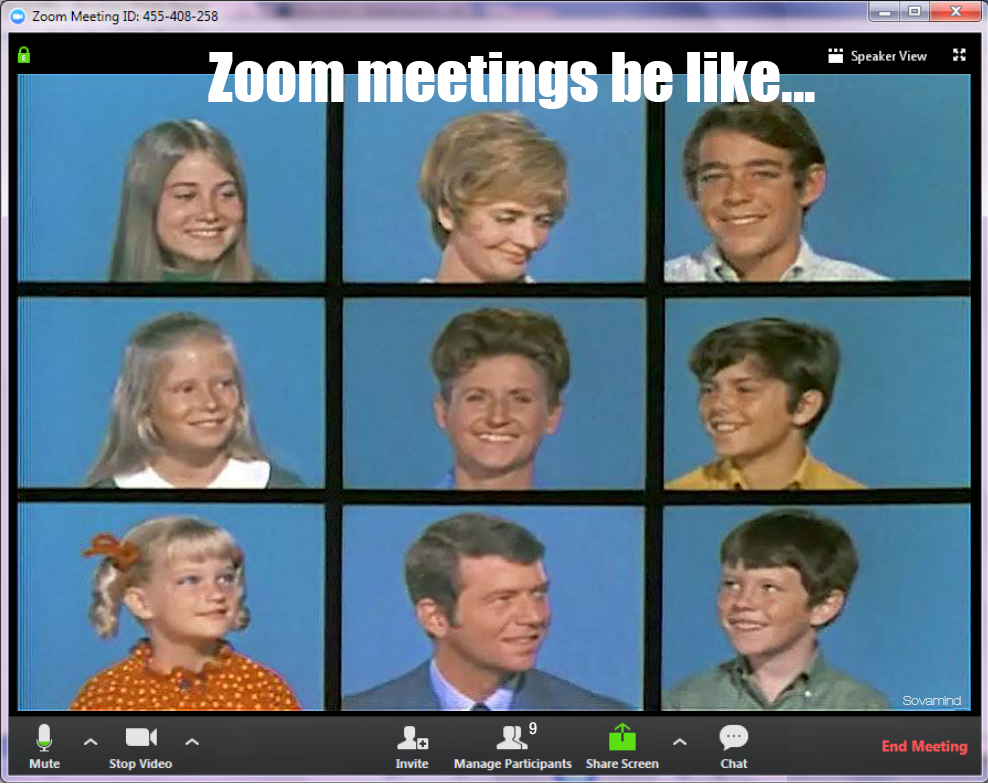
hpgiu1kefus41Then COVID struck. Slowly, then encapsulating the world. With the physical spaces we used to gather no longer being accessible, people fled to the internet to try and make whole the social spaces they were deprived of. The very people who claimed that these spaces were the death of all community are now struggling to try to figure out how to use the internet as the vast saviour of all things social.

And yet, they still don’t understand.

Now that I’ve passed into the post-comps-dissertation-writing-I-swear phase of my PhD, it’s hard to not see things align in an eerily timely and useful way. While I write about gender and power dynamics for my dissertation, I’m effectively writing about how communities are built and developed online. How their ideologies are developed and perpetuated; how we make meaning in digital spaces. As my academic mantra has been for a while: People, Technology, Culture.

I’ve had the pleasure of receiving a series of graduate research scholarships to develop a community for the UW Games Institute from the ground up in a digital space—predating the COVID epidemic, but accelerated in kind by its appearance. I’ve had in-depth experience with thinking through how to build the culture we want to have, and how to reinforce the culture we already had, through an entirely virtual medium.

This has given me new perspectives not only on how simple it can be to consciously choose the framework you want a community to develop around, but equally how easy it is for people to overlook the simple things that can easily breed discontent and toxicity if overlooked.

As per usual, this is going to come back to World of Warcraft (shocker, I know). I spent the morning talking to my current GM of HKC, whom I’ve known for over 13 years now. We talked about our community, the world of gaming culture, and most notably, the recent scandal with Method.

This scandal sadly has come at no surprise to me, as one who researches within and participates heavily in the competitive gamer world. The stories relayed through this news blast aren’t unique—in fact they’re far more common than many want to believe—but the more these stories come to light, the more…hopefully…we’ll come to see a change in the gaming “community.”

I’ve been lucky that I learned to navigate these worlds earlier, and have surrounded myself over time with people who support the kind of virtual space I want to be a part of, but many aren’t so lucky. That spine, was an important part of my conversation today. We have a strong and long-lasting community within Hello Kitty Club. But despite our size, we aren’t free from risk of drama (nor have we not had our share of it in the 10+ years I’ve been a part of its leadership).
IMG_20191102_175037-01
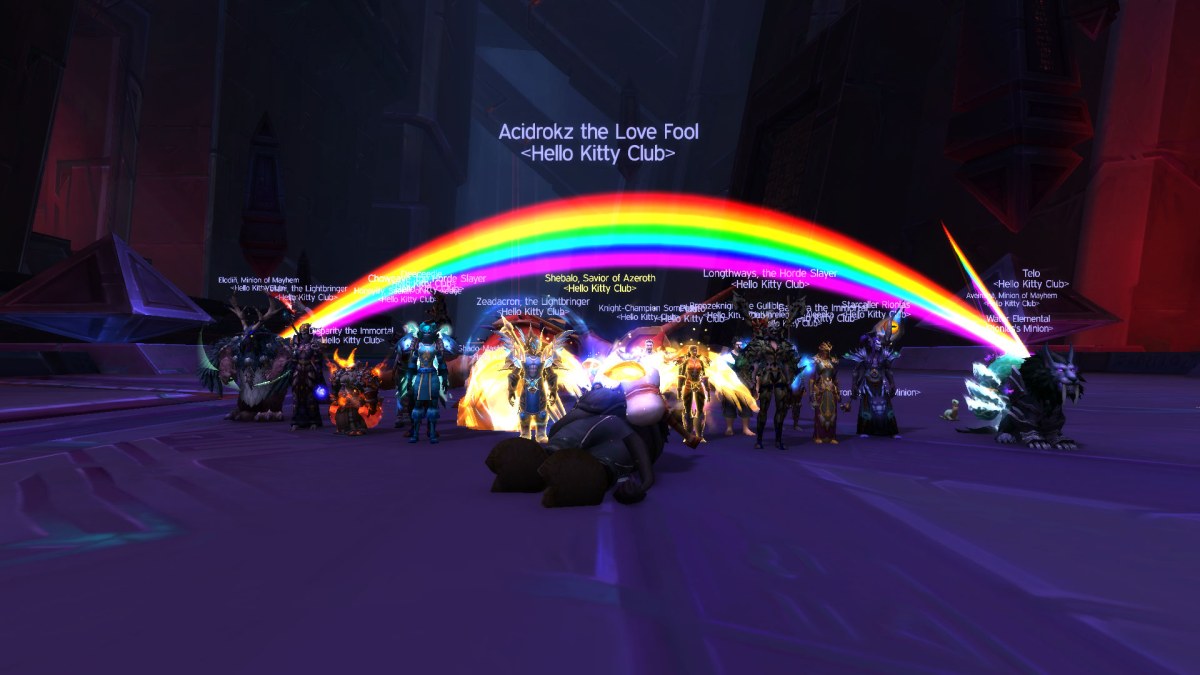
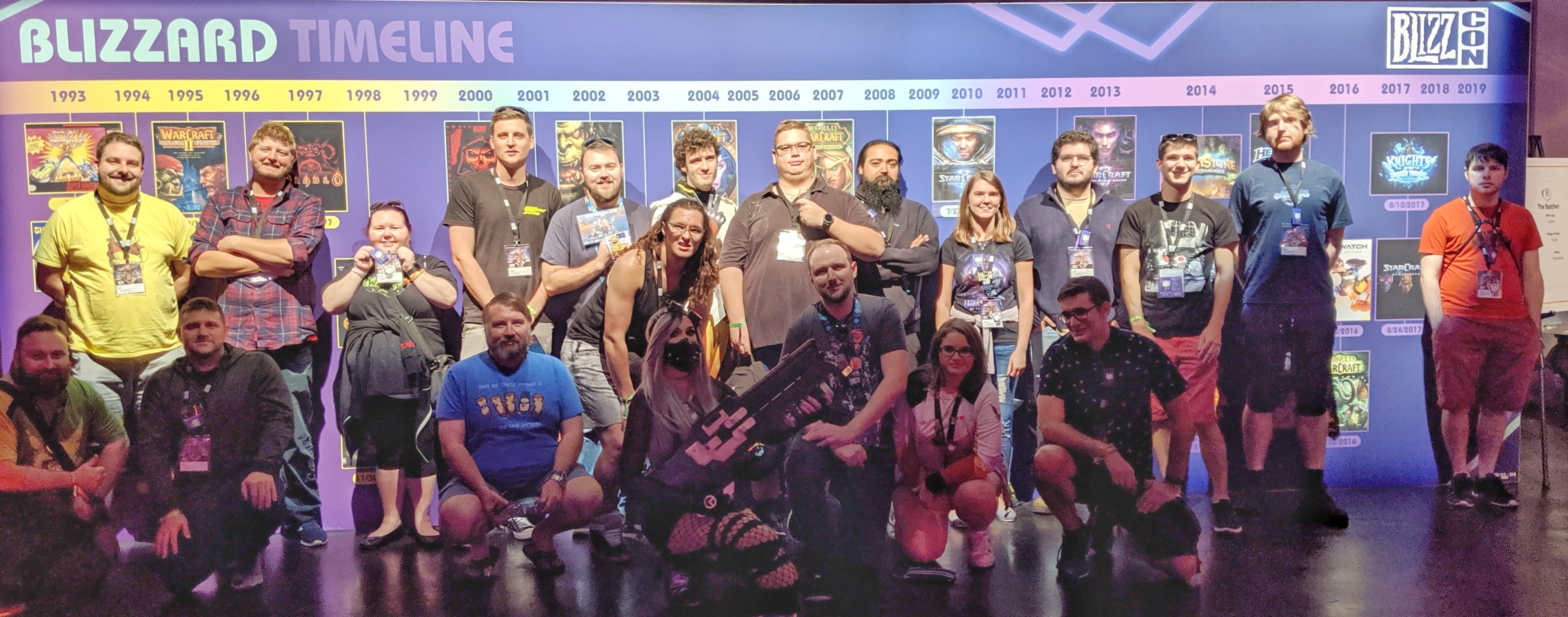
HKC BlizzCon 2019, HKC + Friends through the years (when we each joined Blizzard, approximately)


What struck me today was the willingness to work towards creating systems to stop, acknowledge, or offer recourse for situations in the same wheelhouse as what happened with Method (and others) before they even start. We aren’t some international gaming juggernaut, and yet, the importance of creating safe spaces for all members of your community, is no less important to us.

Over the years, there’s a reason why people keep coming back to HKC. Many guilds rise and fall. People disappear without a word. But for some reason, people keep coming back to us and remember us long after we’ve parted ways (or changed servers), and I can’t help but keep coming back to the question of community. We’ve evolved over the years but there’s something about our core, our attitude, our values that seems to strike a chord with people. Something we hope to soon put to writing to ensure that that energy can continue to thrive beyond the current leadership.

I mean….let’s face it, we might leave this game eventually right? (*awkward laughter*)

In the meantime though, I’m proud to be part of who HKC is today. We acknowledge our own missteps in the past but equally are learning from them in order to build a better community in the future. Even if it’s just in our one small corner of the Discord & Azeroth universes.

MVIMG_20191102_191748
HKC BlizzCon 2019, closing ceremonies

#GamerGate, Tech industry sexual harassment leaks, #BlackLivesMatter, #MeToo, and through this current Method scandal. All of these things happen everywhere, across the globe, but they are changed systematically at the small community level.

We work together to fight intolerance and misconduct at a local level and it can have a rippling effect that spreads across the whole of the industry. It’s human nature to gravitate towards what others are doing successfully. We must continue to fight, no matter how helpless it may seem by learning about these big-news items.

All news is local news, and the biggest of scandals start with the smallest of problems.

Build your communities with care and you’ll see them grow. Let them populate unchecked and you’re just setting yourself up for disaster. I’m sure Method meant well, but at some point you need to let go of old ways, evolve, and stand up for what’s right.

Change is an individual choice. Choose to build better communities, adopt more inclusive values, choose to listen to others.

Choose a better future by acting as though it were already here.

On the Hook & Engaged: Why do we play games?

My recent experiences with Fallout 4 and conversations about modding have got me thinking, how we get locked in and invested in the games we do, and why? Further still, why do we play games at all?

Forgive the featured image, but I can’t render the phrase “got me thinking” without picturing Skyrim. That fact alone, is a testament to my questions. I haven’t done a serious playthrough of Skyrim in years and yet there are specific references like this that continue to persevere. While studying or writing, I often find myself listening to the Oblivion or Skyrim soundtracks. I continue to have the game’s map tagged up at my work desk–a testament to the game’s place in my life once, even if it’s there no longer.

Our games, our video games, are cultural artifacts. They are designed with intent for specific outcomes, and yet, like many other games, they tend to develop a path of their own once in the hands of players in the wild.

But why do we play at all?

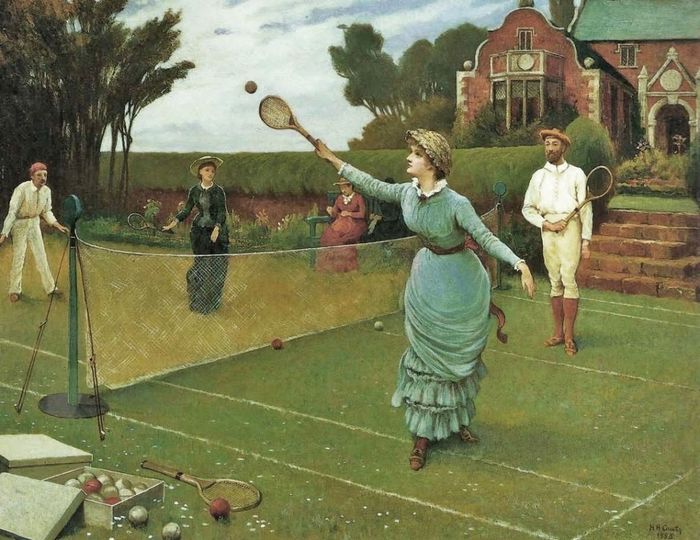
tennis2bplayers2bby2bhorace2bhenry2bcauty252c2b1885
I wouldn’t want to run for a tennis ball in those skirts, I’ll tell you.

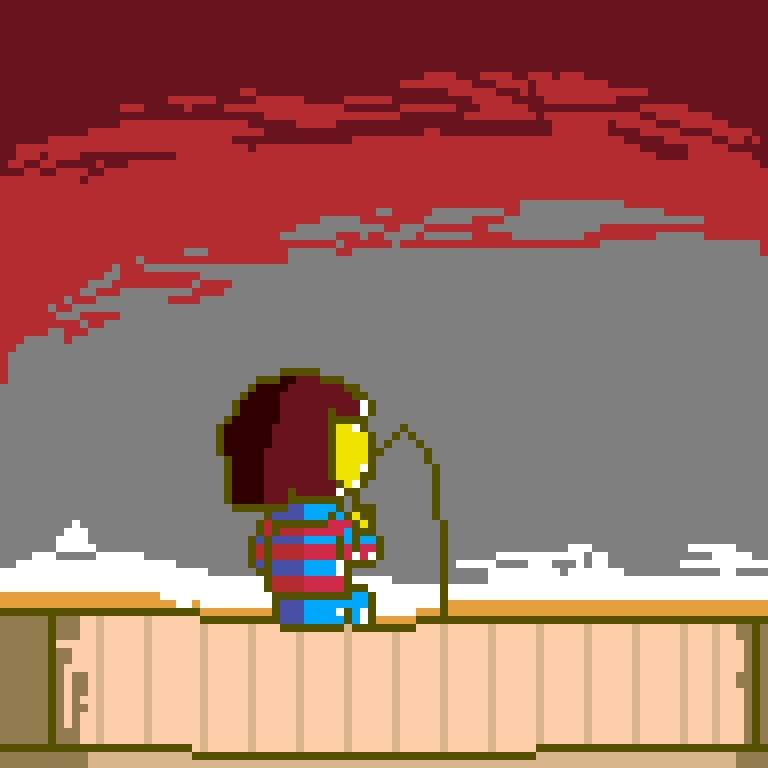
Last term when writing a paper about Undertale, I looked into some of the ways that video games tap into our minds at a very fundamental cognitive level. Well-executed games like Undertale subvert player expectations in order to create more engaging content. This content goes against RPG-trained gamers’ beliefs about the genre, and further still, about video games themselves. One of the ultimate messages in Undertale is to force players to question procedural narratives, the perceived kill-spare dichotomy, and notions of “progress.” This message is delivered not only through the narrative, but also how the game builds itself around the player’s decisions, even after many playthroughs. Undertale is successful in this way, due to its ability to really get inside the mind of the player (or at least pretend to do so). It too, questions why we play, but does so while you are playing.

In the research for that paper, I considered a number of figures in cognitive stylistics, including the writings of Kenneth Burke (1, 2, 3), Joanna Gavins, and perhaps most importantly for where I’m going with this series’ introduction: Gonzalo Frasca and Michael Kearns. Their notions of “simulation theory” (Frasca 2003) and “predictive play” (1996) are an excellent jumping point for exploring not only why we play, but also why video games as another form of storytellling, are so enticing. Essentially, simulation theory and predictive play suggest that we tell stories (and subsequently write novels, or by extension, make video games), because our brains are literally hardwired to want to do so. Not purely because we find them “entertaining,” but rather, that we enjoy participating in other worlds so that we can better learn how to navigate this one. The theory goes that evolutionarily speaking, the reason we got so good at navigating complex social situations or novel problem-solving was because we got so good at pretending they were happening through stories. Tell enough stories that deal with how to fight a bear in the woods, and you might have a better chance at fighting off a bear in the woods if it actually happens to you.

We’re not here to discuss the validity of this claim per-se, but it’s an interesting point to consider when we look at video games. If novels and storytelling more broadly are ways for us to exercise our minds in order to better manage reality, how much better (or worse) might video games and “real” simulations be at doing just that? Naturally we play video games because we find them entertaining, but perhaps they tap into something even more primal than that? Or at least that’s the excuse you should give someone the next time they say you play video games too much. Heh.

Alas, no matter what the reason we play games at all, there are certainly many reasons we play video games, and further still, why there are so many video game genres to suit almost any need. You have role-playing, shooting, adventure, platformer, puzzle, strategic, simulation, racing, and fighting games–only to name a few. This is compounded by different methods of playing video games–be it mobile, console, computer, or virtual-reality. At every step of the way, we have found a variety of environments to simulate and pass time in. Unlike traditional narratives, video games allow us to explore simulated spaces in previously impossible ways. Hand-eye coordination in particular, is something that is gained by stories-by-gaming environs. Unless someone telling you a tale happens to throw the book at you during the climax, chances are, that this part was missing from traditional mind exercises.

With the genres of video games extending past those of traditional narrative forms, blending with other forms of sport and play, and further splitting off into countless directions–how do any of them manage to keep our attentions at all?

They catch us on the hook.

0677617dd824b8d58e6909db2e8914b55e6e32b3_hq

| [Keeping our Interest: Part 2] | [Social Creatures: Part 3] |
| [ Time is Money, Friend: Part 4] | [Building Worlds: Part 5]|
| [Case Study: A Battle For Azeroth] |
Combined word count: 9, 825


Academic References All-Posts Compilation

(Non-course):
– Burke, Kenneth (1925) Psychology and Form
– 
Burke, Kenneth (1968[1931]) Lexicon Rhetoricae. Counter-statement
– 
Burke, Kenneth (1984) Permanence and change
 Frasca, Gonzalo (2003) Simulation vs. Narrative: Introduction to Ludology
 Gavins, Joanna (2007) Text World Theory: An Introduction
– Genette, Gérard and Marie Maclean (1991) Introduction to the Paratext
– Kearns, Michael (1996)Reading Novels: Toward a Cognitive Rhetoric

(Course):
– Bogost, Ian. (2010) Persuasive Games: The Expressive Power of Video Games
– De Koven, Bernard. (2013) The Well-Played Game.
– Flanagan, Mary. (2009) Critical Play.
– Gibbs, Martin et al. (2012) Tomestones, Uncanny Monuments and Epic Quests: Memorials in World of Warcraft
– Hart, Casey (2017) Getting Into the Game: An Examination of Player Personality Projection in Videogame Avatars (Game Studies)
– Isbister, Katherine (2016) How Games Move Us
– 
Juul, Jesper. (2013) The Art of Failure
– 
Kolo, Castulus and Timo Baur (2004) Living a Virtual Life: Social Dynamics of Online Gaming (Game Studies)
Krzywinska, Tanya (2008) World Creation and Lore: World of Warcraft as Rich Text in Digital Culture, Play, and Identity: A World of Warcraft Reader, Hilde G. Corneliussen and Jill Walker Rettberg eds.
– LaRell Anderson, Sky (2017) Watching People is Not a Game: Interactive Online Corporeality, Twitch.tv and Videogame Streams (Game Studies)
– Pearce, Celia (2009) Communities of Play: Emergent Cultures in Multiplayer Games and Virtual Worlds
– Ruch, Adam (2009) World of Warcraft: Service or Space?
– Sharp, John (2015) Works of Game: On the Aesthetics of Art

(Video)Games: A Need to Cheat

Along with the idea of fairness comes its necessary complement: cheating. Cheating is what someone does to give him/herself a more than even chance to win. At least, that’s what we most often call cheating.

When I happen to notice you attempting to draw universal attention to my little cheat, I am aware that the motivation for your sudden intensity stems not as much from your concern that I have broken a rule as from your feeling that I have  somehow deprived you of your opportunity to win…

It is obvious that your concern with my cheating is biased in your behalf. If I’m doing something wrong, even if I’m in flagrant violation of the rules of the game, as long as you perceive yourself as winning, everything’s cool (Koven 24-25).

To what lengths will you go to win, to succeed, to overcome the technical rules of whatever game you’re playing to get a little bit of an advantage? Would it make a difference if the game enabled you to accomplish this task via embedded cheat codes? What do we make of sanctioned cheating vs. unsanctioned cheating? What if you don’t even know you’re circumventing the rules-as-intended?

When playing board or card games with friends, we already know the routine. Often “house rules” need to be established alongside “legitimate” ones, because we seem to have a predisposition to change games as they’re presented to us. We demand that our friends and family reveal their house rules before a game even begins, lest we find out mid-way through that people are actually not on the same page. What happens when you land in free parking in Monopoly? I’m sure we’d be very divided on the answer. “Wait, that’s cheating!” we’d be inclined to say, when our peers reveal themselves to be playing an entirely different game than us, while all looking at the same board. Some strange parallel reality where someone jumps up and stops you from buying a house on your second pass of “GO” in Monopoly.

phoenix-wright-objection

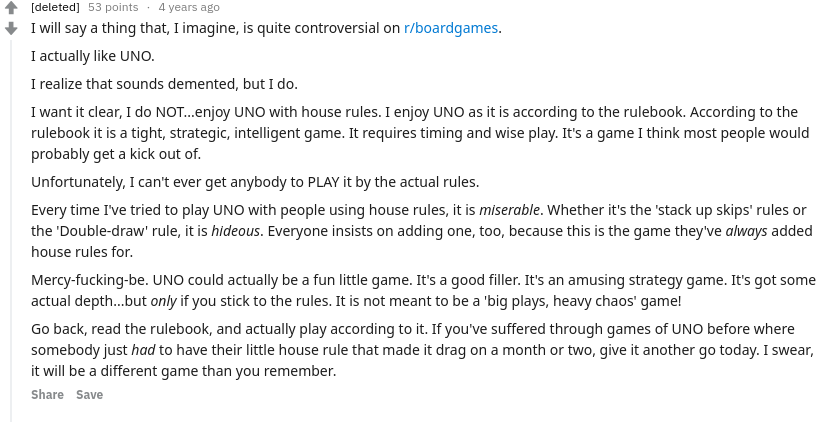
It’s not surprising that this was a heated conversation in the board games subreddit, and spawned at least one thread trying to spin the ‘positivity’ of house rules. These are things we usually only find in board and card games, because (without mods or hacking), in video games, the code simply doesn’t allow us these affordances. This is thanks to Procedural Rhetoric, where game philosophy and developer ideological visions are written into the very laws which govern how the game operates. For example, when playing UNO on the Xbox 360 (or other ports), the kinds of house rules faced by this unfortunate redditor would simply not be possible.

Screenshot 2018-07-08 at 1.10.09 AM

The code would prevent such frustrations from occuring in a the videogame version of this card classic. Even when “house rules” are allowed, they’re usually custom-made and allow only for people to enter into the game acknowledging them in advance, with no room for mid-game shifts in playstyle. Even custom games in more recent first-person shooter titles like Halo or Overwatch, lay all the custom rules upfront–people know what they’re getting into. At all stages of these custom maps or games, players are often required to choose from what the developers have already accepted as “sanctioned” deviations from the norm.

This idea of customizing game rules and house rules within board games and their video game companions brings us closer to the question of what it means to cheat in games. The implementation and adaptability of board and card game house rules are perhaps more complicated than a handful of blog entries can address, but, I think we can safely look at why and how we cheat in our games through looking at some specific videogame history and case-study-style examples via the following series:


Academic References/Further Reading from the Series:

4 Games That Should Totally Be Movies

Share Buttons

Share on FacebookTweet about this on TwitterShare on RedditShare on TumblrShare on Google+Email this to someoneShare on LinkedIn

Which Games Should Make the Transition to Film?

With the release of Assassin’s Creed coming to theaters in short order, and following the high of the finally-released Warcraft film, video game movies are here to stay whether you love or hate them.

Continue reading “4 Games That Should Totally Be Movies”