
This Day In Gaming History: July 12

 Thisdayingaming

This Day in Gaming History is an editorial released 2-3 days per week, that takes you on a ride in its custom-built gaming history blue box. We take a look at titles all released on the same day throughout gaming history, while also giving extra facts and anecdotes as available or appropriate. Got a favorite game that you want to learn more about, or perhaps want to see featured on TDIGH? Send angel1573 a message on the forums, or leave a comment below!

While today’s post will be brief (a topic which will be discussed further in coming weeks), its a heavy hitter comes from a franchise which seems to be on everyone’s lips these days. If you haven’t been living under a rock, I’m sure you’ll catch my meaning. Whether or not you’re ready to master what we have in store for you today, it’s time to dive in and go!

CASTLEVANIA II: BELMONT’S REVENGE [JAPAN] (GAME BOY)

Also translated as “The Legend of Dracula“, and not to be confused with the NES game Castlevania II: Simon’s Quest, this title was released for the Game Boy on this day in 1991. The second title to be released for the Game Boy handheld, and sequel to Castlevania: The Adventure, it is set fifteen years after the events of its predecessor. Released in color in later versions, Castlevania II: Belmont’s Revenge was applauded for its inclusion of classic Castlevania items, and weapons, while also making better use of the Game Boy’s hardware than its predecessor. The title follows the story of Christopher Belmont and his quest to save his son and Transylvania from Dracula in newly regenerated human form.

PAC-MAN COLLECTION (GAME BOY ADVANCE)
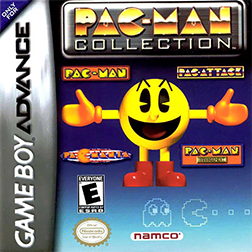
A compilation of four Pac-Man titles–Pac-Man, Pac-Mania, Pac-Man Arrangement, and Pac-AttackPAC-MAN Collection was released on this day in 2001. While the first three titles are all classic Pac-Man, and follow general Pac-Man gameplay, Pac-Attack is a falling-block puzzle game much like Tetris, and was originally released for the Genesis and SNES consoles. Due to the small screen of the GBA, players are given the option to view their chosen title in two different methods. In scroll-mode, the field of view automatically scrolls to follow Pac-Man, whereas full-screen shows the entire field of view in miniature form. With the exception of Pac-Attack, the player can tweak various settings such as lives, difficulty level, or bonus life counters, similar to the DIP switch enabled settings in the original arcade machines. The title was criticized for cutting out pieces of music and sound effects, a lack of save functionality, and inconsistencies with the field of view methods. Overall, however, the title was well received.

POKEMON BOX: RUBY & SAPPHIRE (GAMECUBE)

Last but not least, with all the Pokémon Go news since launch, it seems very appropriate that we should look at another Pokémon title. Originally available in North America, and only at the Pokémon Centre in New York City, Pokémon Box: Ruby & Sapphire was released on this day in 2004. More Poke-utility than game, for the days long gone where storage was a massive problem, Pokémon Box allowed players to store up to 1,500 Pokémon from Ruby or Sapphire. It allowed for ease of collection, organization, and searching of said Pokémon, and also allowed players to play Ruby or Sapphire on their TVs. In Europe, the box could be purchased in a GameCube bundle, which included Pokémon Colosseum, a memory card, and a GBA-GB game link cable. The title also facilitated transfer of Pokémon between Emerald, FireRed and LeafGreen.

The game also connects with GBA directly, allowing Trainers to deposit their Pokémon without having to trade. Once stored, players can view a spreadsheet-like stat list, featuring categories such as: original Trainer, moves, Pokémon Contest stats, friendliness, and level. Pokémon Box also features a “showcase” mode, which allows players to create a stage from a combination of ten backgrounds, ten stage patterns, and five types of display pieces, alongside one of eight music tracks to show off their selected Pokémon. The title has certain limitations before it can be used with any of they aformentioned Pokémon titles, all of which include having caught at least 100 Pokémon in their in-game Pokédex, plus additional title-specific requirements. After a certain number of Pokémon are deposited within the game cartridge, the player is gifted a Pokémon Egg, which will hatch into a Pokémon with a special move it would not learn normally. This move can be passed down through breeding.

Images © Konami, Namco, & Nintendo


Some other titles released on this day:

  • Warpman (Japan) – NES – 1985
  • FlatOut – Xbox/PS2 – 2005
  • Resident Evil 4: PLATINUM – iOS – 2009

This Day in Gaming History: June 11

Thisdayingaming

This Day in Gaming History is an editorial released 2-3 days per week, that takes you on a ride in its custom-built gaming history blue box. We take a look at titles all released on the same day throughout gaming history, while also giving extra facts and anecdotes as available or appropriate. Got a favorite game that you want to learn more about, or perhaps want to see featured on TDIGH? Send angel1573 a message on the forums, or leave a comment below!

Today, we’re taking a bit of a curve with our trajectory as we focus on a sole piece of gaming history today: the release of a Nintendo hendheld console, in a long line of handhelds. Let’s take a look at what the GBA has done for gaming history, shall we?

GAME BOY ADVANCE (GBA) – NORTH AMERICA

Game_Boy_Advance_Purple_Model

On this day in 2001, Nintendo released what would become one of the most successful handhelds in gaming history in North America. Celebrating its 15th anniversary this year, the Game Boy Advance was the sixth release in the Game Boy line, including advancements and different versions on the Game Boy and Game Boy Color. The Game Boy Advance itself also had two additional releases from its original model, including the Game Boy Advance SP released in 2003, and the 2005 Game Boy Advance Micro. The handheld maintained an extensive game collection, as well as a distinguished career run. The system has been supported as late as 2010 (in Australia). The Game Boy Advance is also touted as having one of the best hardware designs in Nintendo’s history for ergonomics and durability. The GBA was initially hinted at as far back as 1996 in EGM as a Game Boy successor being worked on by Nintendo, coded “Project Atlantis.”

The extensive and successful gaming library developed for the GBA following its release was highlighted by a number of well-known titles (some that you can expect to read about here in the future). According to IGN, the top ten of all time include: WarioWare: Twisted (2005), Castlevania: Aria of Sorrow (2004), Legend of Zelda: A Link to the Past with Four Swords (2003),  Advance Wars (2001), Tony Hawk Pro Skater 2 (2001), Mario Golf (2004), Super Mario Advance 3: Yoshi’s Island (2002), Final Fantasy VI [re-release] (2007), Metroid Zero Mission (2004), and Pokemon Ruby & Sapphire (2003). Much to the dismay of gamers wanting to revisit old GBA titles, there was a delay in Nintendo deciding to incorporate the Advance into the Virtual Console. Only recently, within the past year, have games begun to trickle into the official emulator. For an in-depth anniversary look at the GBA, check out this feature retrospective.

Image © Nintendo


Some other titles released on this day:

  • Mario Golf  [Japan] – Nintendo 64 – 1999
  • Bomberman Ultra – Playstation 3 – 2009
  • Tekken Revolution – Playstation 3 – 2013
  • LEGO Jurassic World – PC – 2015

This Day in Gaming History: June 5

Thisdayingaming

This Day in Gaming History is an editorial released 2-3 days per week, that takes you on a ride in its custom-built gaming history blue box. We take a look at titles all released on the same day throughout gaming history, while also giving extra facts and anecdotes as available or appropriate. Got a favorite game that you want to learn more about, or perhaps want to see featured on TDIGH? Send angel1573 a message on the forums, or leave a comment below!

We continue to drag our heels through the last few weeks of spring, looking towards a summer filled with sunshine…outside our windows as we sit inside and play video games. That’s how summers are spent, right? Regardless, we continue to have gaming history coming your way, even as historical releases are dwindling. Look for some summer special posts coming soon to help tide you over til mayhem hits in Q3. The blue box has some stories to tell today, so let’s take a look at one of the most well known-cult SNES titles, revisit some ancient ruins, and piece together a little bit more of the plotweb of Kingdom Hearts–all on This Day in Gaming History.

EARTHBOUND (SNES)

Also known as Mother 2 in Japan, this RPG title was modestly received on its release, only to carry a weighty global legacy. EarthBound has frequently been listed on top games every gamer should play at least once in their lives; often ranked rather highly as well. Critics, as well as players, find the title to be a “classic” of the RPG genre, as well as for its socio-political commentary. Praised for its humor, intelligence, and ability to captivate, EarthBound has continued to charm players of all kinds since its initial release. The title has also quite a cult following, developing slowly ever since its release. The community has struggled to gain access to North American releases of the greater Mother series, developed countless fan art and tributes, and has generally been quite vocal about the series more broadly–a fandom holding strong since EarthBound’s 1994 release.

The sequel to EarthBound/Mother 2 was originally to be released on the Nintendo 64 console, as EarthBound 64, but was later canceled. The title was later revived as a Japanese-only sequel in 2006 for the Gameboy Advance. EarthBound was re-released in 2013 for the Wii U Virtual Console. Beyond the game itself, the lead character Ness, has also become a fan-favorite icon since the game’s release. So much so, that fans advocated for his inclusion in Super Smash Bros. and its sequels). Ness thus has become perhaps more recognizable for his roles in Super Smash Bros than from his own game. Ness has even received his own amiibo figure.


TOMB RAIDER: ANNIVERSARY (PC/PS2)

Released in 2007, Tomb Raider: Anniversary is a remake of the original 1996 Tomb Raider. Utilizing an improved version of the “Legend” game engine, it includes all of the original environments from its prototype. While it was the least commercially successful game in the Tomb Raider series, the title was well received by critics. Nine official trailers and four developer diaries were released in anticipation of the remastered title; highlighting various zones and their updated graphics. Despite being an updated copy of the original, Anniversary featured new abilities, like pole swinging, which had been absent from initial gameplay. A game trailer showing footage of the game was released in June of 2006, however, the then-PSP title developed by Core Design was canceled; the had been leaked and was not meant to be released. In the week following the trailer’s leak, Eidos Interactive announced the Tomb Raider: 10th Anniversary Edition for PS2, PSP, and Windows, to be developed by Crystal Dynamics. Core Design is no longer legally allowed to produce Tomb Raider titles; the leaked trailer now considered to be copyright infringement.


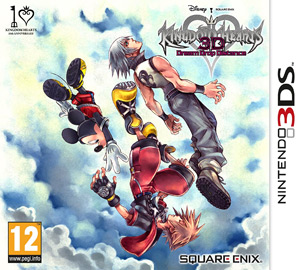
KINGDOM HEARTS: DREAM DROP DISTANCE (3DS)

Taking place after the events of Kingdom Hearts Re:coded, the game focuses on Sora and Riku as they prepare for the return of Master Xehanort. Besides these two well known characters, players can recruit Dream Eaters to assist them in fights. Square Enix decided to develop Dream Drop Distance, having been impressed by the quality of the Nintendo 3DS. Taking advantage of the handheld’s functionality, Square was able to include action elements from the series seen in Birth by Sleep, as well as to give plot hints for Kingdom Hearts III. The game has sold well, and an HD remastered version for the Playstation 4 was announced in September of 2015, as part of the upcoming compilation Kingdom Hearts HD 2.8 Final Chapter Prologue. 

Images © Eidos Interactive, Nintendo, & Square Enix


Some other titles released on this day:

  • Athena [Japan] – NES – 1987
  • Digimon World 3 – PlayStation – 2002
  • Hospital Tycoon – PC – 2007
  • The Incredible Hulk – PS2/PS3/Wii/Xbox360 – 2008
  • Final Fantasy Tactics  – Android OS – 2015

This Day in Gaming History: May 4th

Continue reading “This Day in Gaming History: May 4th”

This Day in Video Game History: April 15th

Continue reading “This Day in Video Game History: April 15th”

This Day in Video Game History: April 14th

Continue reading “This Day in Video Game History: April 14th”