
Phoning it In

images

It’s hard to believe that we’re already at the end of term and tying things up. It feels like we’ve barely scratched the surface of this content, and maybe that’s kind of the point? As I talked about last week, there’s so much potential with pulp magazines to uncover. Maybe that’s why my head is spinning. There’s so much I want to talk about, so much to explore. I am still incredibly curious about the ties between videogame representations of the pulp era (mostly in exaggeration) as compared to the real deal, especially with BioShock Infinite as a direct timestamp game, but also thematic futurism of Fallout 3 or Fallout 4. I’ve discussed BioShock Infinite, and to a lesser extend the BioShock series more broadly throughout this series, but I think there’s something to be said about either series as an extension of digitization and adaptation — something I’d like to explore, at least a little bit, at the end of my final paper.

However, for now, I think one of the lingering things sticking with me is just how much a study of pulp magazines continues to draw through to contemporary analyses — especially after surveying half of the class’s rough drafts last week. Pulp magazines are alive and well, in some way or another. While I focused on SF two weeks ago, many genres were adapted and created through pulp experimentation (although it is perhaps unsurprising that there were a great number of flops too *cough* looking at you Basketball Stories *cough*). In general, it was a really innovative time, seemingly filled with possibility and growth (which unfortunately would be burst through the Great Depression). New and exciting futures were on the horizon, or at least that was the message being sent. Sound like anything else you know?

In considering the start of pulp magazines, including its boom and its bubble burst, I can’t help but think of the early days of the internet.

post-19715-brent-rambo-gif-thumbs-up-imgu-l3yp

Although we don’t refer to it as the “World Wide Web” anymore (at least, I don’t think we do), I remember when the internet was TheInternetTM. This hugely new and innovative medium, taking households by storm. Inspiring movies (You’ve Got Mail, anyone?), connecting people all over the world, spreading information, allowing for user-generated engagement…The more I talk about it, the more I wish I had written a paper comparing the history of pulp magazines with the history of the internet, up to and including a general lack of support and academic interest to its “low brow” elements. Oh well, another paper (or blog post) for another time. Suffice to say, once the parallel is made, it’s hard to shake off.

I remember being excited for our first dial-up connection. I was lucky that my parents were always particularly technologically advanced and I had ICQ from a very early time (I’m pretty sure circa 1998). I built webpages on GeoCities through code I learned from UW’s Arts Computer Camp (while stylishly pulling off my own play-performance of Sailor Venus at the end of the summer). I practically learned how to type (at least as fast as I do now) by spending far too many hours typing out conversations on Yahoo chatrooms and games. I mean, I was there, I was invested, and my life was forever changed because of it. I can only imagine, in some way, that this is how the boom of pulp magazines felt. A rush of new technology, new and readily available information, connection, engagement.
dillon-web1

It’s all there (and now I wish I had chosen to write a pulp history story version of the dawn of the internet…so many ideas, so little course time left), and it’s astonishing. I’m sure even in some way, people felt like this at the early years of the telephone, the printing press–at all major technological changes. So I wonder how much of our study of pulp magazines is about the technology as well. Not that we haven’t discussed this in class, but I think it’s an area we haven’t explored as much as we could (again, only so many hours!). Even the act of digitization, of bringing pulps to the internet, is another link in that chain, tying it all together (brainblown.gif).

In the end I think, people just keep looking for a way to connect with one another. From cave paintings, to Snapchat, and everything in between. Pulp magazines were a way to convey culture, to control culture, and to express counter culture. They were what people made them to be. As the internet is now, and as something new and distant in the future will replace, they are equally important as part of human history and communication.

In archaeology we’ve come to learn to treat peoples of the past as just that, people. “People have always been people” as it were, and their cultural artifacts reflect the agency of once living and breathing people. If we take that to be important, as we take anything we do today to be important (except maybe fidget spinners), pulp magazine’s value should be clear.

Where there are artifacts, they are fossilized evidence of peoples’ action in trying to intervene in history…Artifacts are a testimony of context, not resolved social structures. (Wobst 47)

What will our legacy be? What will our cultural artifacts have to say about us? Maybe future scholars will academically analyze the importance of our memes. Or maybe, it’ll be something altogether different.

Either way, I’m left with a lot to think about.

original-22468-1448415662-3

Around and Back Again

How I usually feel about group work:


This slideshow requires JavaScript.

However, this round has been rather spectacular. From the very beginning our group was quick to make decisions, to work together, and to adjust to each other’s strengths and weaknesses, including varying availability. Never did I feel like I was doing more work than my share, nor did I feel as though people weren’t available. But ultimately, it was quite a good experience. Most importantly, we learned from each other.

In preparing for our presentation, I was not only engaged with our magazine because of my own interests and foci, but also inspired by what my colleagues uncovered. I’m not sure if it helped that our magazine had a lot to go with it, or because I love Sci Fi so much, but it really helped me understand the magazine better too.

Equally, I found myself engaged with the other group’s presentations. It was clear to see where everyone’s passions lay, showcased by this project. Surprisingly, no one group or individual quite did the same thing, nor did anyone take the same angle on their pulp magazine, which was rather spectacular. It highlighted just how many ways that pulp magazines can be understood and interpreted from an academic perspective.

Best of all, the presentations left me inspired for my final paper for this course, which was an unexpected result.

banner-research-new-idea-award

Each group gave me a new reflection for my analysis of preservation practices in pulp magazines. Each one demonstrated the different ways in which approaching digitization holistically is crucially important.

While it’s a little early to go too in-depth (not to mention the idea is still forming), I was particularly inspired by the exploration of Snappy Stories and All Story Love Tales, for two very different reasons. All Story Love Tales because of how rare its digital issues are (or any issues at all for that matter), and Snappy Stories for its important and varying use of image accompaniment–and how those things change how one could read the magazine. Interesting stuff to be sure, and something I’ll be very eager to explore when I get down to writing more content for the paper.

One of my favourite things to hear, no matter how frequently, in my academic courses is the importance of taking in multiple perspectives on a given topic–something that rings very true when considering analyzing artifacts. I think my first exposure academically in a formal capacity was when we discussed “situated knowledges,” something I touched on back here. It’s a concept that also comes up through Kenneth Burke’s “terministic screens.” We each see a different perspective on the world, on our studies. It is ever more apparent the need for academia to take this on in their approach to research — something which is exemplified by our group projects as well. Each group was given the same basic guidelines, and each of us came up with very different versions of what that meant to uncover.

5679503_orig

For me, it seems that this is even more important for the study of pulp magazines within English departments. As an outsider to the discipline, it’s hard to see the magazines, so fruitful in their potential cultural relevance, interpretations, etc. be dismissed as trivial “low culture” objects. While we’ve discussed the changes taking place in this regard, coming from my own academic background, it doesn’t make sense that they have been dismissed as such. While it doesn’t always require deep reading to get to the messages within, it doesn’t mean that there isn’t any less content to discover. If anything, I think pulp magazines are more interesting to discuss, not only because there are so few academic angles currently being explored, but also because of how close they were to everyday people. It’s the same reason I find Greco-Roman graffiti so entertaining. Somewhat perplexing however, is the fact that greco-roman graffiti has been treated with such high significance as compared to their pop-cousins in pulp magazines. Perhaps this is due to their age, but everything starts getting old somewhere. Perhaps it was only after the classicists ran out of other things to talk about that they finally turned to the “common man” remnants. No matter what the cause, it is interesting to consider that someday down the line a great many people will turn to a desire to study pulp magazines, and it will only be because of classes like ours, and other enthusiasts, that archives like the PMP will provide them content. It pains me to consider how many pulp magazines were lost, like so many cultural artifacts, because they were deemed useless or “not cultural enough.”

If we, as individuals, and as groups, can uncover so much to talk about, what have we missed discussing over the past century they’ve been around?

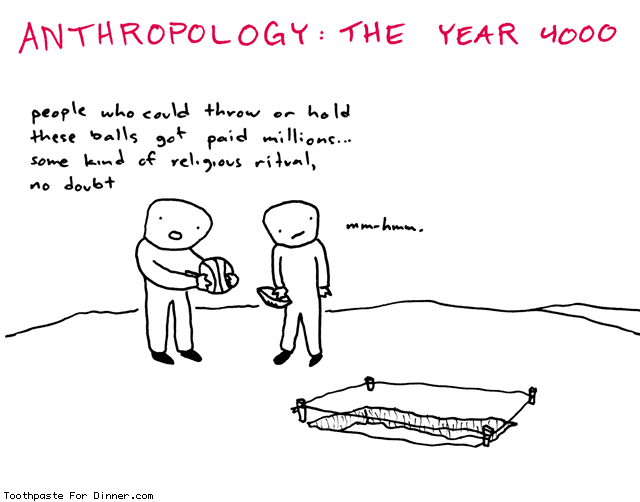
Sadly, even fidget spinners someday will be a cultural artifact. I wonder what future academics will say about their phenomenon? I just wish I could hear what “ritualized” purpose fidget spinners served when uncovered by some archaeologist a thousand years from now. Food for thought I suppose.

61d379f265b98e81573563c60a417772

Generating Genre: The Legacy of Early Pulp SF

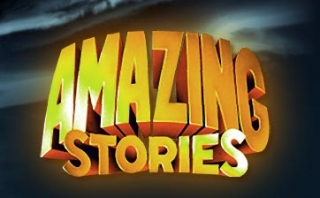
Before going too in-depth into my reflection on Sci-Fi and genre building, I just have to relay two facts: a) that there was a TV series in the mid-80s called Amazing Stories, created by Steven Spielberg, and b) that somehow I didn’t know this existed. In the same vein as the pulp magazine of the same name, the show apparently covered Fantasy, Horror, and Sci-Fi themes. It’s also apparently looking for a reboot. Crazy. Here I thought I was knowledgeable of these kinds of programs having watched The Twilight Zone (old and new) as well as The Outer Limits. Alas, I digress…

AmazingStoriesTVseries

The creation of genre was not really something I had considered before this week’s class. Naturally I had considered that genres had origins — I have even studied the development of Greek and Roman theatre genres extensively — however, I have rarely considered that literary genres too, have origin stories. In particular, that there are more ‘recent’ genres like Sci-Fi that have a much longer legacy than what it feels like they should.

Perhaps it all comes down to definitions, however. We discussed this week how when Amazing Stories first published, the editor basically made it up as he went along. There were no established Sci-Fi pulps at this time, nor, apparently, had the genre been established as a literary area. Romances and Adventure stories are common throughout literary history, but Sci-Fi apparently presented something new. While I’d prefer not to quote Wikipedia, but the first few lines of “Science Fiction”‘s entry rings true, perhaps because they’re quoting Gernsback:

Science fiction is difficult to define, as it includes a wide range of subgenres and themesHugo Gernsback, who suggested the term “scientifiction” for his Amazing Stories magazine, wrote: “By ‘scientifiction’ I mean the Jules VerneH. G. Wells and Edgar Allan Poe type of story—a charming romance intermingled with scientific fact and prophetic vision… Not only do these amazing tales make tremendously interesting reading—they are always instructive. They supply knowledge… in a very palatable form… New adventures pictured for us in the scientifiction of today are not at all impossible of realization tomorrow… Many great science stories destined to be of historical interest are still to be written… Posterity will point to them as having blazed a new trail, not only in literature and fiction, but progress as well.”

To me it seems then, more that the development of SF as a genre was more about its kairos than its content. Alongside the development of advanced science and technology, we see something labeled accordingly. But even in the early days of writing (in terms of ancient plays), we see themes of instruction, knowledge transfer, and speculative/imaginative forms. While Gernsback cites Poe et al., we discussed in class the existence of Mary Shelley and other female authors before that also would fit into the SF genre (sadly calling again to those gender issues in scholarship and social acknowledgement). If these themes existed for longer than the existence of the genre, what else can we attribute the development of the genre to other than kairos? Someone surely could have “decided” to do so, as Gernsback did before Amazing Stories, and yet, no one did. Intentionality does not appear to be enough then, but rather, the timing not only of an increase in science and technology, but also the existence of pulp magazines themselves, that allowed for such a thing to develop.

blade-runner-2049-796x398
Blade Runner 2049

Launching a new “genre” within literature would have been too risky. Books take a lot of time and finances in order to be successful, on top of necessary marketing and appeals to readership. Pulp magazines rose and fell seemingly at will — they were willing to take a chance, even if it meant failure — because they weren’t as expensive to produce. All of this explains why SF came when it did — easy to take a chance, lots of technology and science popping up everywhere…but it doesn’t account for all the reasons why they were successful…

I think the key here is the readership engagement. We’ll talk about this more during our presentation, or rather Sue will, but I think it’s worth spoiling a bit here on the subject. SF was successful as a genre due to its kairos as well as its ability to engage its audience. It’s quite a clever advertising move actually. The best way to establish yourself as a genre is to get people interested in your genre, to get them engaged in its development. People always love talking about themselves, and by extension, they love putting their mark on things. The actual amount of influence the readership had on Amazing Stories is up for debate, however, the magazine’s active push for any show of dialogue I think helped to make them boom as long as they did and really helped to engrain SF as a genre as a result.

tr9cjgoatgczw3qh2ptaOne might argue that any genre could have been created in this way, which is true I suppose, but SF latched on at the exact right nexus of context to blossom into what it became–further evidenced by how much SF developed after Amazing Stories gave it a label. We see the first SF film Metropolis hit theatres as early as 1927. Then in 1938, Orson Wells converts his then-40 year old book The War of the Worlds into an infamous audio drama that briefly causes real panic and fear in the populace (The Smithsonian has a good piece on that and kairos/”an magnificent fluke” for the record). Meanwhile Astounding Stories kicks off in the 1930s as well. From this point forward, we see an increased basis for Futurism taking shape in art and design, especially leading through the 1950s and 1960s. Something we see revisited and taken to the extreme in the Fallout series.
In the end, I wonder what would have happened without this nexus of readership engagement and appropriate timing? Where would Sci Fi have started without pulp magazines? For how popular and how fast SF spread like wildfire in the last century, I feel fairly confident that simultaneous invention would have happened somehow, give or take a few years. But isn’t that all what SF is about anyway? Speculating the unknown?

star_trek_5

Through the Looking Glass

Popular media often serve as a reflection through which we view culture. Like mirrors at a funhouse, they can distort as much as they can show true. We’ve talked about it in class, and I’ve otherwise previously discussed on this blog (here and here), how pulp magazines can be interpreted as presenting a certain way of enacting American life. A very particular way of being a ‘proper’ citizen. As much as the stories, characters, visuals, and advertisments served to train a population to see the world a certain way, so too did the stories, characters, visuals, and advertisments reflect aspects of the world that already existed.

This week, we read topics on gender and race depiction in pulp magazines. While we have discussed these themes throughout the course, this week they take primary focus.

1889n4og4e6c5jpg
A mural from BioShock Infinite, featuring racial stereotypes of ‘undesireables’ and ‘societal moochers,’ that “proper” citizens of the game’s flying city of Columbia are supposed to protect against. This echoes a general theme of racist representations throughout the game, associated with the dominant white and affluent citizen body.

Nathan Madison explores racism in pulp magazines thoroughly in Anti-Foreign Imagery in American Pulps and Comic Books, 1920-1960. In particular, we read about “The Yellow Peril,” or rather the representation of stereotypes and orientalism within the covers of 1919 and 1935’s pulp magazines. Some of the imagery and quotations are quite jarring and unfortunately illuminating, not only for the cultures of the time, but also how long-lasting the tropes were. Towards the end of the chapter, Madison revisits the political nature of anti-foreign (particularly Chinese) climate surrounding these magazines from 1882-1930s. Laws prohibiting inter-race marriage, revoking citizenship from American women who ‘dared’ marry a Chinese man, limits to Chinese immigration.

He states on page 83:

In such an atmosphere, what do the stories found in the pulp magazines of the 1920s and the 1930s tell us about Americans, and, specifically, about their views of Asians and foreigners in general? It is difficult, and rash, to simply assign racism to such a time period that differs from the current in so many ways. One reason for this difficulty, aside from the error of attempting to impose early twenty-first century political correctness upon those living in the early twentieth century, is the contradicting evidence of racial tolerance, and even racial acceptance, on the part of many Americans at the time. For every act of the federal government that attempted to impose immigration restrictions, there was an outcry from many denouncing the racial intolerance such acts legalized.

Continually we return to the complex nature of history and scholarship. It is not enough to simply see these works and stories as reflections of rampant racism at the time. However, as Madison points out, the tendancies were there. It is hard to judge the past based on the morals of the present, and yet in many cases, I would argue, we should. As much as it ‘was different’ in their time, it does not mean we should forgive and forget what happened. In many cases these very damaging stereotypes and racial beliefs created an indoctrinating effect on the populace which persists to this day in many, albiet sometimes more subtle, ways. Amongst the stories that perpetuated the “yellow peril” within the pulps, others did try to subvert it, even to the point of having Chinese protagonists, even if stories like these were more rare.

world-war-2-propaganda
World War II Propaganda Poster

What concerns me about this side of pulp magazines is the overt propagandan nature of “yellow peril” narratives. Madison ends the chapter discussing how the discussion of “yellow” versus “white” races changes leading into World War II, thanks in part to a shift in a percieved gobal villain. He notes, however, that the legacy of this time continues much longer after the fact. We see the effect of orientalism repeat through a variety of funhouse mirrors throughout history, as people from the psudo-mythological East are demonized or exoticised to promote the master-narrative, especially in the contemporary U.S.A. these days. Propaganda narratives like the “yellow peril” catch like wildfire in cultural memory and have damaging effects on the landscape. When everything around you, from the news, to advertisements, to the entertainment you consume, tells a different version of the same story, it becomes increasingly difficult to fight against it.

It’s insidious as hell, and exactly why diverse opinions and representations continue to be important in media, and in scholarship.


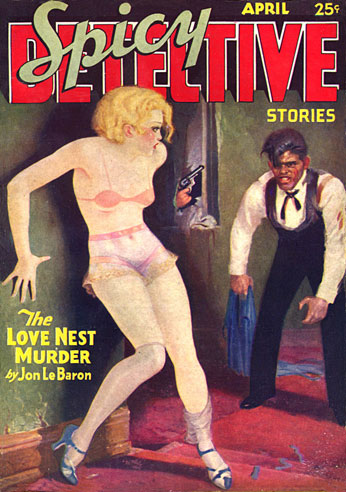
spicy-detective-stories-april-1934Today is International Women’s Day, and I cannot fathom closing out this post without briefly mentioning the looking glass mirrors of gender roles in pulp magazines. That being said, I’ll be brief, as I’ve talked about gender roles briefly before.
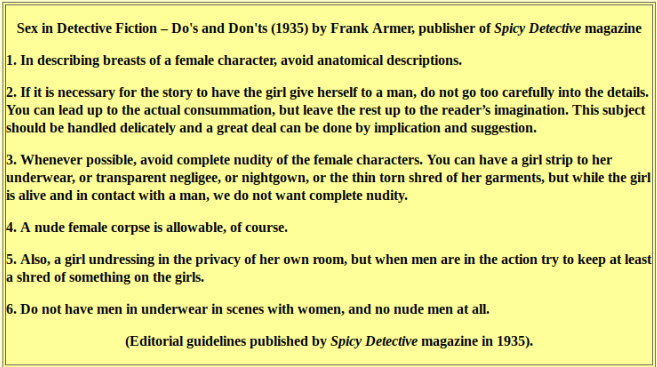
Much like racial tropes and stereotypes, the representation of gender roles and “types” of women are equally present within pulp magazines. While there are examples of women who break the mold, often women serve as narrative elements, part of the backdrop to serve the story’s progression. Object of affection, of scandal, of motherhood…representations of women in pulp magazines echo a much longer history of one dimensional or restricted depictions that women continue to fight against today.  What I did find interesting in this week’s readings, however, was the fact that many of the writers and editors of the “girlie” pulp mags were in fact women themselves. While it is less shocking to read that women also made up a sizeable portion of the readership, I am curious as to the motivations of these women to participate in these kinds of narratives. I don’t care for the ‘morality’ of their involvement, but rather the desire to perpetuate stories of women they knew weren’t wholly true? Sex sells as they say, and I suppose writing as ‘an insider’ would provide that extra oompf that would rack in additional sales. Alas, as is pointed out, little about the authors and editors themselves is known, and tracking down any motivations for their involvement is unlikely.

All that being said, I get a kick out of the list of “do’s and don’t’s” for writing into Spicy Detective. “A nude female corpse is allowed, of course.” Naturally.

Screenshot 2018-03-09 at 12.46.35 AM
Pulp Magazines Project – “Birth of Girlie Pulps

The sad part is, while things are changing in contemporary media, they haven’t changed all that much. Here’s hoping that as consumers of media, and as scholars, we can do better, with both race and gender.

Travel All of Space & Time – From Your Living Room

Stories have always been a way to travel without leaving your surrounds–gateways to another place, another time. Is this transportation affected by how we indulge in stories?

Over reading week I was tasked with a reading project, in efforts to recreate a modern take on reading aloud from a pulp magazine to a group. It was an enlightening experience.

https://www.youtube.com/watch?v=9Oig_j_sXmU

It was my logic that as some people in the class were setting out to read aloud in an in-person group setting, I would try to recreate the experience over the web. A pseudo-recreation of course, as the people I would be reading to, and interacting with, would not be in the room with me. I tried to adapt in advance to suit this need, showing the document on screen with a picture-in-picture display of my face and the text, in addition to some other features. As often happens with these things, I was unable to anticipate everything.

To start, I set the mood as it were, by playing a “Steamboat Willie” cartoon as my opener. Normally I would do a countdown, but I figured some sort of cartoon would be a cute way to get as close to the 1913 era of the pulp magazine serial as I could. Along the same lines, I queued up a playlist of big band/swing music to play in the background as I read. Part of this was my own fear of reading against silence while in ‘entertainment’ mode, but also in part because I imagined that radios and music would be commonplace enough in historical homes, possibly even through reading stories together. Either way, I set things up, started the stream, and began my very awkward read through of the last part of B.M. Bower’s The Last Stand.

52750317_1_x

While some in the class read from the original book, the version I read on stream was from the FlipBook version from the Pulp Magazine Project. This led to a number of problems, mainly an issue of readabilty. Partially due to linguistic conventions of the time, and partially due to the layout of the text, the document was fairly difficult to read. I was out of my element, and had not read aloud in a long time. While I had streamed countless times, this kind of entertainment was different. There were no pictures to distract my audience and many, including myself, found things hard to follow for the first while. Eventually things got a bit more melodical, and I was able to get into the rhythm of the narrative. While we discussed this week that the inclusion of full names were a status symbol for the characters, I have to say, that after reading them over out loud countless times, I’m through with people being referred to with their full three word names after the initial introduction.

There were a lot of similarities between the other read-aloud group and myself. Issues in legibility, reading comprehension, etc. I was surprised to learn that they had taken longer than me to read the entirety of the selection, including a ten-minute break as I started to lose my voice. Perhaps it was because they swapped who was reading back and forth, perhaps I read too quickly. Streaming did result in some interesting complications and improvements, however. I found that I was able to make commentary as it happened. I could voice my opinion about the story, the characters, or my fumblings and capture it candidly (as you can easily see in the above video). I was also able to pause at will and address the Twitch chat, or include their feedback into my commentary. Their voices were unobtrusive as the text cleanly popped up on the side. If we were in the same setting, their comments could have been lost or withheld, out of fear of interrupting. This way, they were perserved as they happened, and could be addressed when the timing was ‘right.’ Similarly, this method gave me no marker of my audience. Without facial reactions, I didn’t know if I was going too quickly, or too slowly, unless people spoke up about it. In-person you could gauge your audience and adjust accordingly.

western town backdrop cartoon on Cartoon Western TownUltimately, this experience allowed me to reflect a lot on what it meant to read a pulp magazine, but also to read aloud in a group at that time. While I nearly lost my voice (and in truth my throat hurt the day after), I wondered if such a thing would have been passed around in a family setting to prevent such a thing, or if voices would have been accustomed to longer periods of reading at that time. Would pictures have made it more engaging for my audience? For any audience? How would have ‘city folk’ reading this story related to the tales of the wild west?
As we discussed in class, the serial in the pulp magazine, later a book, was one in a series of stories about “The Flying U” band of cowboys and their ranch. I imagine that contemporary readers of this publication would have been much more invested in their stories, and would have taken to binge-like behaviour to absorb more information about the fictional world. With more limited access to entertainment at the time, particularly affordable entertainment, I would wager the audience of the time would have been much more captivated as well.

Ultimately learning more about B.M. Bower also endeared me to her writing further. Like I discussed in Gendering History, an acknowledgement of female writers and of female participation in the Western genre has been sorely lacking, if not ignored, in scholarship. Learning that Bower fell victim to this in her own time was heartbreaking. She was successful after a period of personal strife, yes, but she could have been even more so, had there not been such a fear of being ‘outed’ as a female writer of Western stories. My change of heart, also highlights the importance of taking cultural contexts into consideration when doing academic work. It’s easy to dismiss something you don’t personally like or aren’t interested in, but when doing academic studies, it’s important to look at works holistically–to understand them from as many perspectives as possible.

I’m interested in giving her a second shot. Just because the last quarter of The Last Stand isn’t for me, doesn’t mean there isn’t something to be had in the Westerns of the time, particularly such a popular pulp writer as Bower. After all, I love me some Sci-Fi Westerns.

I may just have to avoid reading them aloud in the future…

giphy

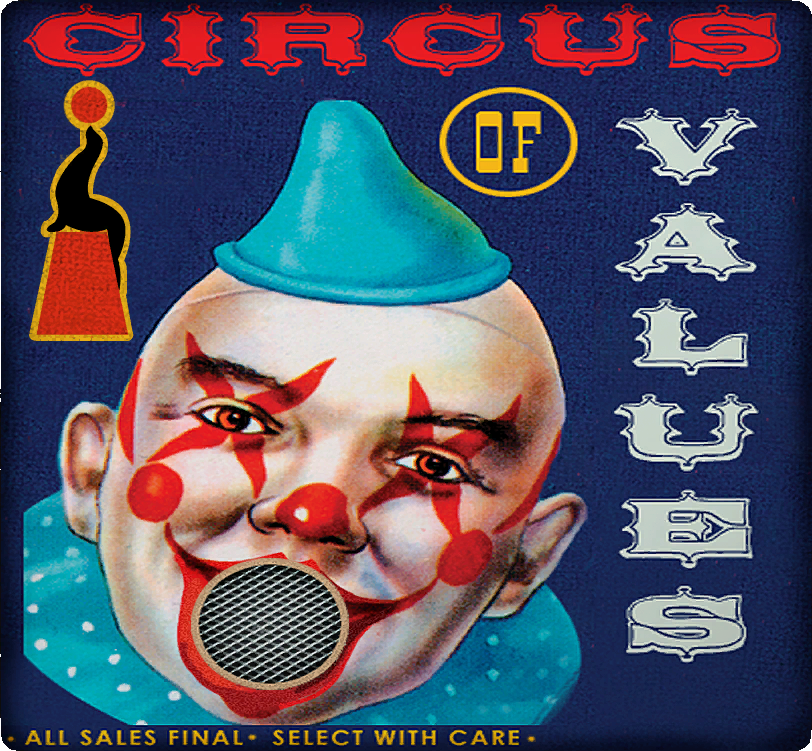
The Circus of Values

When discussing pulp magazines, I can’t help but come back to the BioShock series. Further still, when discussing advertisements. The title and featured image of this post naturally then, comes from a vending machine found in the original installment of the series. While there are equivalent machines in BioShock Infinite, there’s just something particularly accurate about a clown selling you medicinal aids and incendiary bullets that reminds me of the absurdity of advertising.

This fragment of the game’s contents encapsulates so much about advertising and capitalism which mirrors our discussions about advertising so well. “Get back when you’ve got some money, buddy.” The machine calls out into the void around it. The vending machine exists in a world where, among other things, true un-checked capitalism has taken over. The Circus of Values stands in more than just a place to buy items, but also where morality can be bought and sold. Something is wrong with you, and we can fix it with this product.

I briefly discussed in my first posting for this class, about the atmospheric choices of the BioShock series which really resonated with me when looking at pulp magazines. No area is more true than when considering advertising. The goals of ads, for the most part it seems, in the past century or so haven’t changed very much. While the wording or products may have changed, the message generally remains the same. We have a product that you need, and here’s why. While in some cases, this may take the guise of employment training (as is found in a lot of the magazines we’ve looked at), it also takes the form of products: ‘health’care, furniture, land, books, magazines, baby products, cigarettes, etc. These pages, that make the bulk of the beginnings and ends of mid-late pulp magazines, echo the sentiment of this Circus of Values. Spinning into a vortex of sales, it’s a freerange circus of what products you’ll choose to entertain this week. While the ads themselves may come across as the circus, trying to entertain potential buyers into purchasing (something that seems ever true with modern pop-up ads), I would argue that the readers too could be considered circus entertainers–buying products, buying values, to fit into the stage of society’s circus. Am I getting too deep? Perhaps I should buy more coffee.

coffee_2_1

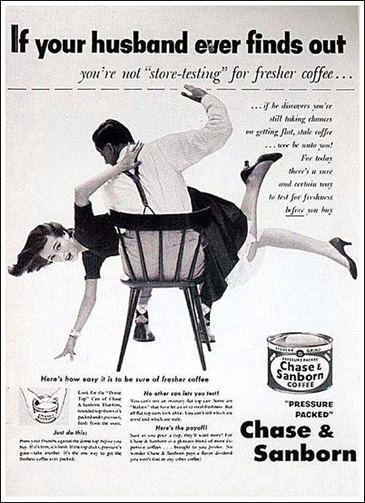
Of course, there’s an ad for that too. Advertising, like stories and other magazine images, exist to train people to behave and consume in specific ways. While we discussed in class early on that advertisements were often sold in bulk to publishing houses that produced a variety of pulp magazines, the fact remains that advertising still expected a certain kind of demographic from their purchase of advertising space. In this way, by deconstructing what magazines were published by which publishing houses, we can try to extrapolate what kinds of populations were targeted by these ads. While we can obtain small amounts of information about readership through analysis of “readership departments,” included in many pulp magazines, we can further try to compile an assemblage of facts by looking at all we have to offer, including targeted advertising markets. This kind of textual archaeology, gathering all the bits and pieces of the past to try to paint a larger story/snapshot of historical life, requires a lot of attention to detail, and demands scholars not to ignore anything.

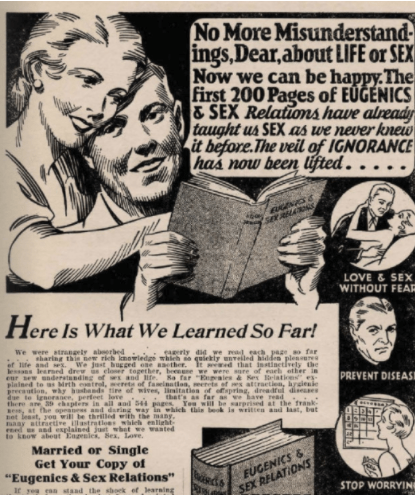
So what kinds of advertising areas did pulp magazines try to provoke their readers into consuming? This week, we looked at an issue of Western Story Magazine, as well as one from Love Story Magazine–both published by the same publisher. Ads generally promoted, as they often do, striving for something greater, achieving more–through products. This included pathways to marriage, improved physique (for both men and women), financial stability, cooking prowess, and excitement (?). Most of these in some form find their contemporaries in current publishing and media. Others, paint a very specific picture of the lives people were being told to strive for:

eugenics
The stern look of the man, the worried calendar tracking of the woman, the implied-if-not-overt racial purity implications. Ah, 1930s advertising.

As much as we can try to piece together readership from fragments like advertising, we need to be very keenly aware that advertising was more about who advertisers wanted the readership to be rather than who they were. Even the readership departments would have been heavily edited and curated to fit the ethos of the pulp magazine itself. Like so many other attributes of trying to piece together the past while living firmly in the present, we need to be careful about the assumptions we make based on what remains. If for nothing else, analyzing things like advertisements, or readership departments (which were effectively advertising for the magazine itself), help us to ask questions about the potential readership of a given magazine or publishing house. By taking as many perspectives as possible into account, we can try to get a more hollistic picture of the past. This of course extends beyond the magazines themselves, but also looking at other primary resources (periodicals, newspapers, literature) of the time, to try and find where populations intersect. Readers did not exist in isolation, nor should we treat them as such. Culture permiates everything, and somewhere beneath the layers of ads, stories, artwork, and news, we can try to find the remants of the people who held it all together.

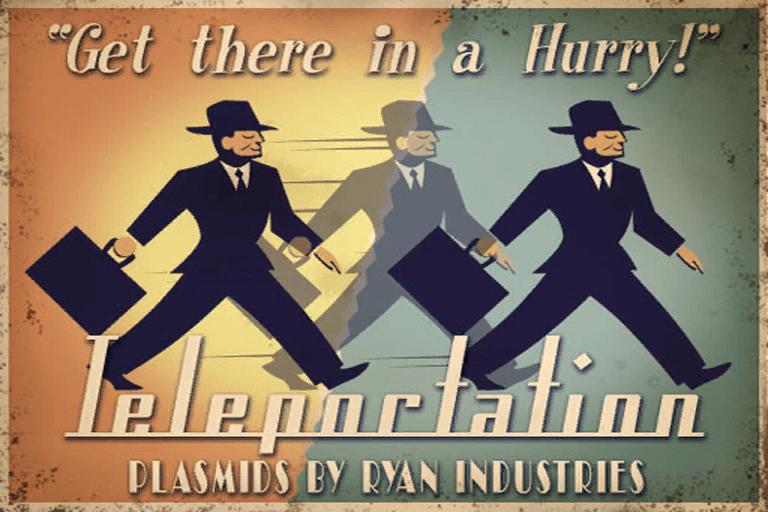
teleportation_advertisement1
‘Plasmid’ advertising from BioShock; a product that literally improves you when you buy it. Nevermind the list of side effects and addictive qualities, however. Success requires sacrifice after all…

Imagining Text

It’s not surprising that in our contemporary minds, graphics matter. Over the years we’ve seen a steady increase in getting the biggest, best picture we can get for our visual screens. 4K resolution screens, virtual reality, and augmented reality technologies are changing how we view and interact with narrative. Not long ago, however, things were much more low key.In fact, for millenia, humanity utilized a much more limited toolkit for expressing ourselves visually. While the methods for visual representations have continued to evolve over time, the fact remains that even the earliest cave paintings tell stories–stories of everyday life, of existance.

a-bridgeman-rev-115959_ufqcqy

There’s a great deal of scholarship involved in the art of visual rhetoric–how we use graphical tools to transmit specific messages. Sometimes, the images themselves convey the message, othertimes, the message comes alongside the image. In this case, text and image interact with one another to create a more rounded version of the message.

As industrialization progressed, and pulp magazines were established, we see an increased use of graphical accompanyment alongside included stories. In Sillar’s chapter “Illustrated Magazines” from Visualisation in Popular Fiction, he challenges scholars to look at the relationship between images and text–how does their blending contribute to our expeirence of reading? To the overall ideology of the magazines? (76) Quite often, included images do not depict the entirety of a story, but rather highlight specific moments, often climaxes or otherwise dramatic situations. While these may have served to draw in potential readers with flashy renditions of narrative elements, they also served to enhance the stories themselves. While this may not surprise modern audiences, inondated with pop up ads, GIFs, videos, and flashy graphics infiltrating stories read online, graphic inclusion in pulp magazines would have been a vastly different story. While cover art and advertising images were commonplace, not all stories were given a graphical counterpart. Rarer still it seems, at least in the magazine’s we’ve surveyed thus far, was it for stories to be given more than one graphic, if they were given one at all. While covers drew readers into a particular story, increased use of graphics in other areas would help to engage readership further, and perhaps, produce repeat customers.

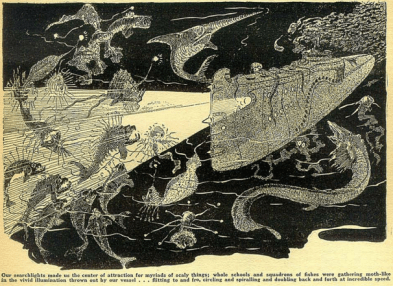
image
“The Sunken World” — Amazing Stories Quarterly, Summer 1928, p. 297

It’s interesting to consider how print technology changed alongside the earliest days of pulp magazines and throughout their run; the cultural elements that went alongside what kinds of images were or were not included. It is here we again see an artifical divide between high and low culture. As Mussell discusses in Chapter 2 of The Ninteenth Century Press in the Digital Age, while both ‘proper’ literature and pulp magazines utilized versions of woodcut print technology, woodcuts/wood engravings for pulp magazines were considered vulgar and quick. Conversely, wood carvings were considered high art forms that took longer to produce, and thus matched the cultural strata of “real” literature. As culturally low as woodcuts may or may not have been precieved, their inclusion in pulp magazines (and later hand-drawn graphics) opened up a wide array of new options for would-be readers. In addition to a likelihood of increased engagement (after all, who doesn’t love pictures), they also helped to make each magazine more unique by developing an art style. Like Sillars suggested above, images produced in these magazines contributed to the ethos of the magazine–who they would market themselves as and who they would market to. Pictures also allowed for individuals to engage with the material who struggled with reading the stories, or perhaps couldn’t read at all.

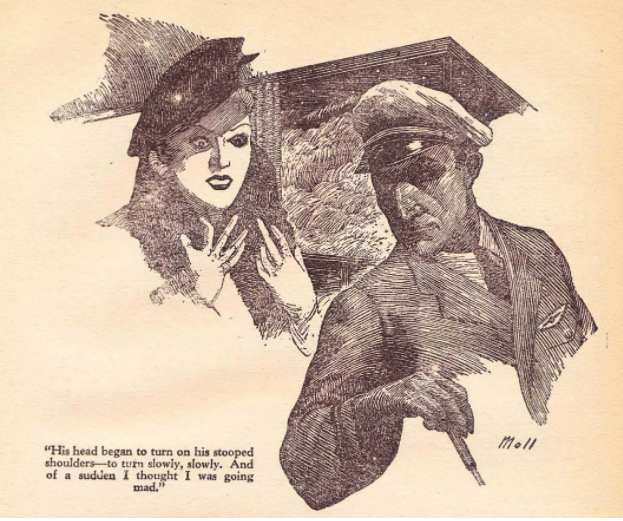
image2In preparing for class this week, I was struck by just how much my opinion of an image could change how I read or understood a story in a pulp magazine. While the image I chose to work on was relatively simple, it depicted a very specific climax of the story. I made note of what I could “read” in the image before actually reading the story, as well as a reflection after the fact. In truth, on its own, the image did very little to entice me to the story, but its inclusion gave me a lot of things to reflect on after the fact. Beyond my own analysis, I was even further impressed at how versatile such an image was for engagement throughout the class, as multiple people had chosen this image for their own analysis. While some of us struck the same chords, there was a lot of variation in how the image affected our individual perspectives.


For me, the image served more to reinforce the ‘moral’ of the story, which appeared to be governed by a less-than-covert warning against rising above your station. Aristocratic/Upper Class woman rises too high into the clouds, sees a ghost, tumbles nearly to her death, and vows never to fly again, lest she ‘go too high.’ There’s safety to stay within your means. The woman in the image is clearly finely dressed, and flying at the time of this publication would have been exorbitantly expensive. Before reading the story, consumers of this may have understood that the main character was upper class based on this image. Further still, the moral of the story, may have run louder because of it. If a woman of high stature can fall to this, perhaps I can too? Perhaps I should be more cautious?

All of this of course, goes along with the idea that pulp magazines cultivated particular cultural goals for their readership to consume. Ways to be proper citizens, proper men, proper women. I digress slightly from the goal of this post, but stereotypes and cultural roles would have been just as enforced in the artwork that surrounded pulp magazines, as their printed stories and ads would have. Different images would have conveyed different messages, but for the time and cost involved in image inclusion, we can be sure the messages were deliberate. Who was in charge of creating the message, or what message was intended, however, is an intriguing question worth pursuing in this area of study.


Gendering History

If you’ve even dabbled into the discussion of gender and history, you’ve more than likely stumbled by a mention of a lack of female representation in the documented past. It’s something that’s come up in pretty much every course that deals with the past throughout university. Documentaion of women’s affect and even their presence in history is lacking because they just weren’t the ones who were writing it down.

silhoueteuropa-1050x1024

Well, that’s not entirely true. Women were writing, and they were participating in documentation, but not quite as much as their male colleagues. Additionally, it was only usually women of power or money who had any time or ability to write anything at all. We see this even as early as with Sappho, the ancient Greek poet. She was a wealthy citizen, and as a result, had the privilege to leisure time and thus was able to write. While there are very few documented female voices in history, there are even fewer of the average women who would have lived alongside their much more represented male counterparts. Even when women may have written their perspective, carved their story, or have been celebrated in their time, historians have traditionally washed away female participation from the record. Anything which presents women as vocal individuals in their own right, in their own lens, detracts from the male domination narrative you see.

It’s not all that cut and dry, however, as there are plenty of women’s studies and history classes to teach the messiness of such a subject. Where we can tackle however, is something that we discussed in class this week, namely the male-washing of the Western genre. While industrialization allowed for more and more women to gain access to reading and writing, the legacy of their participation in the literary market would go overlooked.

As we discussed in class, the Western genre in its earliest days, when looking at the pulp magazines themselves, had high female engagement. Not just in reading either. Women were writing stories too. While scholarship on Westerns focused on literary sources, skewed towards male authors, the truth remained that the Western genre developed through simultaneous and mutual involvement in the genre. It’s no surprise that in the 1950s and 60s, eras desperately trying to embolden gender roles against an influx of new thinking, that scholarship would erase the presence of female participation. Naturally, it would seem to them, women would have come to the genre only for the romance. Women didn’t want to see the guns or action stories, nay (or perhaps neigh), they only wanted to read about stories where subservient (or perhaps wild-then-tamed) women fall in love with dominent men and start a new life in the West. They couldn’t possibly be interested in the same “men” stuff *insert chest bump here*.

hbo-westworld-12Does my sarcasm read strong enough? It’s so incredibly infurating as an academic to look back and be faced with misled and unfounded historical scholarship. We are now taught to look at the entire picture. To preserve all that we can about a text or an artifact, in hopes that even if we can’t analyze the whole picture, someone, someday, might. When faced with situations like this, one cannot help but be infurated by the scholarship of dominant male authorities, which changed official analysis of history to fit their own goals. Nevermind that the female-driven/written pulps lasted longer than their guns-blazing counterparts. Nevermind that the blended magazines came first. Nevermind that women had any active role whatsoever.

I regret that I’m getting fired up about this more than I intended to, but it strike a chord with me. I have, thanks to my training through a very forward-thinking parent, I’ve always grated against imposed gender roles. Why should boys get all the fun stuff? Women have always been interested in things beyond romance and beautification, but because gender roles (albiet ever shifting) shame them for it, they either train themselves not to be interested, or find an excuse for something societally acceptable within them to like. It makes me hurt, not only for contemporary audiences and issues, but also for the women in history who have had their voices silenced or ignored–or worse yet, attributed to a male counterpart. There is a place for everyone in this analysis, in this field, and it’s up to us to go back and return life to those who we can find within these pages. To give back credit where it is due, and to change scholarship on history to better represent the truth of gender (and race) participation.

westworld-headerI’ve visually referenced Westworld twice in this post–a brilliant TV show (which if you haven’t watched it, stop, drop, and binge it all right now), created by the joint efforts of a male and a female, produced by a female, and containing an amazing cast of strong-willed, well rounded, and well-written female characters. In the sci-fi/western/drama category, it’s everything an inclusive audience should want, and it’s no wonder it was critically recieved accordingly. It deals with complex issues of romance, action, drama, abuse, artificial intelligence, ethics, free will, and consumerism (alongside so much else), against a backdrop of stunning visuals, breathtaking sets, and a moving score. It’s a show, for me, which proves that Westerns can be for everyone (well, except maybe not kids in this case). I can only imagine, that in the age of pulp magazines, a well written Western would have the same effect on its audience as Westworld has today. A good story need a blend of a variety of elements, and the best way to accomplish that would have been to incorporate blended perspectives and angles into a magazine.

If for nothing else, the lesson of male-washed Western genre scholarship calls for us to use a critical eye when looking at other pulp magazine genres, as well as literature more broadly. Just because it’s not obvious, or its been overwritten, doesn’t mean female voices aren’t there–that female participation isn’t there. Sometimes you just need to dig a little deeper, find meaning in the blank spaces, and help to try and uncover what history has tried to erase. We cannot hope to move foward in our own scholarship, if we continue to accept ingrained and perpetuated biases about the people we study.

The cycle has to end somewhere, why not with us?

The Good of the Many

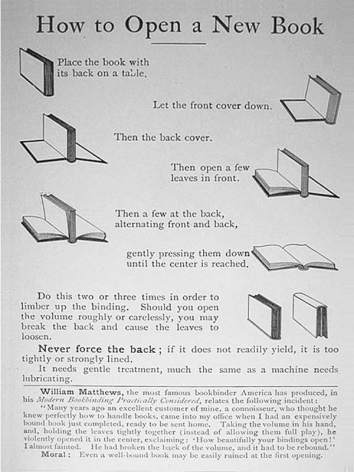
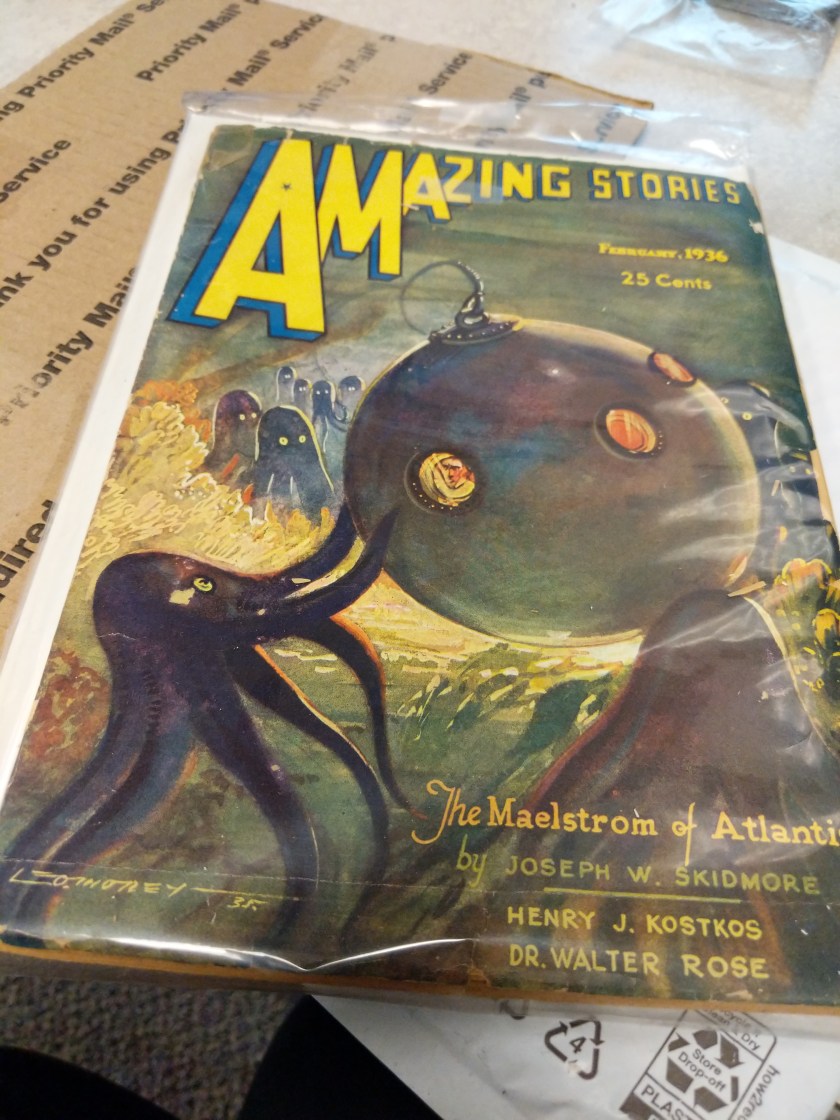
After class this week, I was elated to receive our pulp magazine in the mail, timely and well-packaged. I slipped it carefully out of its protective sleeve of cardboard and plastic, before gently flipping through its pages. Hints of stories to read flashed before my eyes as I gingerly touched its fragile pages. Then it struck me, I needed to document this magazine–to scan its pages, and upload them to the PMP. While I had known this all along, I was suddenly disheartened. The well-preserved mag possessed a very deliberate spine that didn’t seem to want to give way, even to read it wide open. Conservation would be troublesome at best, and I feared that I would have to break the spine in order to scan it properly. What is lost in breaking the original so that a digital copy may live?

howtoopenanewbookA very à propos question to be sure, following our discussions from this week. What is lost in the digital preservation of pulp magazines? What is gained? We spent a great deal of time analyzing the ways in which scholarship and individuals could benefit from a database like the PMP. For my MA thesis I spent a great deal of time looking at archaeological artifacts and 3D replicas. In order to do this, I analyzed the semantics and meaning-networks of ‘originals’ vs. their digital replicas. While my thesis was focused on actual material replicas, I briefly touched upon purely digital replicas as well. Mass-access, availability, and production were all benefits to such a phenomenon. While not going into the ethics of digital replication (mainly of cultural objects you may have no authority to duplicate), I came to the conclusion that the benefits of digital reproduction and preservation outweighed the costs, at least for educational purposes. Most relevant to our topic this week however, I found that meanings and that something extra held within an original artifact only has meaning because we give it meaning. While something can be argued for seeing ‘the real thing,’ many people would not know any different if presented a reliably produced replica. While the old must of a vintage pulp magazine may be hard to duplicate, I wouldn’t be surprised if there were propmasters who could come up a solid approximation for the layperson, which would be indistinguishable, save for perhaps having them side by side.
Suffice to say, there are dangers to certain kinds of object-replication. In the case of the PMP, and something that never occured to me before I held one in my hand, is the potential need to break the spine in order to accurately scan the magazine. In this way, the original is broken, is altered due to digitization. My research explored non-invasive digitization of artifacts, and as a result, this adds an entirely new element to such a study. Do the scales shift when the act of digitization destroys, or at least alters, the thing we’re trying to save? Does the good of the many [scholars] outweigh the needs of the few [magazines]?

FLASHFORGE_Flyer_FRONT
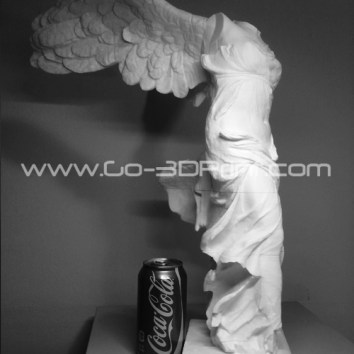
3D Replica of the Winged Victory of Samothrace

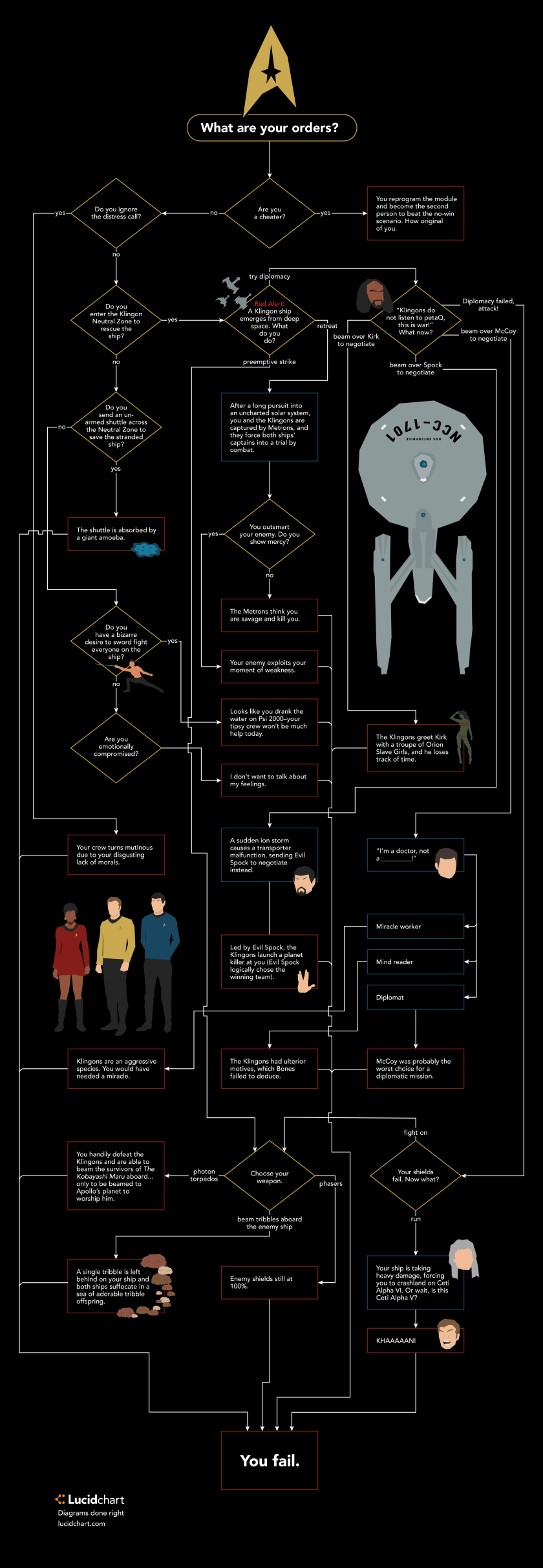
I have to say I’m philosophically at a loss as to the most correct answer in this regard. My inner archaeologist wants me to preserve the original at all costs. That being said, my inner scholar would rather see it digitized before the original crumbles to dust. That’s the thing about paper objects versus stone tools or clay pots–they deteriorate so much faster, and are in so much more need of early digitization to preserve their integrity. It would seem to me that in this case, that Spock was more correct than Kirk at the end of The Wrath of Khan. Sacrificing the physical integrity of the original object for a prolonged digital life, feels as though it’s the right thing to do. The paper copy will ultimately fade and fall apart, even with perfect preservation. It will deteriorate. Pulps were not made to last after all–it’s a miracle we have as many as we do. A digital replica, at least we hope, will never fade beyond the moment the original is scanned. It can be transmitted, duplicated, and shared without fear of lost pages or damages. In an ideal world, one can save both the magazine and create a perfect replica, but I have yet to see if we can pull off a proper Kobayashi Maru. Or are we, like Starfleet officers in training, meant to accept defeat for the greater good?

It seems to me that it’s good our group chose sci-fi after all. It has so much to teach us.

star-trek-update2x
Full Size Link

That feel when…

You receive your 1936 Sci-Fi pulp fiction magazine in the mail at last.

With only minor (and careful) flipping through of the issue, I’m very excited to get engaged with it. I think we made a good choice.

Also, there’s a literal story about “gaslighting.” However, it’s quite literally about the history of Gas Lighters (by the looks of things). And let’s not forget the existence of a circa 1930’s science questionnaire. I’m hyped.