
Keeping our Interest

There are a lot of methods that developers use to gain and maintain our interest in video games. Further still, there are external elements at work that also serve to drive us more into our games, as much as there are forces trying to drive us away. The network is as complex as it is interesting.

One of the first ways developers may gain our interest in their video game products, be the game itself or the method for playing the game (e.g. console, proprietary software, etc.). In many cases, especially in today’s market, a player’s decision about a title might be made up before they even have the game in their hands. Advertisements, reviews, unboxing videos, games conventions–all of them are driving people towards the socially agreed upon games for people to play. What’s the hottest ticket this year? What’s the new DLC for that EA game? What collector’s editions have the shiniest inclusions? What did that top Twitch streamer give special item drops for watching their stream?

Further still, advertisements and community driven conversations surrounding games are only part of this puzzle. Marketing and developer teams also try to appeal to whatever markets they perceive as being the most viable. At E3 this year, I remember reading a number of stories and news posts about angry Twitter or Facebook users criticizing the ongoing inclusion of female protagonists as within upcoming titles as a travesty, particularly when players would be unable to choose a male protagonist, or if players thought it wasn’t “accurate,” as happened with EA’s backlash for Battlefield VDespite the increased perception of female protagonists, according to Polygon’s post, the numbers aren’t actually changing all that much:

When a game features a set female protagonist, every player who enters those worlds must experience them through the lens of whoever the female protagonist might be. These games work to normalize the notion that male players should be able to project themselves onto and identify with female protagonists just as female players have always projected ourselves onto and identified with male protagonists.

A lot of vocal male gamers react to this because their identity is tied up with the role they live, but also the roles they play in their video games. It’s perceived as being so intertwined, in fact, that while these individuals may have chosen to play a female or male character before, the act of being “forced” to play from the female perspective, is somehow an affront to them personally. Nevermind that FemShep from the original Mass Effect trilogy was obviously the better cannon choice…but I digress.

1cf9d25436a25ad4f7154a38b3189a1f

Before we even get our hands on the games, people are already being told what they can, cannot, should, or should not be playing. It’s tied up in people’s identities, and threaten’s some individual’s perception of their flow (Isbister 5), their immersion, if it doesn’t match what they believe it should be. Even though, that flow isn’t broken by say, playing a bright blue super-fast hedgehog in the curvy streets of Metropolis (or perhaps that’s because he’s male?). Play helps to perform acts “of bonding, including the exhibition and validation or parody of membership and traditions in a community” (Flanagan 5), which subsequently helps to reinforce and create community, as well as to stand up against or alongside social norms. When the group identity is called into question by the identity of our game’s protagonists, turmoil erupts. However, engagement does not necessarily cease here, but rather is transformed. Rather than direct play with the game itself, would-be players become embroiled with anger against the creation of their perceived abomination–there interest is oft maintained, even if in…different circumstances.

Conversely, the broadening and redefining of our social norms helps to provide better representation, to allow new communities to grow and become enthralled with a video game’s world. Representation matters, and while I probably still would have played the original Mass Effect trilogy, I don’t think I would have been as emotionally invested in the story, my decisions, or the future of the galaxy, had it not been for FemShep. Similarly, every chance I get, be it Dragon AgeSkyrim, Oblivion, World of Warcraft…pretty much every adventure or action RPG I’m given the option to play a female character, I will. I see myself in those roles, and I play my characters accordingly. It’s not that non-male individuals can’t get hyped about playing as male characters in our video games, quite the contrary. However, we might not see ourselves as the characters we play, as much as our male counterparts might. Individuals may become less invested in video games in general, become withdrawn from the community and advertisements already not targeted at them, and the prophecy becomes self-fulfilled.

The original Mass Effect trilogy was one of my favourite series, possibly of all time. Not only because the storyline was amazing, the world was stellar (pun intended), the voice acting, and music were superb, but also because for the first time in my already-then some twelve to fifteen years of gaming, I was finally able to really play myself. I made all of the Paragon decisions, not just because I wanted to play that role, but because I knew that’s how I would have responded in those situations. It was the truest essence of roleplay, something I had enjoyed doing in a pen-and-pencil environment, come to life in full voice-acted splendour. I carried this motif the whole way through, I made the hard decisions, I felt the struggles, and I was fully immersed in the entire journey.

At one point, for the achievements, I decided to try to go back and play the Renegade options, starting at Mass Effect 2. Suffice to say, I found it impossible. Even following the creation of my own mythos that my Sheppard was lost at the end of Mass Effect 1, and this ME2-alternative Sheppard was a miswired-during-revival version, I still couldn’t bring myself to play that kind of role. To this day, I still do not have those achievements.

In this way, the virtual worlds we visit are no less complex than the one our physical forms inhabit. “Within the culture of computer games, race, ethnicity, language, and identity relations including gender emerge as complex and contradictory…In Western countries, computer games are still perceived as an arena created by and for white men…” (Flanagan 225). She continues to discuss the specifics of a number of games and genres, namely the false dichotomy of “casual” female gamers and “hardcore” male gamers. She suggests that designers “…have yet to grapple with the full range of inequities ingrained in the player categories and game models exhibited in most of today’s games” (225). Though, despite the backlash they continue to receive, we do see this trend slowly starting to change. Despite the ongoing sexist environment within the industry for some, there yet remains hope, and an ongoing push for developers, and players, to do better. For just as soon as there’s no female representation, the tide can change just that quickly.

In the words of EA, “either accept it, or don’t buy the game.” As our video games are reflections of our societal norms, and of our own identities, emotions become heated when beliefs are challenged. Conversely, because they are reflections of our society, it looks good on the industry, and on gamer culture more broadly, to see these kinds of changes take place. Players are engaged and invested because they see themselves in the worlds they explore (Hart 2017). If we take the simulated play theory to be true, the better equipped players are at learning different kinds of worlds to live in, perhaps one with more accessible and even representation, the better adept they will be at living in them.
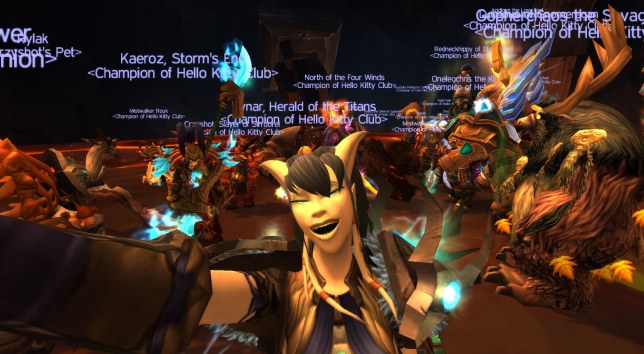
WoWScrnShot_031815_205451

After all, play is ultimately a social venture, right? [Part 3]


– Flanagan, Mary. (2009) Critical Play.
– Hart, Casey (2017) Getting Into the Game: An Examination of Player Personality Projection in Videogame Avatars (Game Studies)
– Isbister, Katherine (2016) How Games Move Us
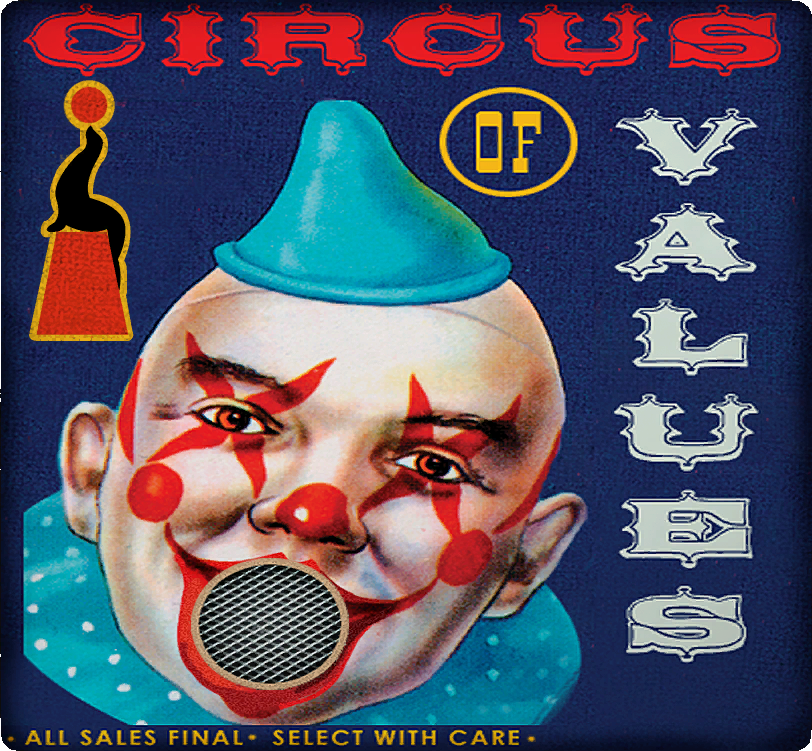
The Circus of Values

When discussing pulp magazines, I can’t help but come back to the BioShock series. Further still, when discussing advertisements. The title and featured image of this post naturally then, comes from a vending machine found in the original installment of the series. While there are equivalent machines in BioShock Infinite, there’s just something particularly accurate about a clown selling you medicinal aids and incendiary bullets that reminds me of the absurdity of advertising.

This fragment of the game’s contents encapsulates so much about advertising and capitalism which mirrors our discussions about advertising so well. “Get back when you’ve got some money, buddy.” The machine calls out into the void around it. The vending machine exists in a world where, among other things, true un-checked capitalism has taken over. The Circus of Values stands in more than just a place to buy items, but also where morality can be bought and sold. Something is wrong with you, and we can fix it with this product.

I briefly discussed in my first posting for this class, about the atmospheric choices of the BioShock series which really resonated with me when looking at pulp magazines. No area is more true than when considering advertising. The goals of ads, for the most part it seems, in the past century or so haven’t changed very much. While the wording or products may have changed, the message generally remains the same. We have a product that you need, and here’s why. While in some cases, this may take the guise of employment training (as is found in a lot of the magazines we’ve looked at), it also takes the form of products: ‘health’care, furniture, land, books, magazines, baby products, cigarettes, etc. These pages, that make the bulk of the beginnings and ends of mid-late pulp magazines, echo the sentiment of this Circus of Values. Spinning into a vortex of sales, it’s a freerange circus of what products you’ll choose to entertain this week. While the ads themselves may come across as the circus, trying to entertain potential buyers into purchasing (something that seems ever true with modern pop-up ads), I would argue that the readers too could be considered circus entertainers–buying products, buying values, to fit into the stage of society’s circus. Am I getting too deep? Perhaps I should buy more coffee.

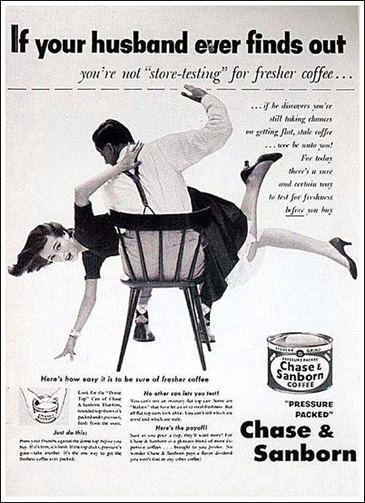
coffee_2_1

Of course, there’s an ad for that too. Advertising, like stories and other magazine images, exist to train people to behave and consume in specific ways. While we discussed in class early on that advertisements were often sold in bulk to publishing houses that produced a variety of pulp magazines, the fact remains that advertising still expected a certain kind of demographic from their purchase of advertising space. In this way, by deconstructing what magazines were published by which publishing houses, we can try to extrapolate what kinds of populations were targeted by these ads. While we can obtain small amounts of information about readership through analysis of “readership departments,” included in many pulp magazines, we can further try to compile an assemblage of facts by looking at all we have to offer, including targeted advertising markets. This kind of textual archaeology, gathering all the bits and pieces of the past to try to paint a larger story/snapshot of historical life, requires a lot of attention to detail, and demands scholars not to ignore anything.

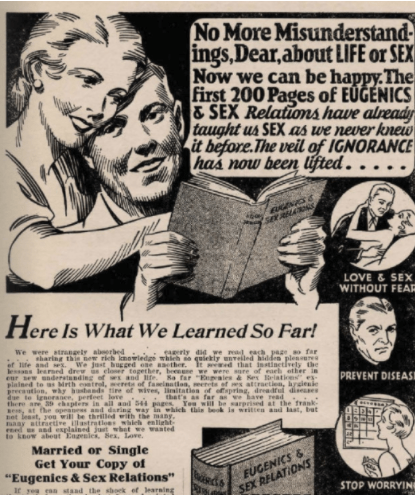
So what kinds of advertising areas did pulp magazines try to provoke their readers into consuming? This week, we looked at an issue of Western Story Magazine, as well as one from Love Story Magazine–both published by the same publisher. Ads generally promoted, as they often do, striving for something greater, achieving more–through products. This included pathways to marriage, improved physique (for both men and women), financial stability, cooking prowess, and excitement (?). Most of these in some form find their contemporaries in current publishing and media. Others, paint a very specific picture of the lives people were being told to strive for:

eugenics
The stern look of the man, the worried calendar tracking of the woman, the implied-if-not-overt racial purity implications. Ah, 1930s advertising.

As much as we can try to piece together readership from fragments like advertising, we need to be very keenly aware that advertising was more about who advertisers wanted the readership to be rather than who they were. Even the readership departments would have been heavily edited and curated to fit the ethos of the pulp magazine itself. Like so many other attributes of trying to piece together the past while living firmly in the present, we need to be careful about the assumptions we make based on what remains. If for nothing else, analyzing things like advertisements, or readership departments (which were effectively advertising for the magazine itself), help us to ask questions about the potential readership of a given magazine or publishing house. By taking as many perspectives as possible into account, we can try to get a more hollistic picture of the past. This of course extends beyond the magazines themselves, but also looking at other primary resources (periodicals, newspapers, literature) of the time, to try and find where populations intersect. Readers did not exist in isolation, nor should we treat them as such. Culture permiates everything, and somewhere beneath the layers of ads, stories, artwork, and news, we can try to find the remants of the people who held it all together.

teleportation_advertisement1
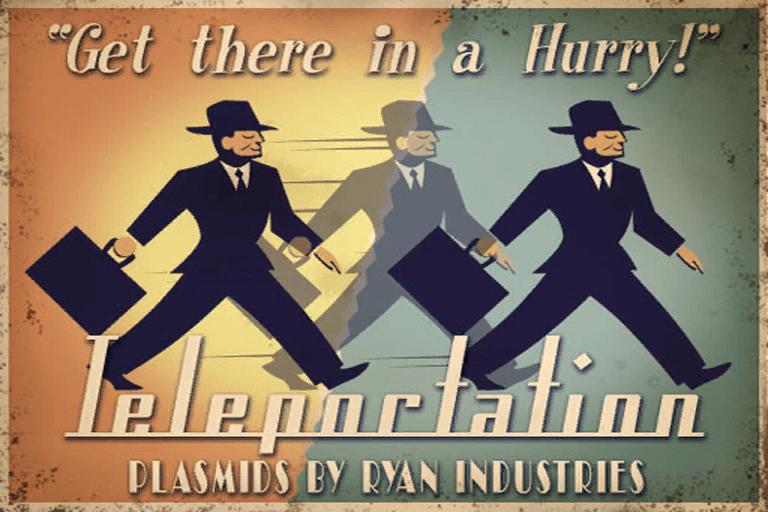
‘Plasmid’ advertising from BioShock; a product that literally improves you when you buy it. Nevermind the list of side effects and addictive qualities, however. Success requires sacrifice after all…

Ready to Party

Things got a little more lively this week as we started to really get into thinking about how to analyze pulp magazines. Class discussion was fruitful and I was very engaged with how much people pulled from the day’s readings. While we covered both Christine Bold’s introduction to The Oxford History of Popular Print Culture Vol. 6: U.S. Popular Print Culture 1860-1920 and the introduction to  Mussell’s Nineteenth-Century Press in the Digital Age, we spent the majority of our discussion working through an anatomical study of Popular Magazine, where people got really into things.

Something that came out of our discussions, which I really carries forward from my initial topic area last week, is the problematic history of pulp magazines. In class last week we discussed the origins of pulp magazines in Dime and Nickel magazines, which were predominantly of a “dangerous” and “sensational” variety, governed by a white and male master narrative.

bioshock_history_2
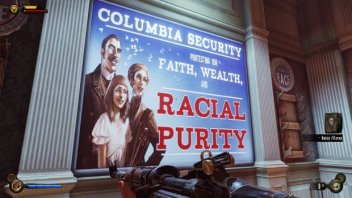
One of the many areas where racial tensions are highlighted in an alternative history setting in BioShock Infinite.

Pulp magazines, coming out of this tradition, had to struggle to establish themselves as a quality source of reading material, away from the juvenility of the Dime mags. As we see in pulp magazines however, this was not entirely possible to get away from, as a lot of the master narrative elements continued. This is something that is picked up in BioShock Infinite, a game that explores issues of race and class extensively, mirroring issues of the pulp magazine era, while forcing us to analyze our own cultural perspectives (e.g. as explored more fully by Waypoint or HowManyPrincesses).


For now I’d like to hold off on the contemporary comparisons to pulps, and instead focus on the analysis of pulps themselves. As demonstrated by Bold, pulps historically fell into a low culture motif, despite their attempt to remove themselves from the Dime and Nickel days.

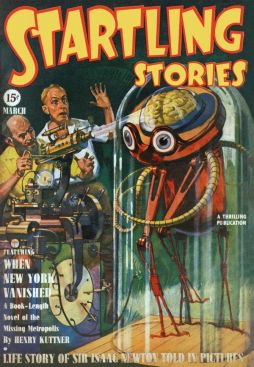
51a60b76f055c3ae366f96dd34e44711-sci-fi-fantasy-weird-science

While this worked, somewhat, to elevate their cultural status, the dichotomous approach to culture remained a dominant force in their ‘place’ in the world — including in academic study. While ‘high’ culture is as much culture as ‘low’ culture, the social elites have continued to try to defame ‘low’ culture in order to keep social groups separate. This has been a problem for academic study in particular, as often ‘low’ cultural elements have trouble being studied in any depth–believed to be lacking any cultural relevance. Naturally, this is far from the truth.

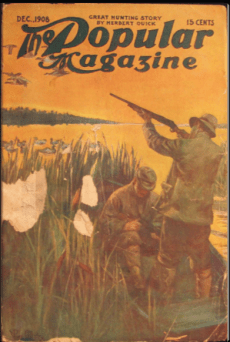
With a large surge of literate Americans and ease of access to printing via the industrial revolution, pulp magazines became a tool of expression for the public at large. This was not without some sort of control however, that as much as pulps were avenues of expression for the non-elites (especially as more sub-genres developed), so too did they serve to normalize and establish a desirable master narrative of Americana. We saw this clearly when we performed an “anatomical study” on The Popular Magazine from December of 1908.

popmagdec.PNGIn this early pulp magazine we found a steady theme of adventure…but only so far. Quite frequently the stories in the magazine conveyed a sense that adventure can be found anywhere for the everyman–even just outside of the city. It is oriented towards this everyman, who is capable of reaching his own potential, if only he tries hard enough (read like traditional Americana or what). The advertisements (at this time) reinforce this theme, with promotions of becoming a better business man, family values, as well as patriotism and nationalism, naturally. This is quite literally laid out at the end of the magazine, where “A Chat With You” leads potential writers into how they should tailor their stories for the magazine. Underpinning these normative performances, we also see simplified and stereotypical representations of People of Colour and immigrants–quite often negative ones at that.
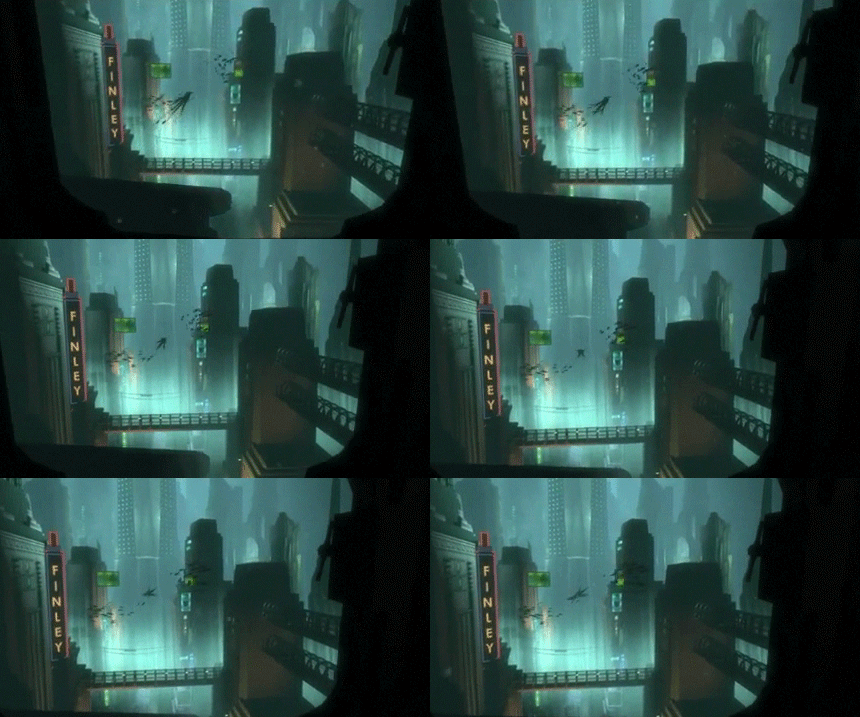
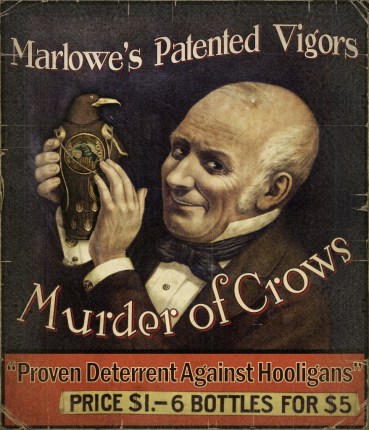
Finally, we took to buying our very own pulp magazines. Searching the e-racks of Ebay, we tried to find an authentic, interesting, and affordable magazine to call our own, and to document for the rest of the term. As a group, we readily decided on a sci-fi theme, as the stories they promised were sure to be entertaining, if only just to see how people saw the future. Luckily, we had a lot of potential options, and settled on a copy of “Amazing Stories” from the mid-1930’s. Sadly we weren’t able to get a synopsis of any of its contents but its cover alone was enough to draw us in. Some sort of squid people rolling people in a Christmas-ornament style orb–what isn’t to love? Here’s hoping its as interesting as its cover suggests–but wasn’t that the hope of all pulp cover art? To draw you in? Well, this one surely has us hooked, and luckily, it follows a nautical theme with “The Maelstrom of Atlantis.”

I’m ready to dive in.

giphy

Breaking into Pulp Reading

I have always been a fan of detective fiction, mystery, and sci-fi novels. This has extended to movies and video games that delve into these topics from a variety of levels. For me, pulp fiction magazines highlight some ways in which these genres came to be developed in a different, more easily digestible, way. 

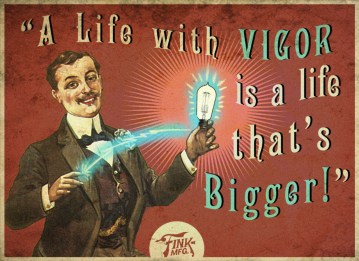
BioShock Infinite Ad
Advertisement from BioShock Infinite

In particular, some of my favourite games feature art, themes, and graphical styles based on the same styles seen in pulp magazines (BioShock series, Fallout, etc.), and there’s a 

real movement towards narration or satire based on the themes originated in pulp. I would love to trace how some of these things are enacted and developed in pulp magazines, versus how they are manifest in video game contexts. I am curious to see if the tropes and imagery are blatantly pulled from these precursors, or if they are used and adapted to fit the motivations of the game. I know in many cases the themes are adapted, but I am sure there are places that are near recreations of pulp-styles. It’s also interesting to consider how pulp motifs play out in a video game setting, that is often the opposite of quick and digestible.

In considering this possibility, I spent a great deal of time pouring over various magazine covers from the Pulp Magazine Project (PMP), and doing a visual overview of various art and media messages found in the BioShock and Fallout series. It was of no surprise that there were a lot of similarities in advertising and message. There are a ton of background advertising stills, videos, and audio clips played throughout both the BioShock and Fallout universes–aimed at creating a very specific type of atmosphere. It is at once ‘nostalgic’ but also a little surreal as they both take what’s familiar (Art Deco, 1950’s suburbia, etc.) and twist them to fit the worlds they want to represent. We buy in because we recognize these cultural markers, but we are carried along by how those markers are shifted and inverted to show us entirely new and often self-reflexive perspectives.

vigor_barker

One of the things that I enjoy so much about these worlds, and why I find them so important for informing my study of pulp magazines, is that the visual motifs used from these video games are derived quite deliberately from the eras that pulps come from.  Not only do they play on nostalgia, but they outright present alternative history representations of the same visual style.

“[Developers] also [make] use of a game’s atmosphere to support narrative–the architecture of the cities, the ambient conversations of the citizens, the advertising of the time period” (Fast Company).

In developing BioShock Infinite, the third BioShock in the series, creator Ken Levine “…was drawn to the time between the Civil War and World War I, a time of scientific progress that saw the development of electricity and the telephone but also religious belief and nationalism. Specifically, he cited, ‘Devil in the White City, which is a great book about the 1893 World’s Fair, and then certain movies give you a feel–There Will Be Blood gave me the weird vibe of revivalism and frontierism'” (Fast Company). As Levine highlights, movies like There Will Be Blood or tv shows like Downton Abbey sensationalize and stylize the eras these pulp magazines represent. They create a feeling–a feeling that I experience simply by looking at the real covers in the PMP. I’m curious if that feeling is because of the pre-conceived cultural understandings I have of those eras, or if any impression is at all factual.

From a more technical angle, I’ve always been interested in typography and layout in magazines, print media, and advertising of all kinds. I would also be interested in exploring how pulp developed their genre visually and typographically. What threads exist between sub-genres, and how do those tie into larger visual symbols. 

While we ultimately discussed in class that advertising could not necessarily be tied to a sub-genre of pulp magazine due to mass-sales of advertising space across a publishing company, it remains interesting to see what kinds of advertising entered into pulps at all. What did companies think the readers of pulp wanted to buy? What did they want them to buy? What can we learn from their sales attempts (including how advertisements are placed throughout a magazine, etc.).

I’m excited to find out.