


I have always been a fan of detective fiction, mystery, and sci-fi novels. This has extended to movies and video games that delve into these topics from a variety of levels. For me, pulp fiction magazines highlight some ways in which these genres came to be developed in a different, more easily digestible, way.
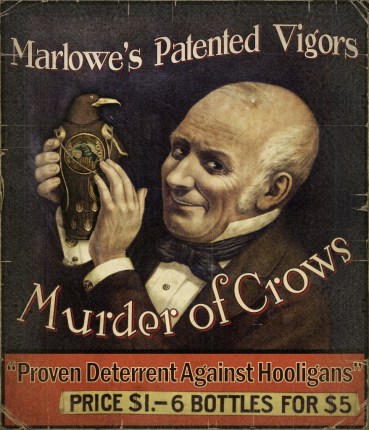
In particular, some of my favourite games feature art, themes, and graphical styles based on the same styles seen in pulp magazines (BioShock series, Fallout, etc.), and there’s a
real movement towards narration or satire based on the themes originated in pulp. I would love to trace how some of these things are enacted and developed in pulp magazines, versus how they are manifest in video game contexts. I am curious to see if the tropes and imagery are blatantly pulled from these precursors, or if they are used and adapted to fit the motivations of the game. I know in many cases the themes are adapted, but I am sure there are places that are near recreations of pulp-styles. It’s also interesting to consider how pulp motifs play out in a video game setting, that is often the opposite of quick and digestible.
In considering this possibility, I spent a great deal of time pouring over various magazine covers from the Pulp Magazine Project (PMP), and doing a visual overview of various art and media messages found in the BioShock and Fallout series. It was of no surprise that there were a lot of similarities in advertising and message. There are a ton of background advertising stills, videos, and audio clips played throughout both the BioShock and Fallout universes–aimed at creating a very specific type of atmosphere. It is at once ‘nostalgic’ but also a little surreal as they both take what’s familiar (Art Deco, 1950’s suburbia, etc.) and twist them to fit the worlds they want to represent. We buy in because we recognize these cultural markers, but we are carried along by how those markers are shifted and inverted to show us entirely new and often self-reflexive perspectives.
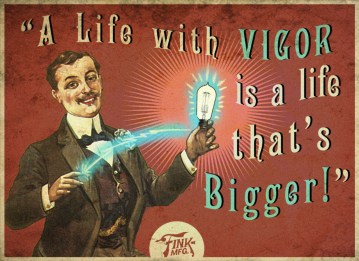
One of the things that I enjoy so much about these worlds, and why I find them so important for informing my study of pulp magazines, is that the visual motifs used from these video games are derived quite deliberately from the eras that pulps come from. Not only do they play on nostalgia, but they outright present alternative history representations of the same visual style.
“[Developers] also [make] use of a game’s atmosphere to support narrative–the architecture of the cities, the ambient conversations of the citizens, the advertising of the time period” (Fast Company).
In developing BioShock Infinite, the third BioShock in the series, creator Ken Levine “…was drawn to the time between the Civil War and World War I, a time of scientific progress that saw the development of electricity and the telephone but also religious belief and nationalism. Specifically, he cited, ‘Devil in the White City, which is a great book about the 1893 World’s Fair, and then certain movies give you a feel–There Will Be Blood gave me the weird vibe of revivalism and frontierism'” (Fast Company). As Levine highlights, movies like There Will Be Blood or tv shows like Downton Abbey sensationalize and stylize the eras these pulp magazines represent. They create a feeling–a feeling that I experience simply by looking at the real covers in the PMP. I’m curious if that feeling is because of the pre-conceived cultural understandings I have of those eras, or if any impression is at all factual.
From a more technical angle, I’ve always been interested in typography and layout in magazines, print media, and advertising of all kinds. I would also be interested in exploring how pulp developed their genre visually and typographically. What threads exist between sub-genres, and how do those tie into larger visual symbols.
While we ultimately discussed in class that advertising could not necessarily be tied to a sub-genre of pulp magazine due to mass-sales of advertising space across a publishing company, it remains interesting to see what kinds of advertising entered into pulps at all. What did companies think the readers of pulp wanted to buy? What did they want them to buy? What can we learn from their sales attempts (including how advertisements are placed throughout a magazine, etc.).
I’m excited to find out.
 My Life, or Something Like It
One thought on “Breaking into Pulp Reading”