

MINESWEEPER
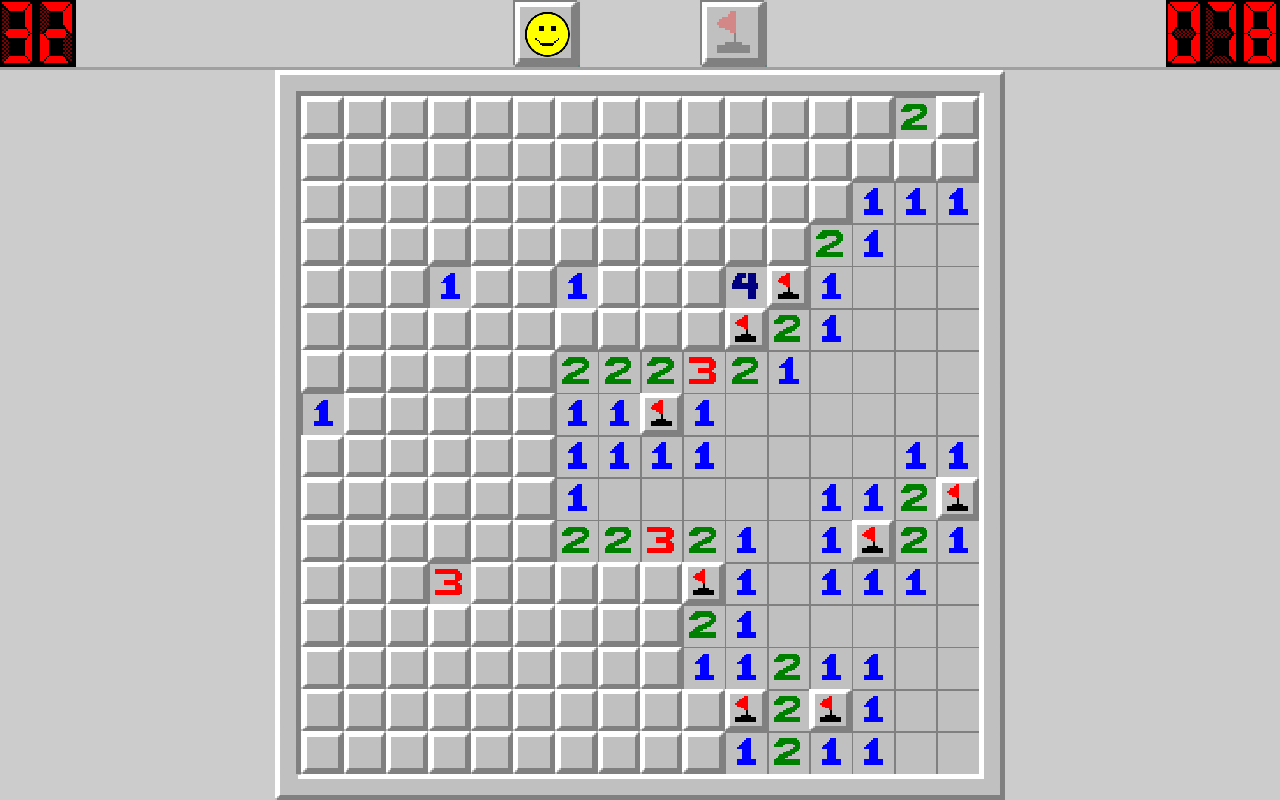
Let’s face it, we’ve all wasted a few minutes (and some a few hours or more) trying to master this simple puzzle game. Whether it be because the internet went down, or because the internet wasn’t even a thing yet, Minesweeper is nothing if not pervasive. In 1992, Microsoft released its version of an old mainframe game from the 1960’s and 1970s: Minesweeper. Originally released as part of the “Microsoft Entertainment Pack 1” in 1990, it was included stock with Windows 3.1 in 1992 replacing Reversi from Windows 3.0. Since then, Microsoft’s Minesweeper has been included in all subsequent Windows releases except for Windows 8. Later versions in Windows Vista and Windows 7 were developed by Oberon Games. While Windows 8 does not have the title installed automatically, there is a downloadable app available through the Windows Store, developed by Arkadium. The goal of the game is to uncover the locations where bombs have been planted without blowing yourself up in the process. A simple interface allows players to make educated guesses about where bombs may be hidden, as well as to label potentially dangerous blocks. The game board comes in three sizes ranging from beginner, to intermediate, and expert. Minesweeper’s generic game concept has taken on many forms since its days on the earliest mainframes. It has become such a pop culture icon in fact (at least in gaming) that versions of it have appeared in other games since it’s release, such as in Runescape or Super Mario 64 DS .
SPY VS. SPY

Released earlier on Xbox than it’s PS2 counterpart, Spy vs. Spy was published by Global Star Software and Warner Bros. Interactive Entertainment based on the MAD magazine’s comic strip series. Developed by Vicious Cycle Software, the game features two spies (‘Black’ and ‘White’) who engage in a story mode, two other ‘modern’ and ‘classic’ game modes, as well as a multiplayer mode up to four local players. In the single player campaign, players choose between either spy character and complete missions involving puzzles and enemies, including the enemy spy not chosen by the player. Story mode plays like an old cartoon reel but with a contemporary spin. The choice of spy doesn’t affect anything about the gameplay or story. ‘Modern’ and ‘classic’ game modes can be played solo or multiplayer, with a goal of collecting four artifacts from safes around the map (these safes transform into briefcases in ‘classic’). The main differences between the two modes are setting theme and variety–‘modern’ features more unique maps, whereas ‘classic’ returns to the same vintage cartoon style of the main story mode. In multiplayer mode, two spies (‘Red’ and ‘Blue’) are added, and the game turns into a more classic deathmatch or capture the flag playstyle. While the comic and TV spots on MADtv were popular, the game as released on Xbox and PS2 received mixed reviews.

MASS EFFECT 2: KASUMI – STOLEN MEMORY

The first major DLC for Mass Effect 2 that did not require access to the game’s ‘Cerberus Network’, Kasumi – Stolen Memory was released by BioWare and Electronic Arts in 2010 for Windows and Xbox 360. The DLC added two new missions, continuing the story and worldbuilding from the main title. In this chapter, the player must recruit Kasumi Goto and help her retrieve key information about her past. During the development of Mass Effect 2, Bioware announced the importance of DLCs as a fundamental keystone for the company’s philosophy at the time. This DLC, and those released after, were a testament to that statement. The DLC received mixed reviews, namely due to it’s apparent brevity. Many complained that the hour or so of gameplay, while interesting, did not justify the price point at release. The title was compared by others to the film Ocean’s Eleven and was praised for its storytelling and character development. Kasumi – Stolen Memory along with all other DLCs, were later included in the PS3 version of Mass Effect 2 released in January of 2011.
Some other titles released on this day in gaming history:
- Ninja Gaiden II: The Dark Sword of Chaos (Japan) – NES/Famicom – (1990)
- Ultraman (Japan) – Super Nintendo – 1991
- WarioWare, Inc.: Mega Party Game$! – GameCube – 2004
- Xenoblade Chronicles – Wii – 2012
 My Life, or Something Like It